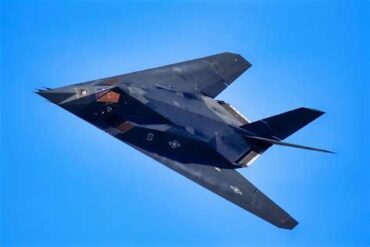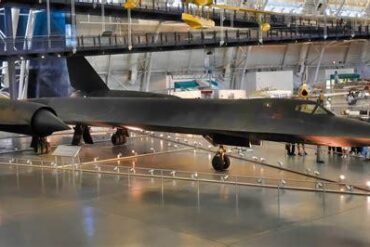
The Lockheed SR-71 Blackbird remains one of the most extraordinary aircraft ever built. Designed during the height of the Cold War, it pushed aviation technology far beyond conventional limits, routinely cruising above Mach 3 and operating at altitudes exceeding 85,000 feet. Almost every aspect of the aircraft required engineers to rethink established aerospace principles. From its titanium airframe and fuel-leaking fuselage to its unique engines and thermal management systems, the Blackbird was a machine built around extreme conditions.
Among its most unusual engineering features were its distinctive silver-colored tires. While many aviation enthusiasts assume the greatest threat to these tires came during blisteringly fast landings, the reality was far stranger. The SR-71’s tires often suffered more damage simply sitting motionless on the tarmac than they did touching down at speeds that would terrify pilots of conventional aircraft.
Understanding why requires a closer look at one of the most fascinating engineering compromises ever made in military aviation.
The Cold War Mission That Created the Blackbird
The origins of the SR-71 can be traced directly to the growing tensions between the United States and the Soviet Union following World War II. As the Iron Curtain descended across Eastern Europe, Western intelligence agencies struggled to understand what was happening inside Soviet territory. Reliable information was scarce, and aerial reconnaissance became increasingly important.
The United States initially relied on the Lockheed U-2 spy plane, an aircraft capable of flying at extremely high altitudes. Early planners believed the U-2 could safely operate beyond the reach of Soviet defenses. That assumption proved incorrect when Soviet surface-to-air missile systems successfully shot down U-2 aircraft, demonstrating that altitude alone was no longer sufficient protection.
In response, Lockheed’s legendary Skunk Works division pursued a radically different solution. Instead of simply flying higher, the new aircraft would fly both higher and dramatically faster. The result was the SR-71 Blackbird, a reconnaissance platform capable of cruising at more than three times the speed of sound while operating near the edge of space.
Achieving those performance levels created engineering challenges unlike anything encountered before.
The aircraft’s skin temperatures could exceed 900 degrees Fahrenheit during sustained high-speed flight. Components throughout the airframe expanded dramatically as temperatures increased. Even seemingly ordinary items such as tires became major engineering obstacles requiring entirely new solutions.
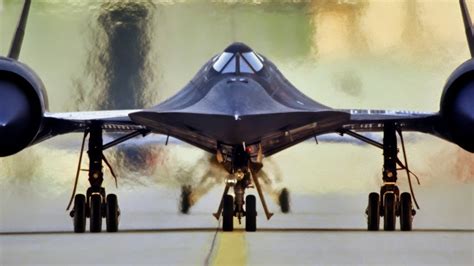
Why the SR-71 Needed Completely Unique Tires
Most aircraft tires are designed primarily to support weight during taxiing, takeoff, and landing. The SR-71’s tires faced a much more demanding environment.
At Mach 3+, aerodynamic heating affected nearly every part of the aircraft. Heat generated during high-speed flight transferred throughout the structure, including areas surrounding the landing gear bays. Conventional aviation tires simply could not survive such temperatures.
Ordinary rubber compounds would soften, degrade, or potentially fail when exposed to the thermal conditions experienced by the Blackbird. Engineers therefore needed a tire capable of tolerating intense heat while maintaining structural integrity during takeoff and landing.
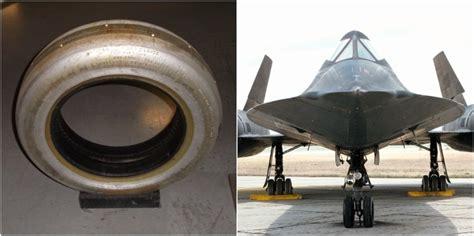
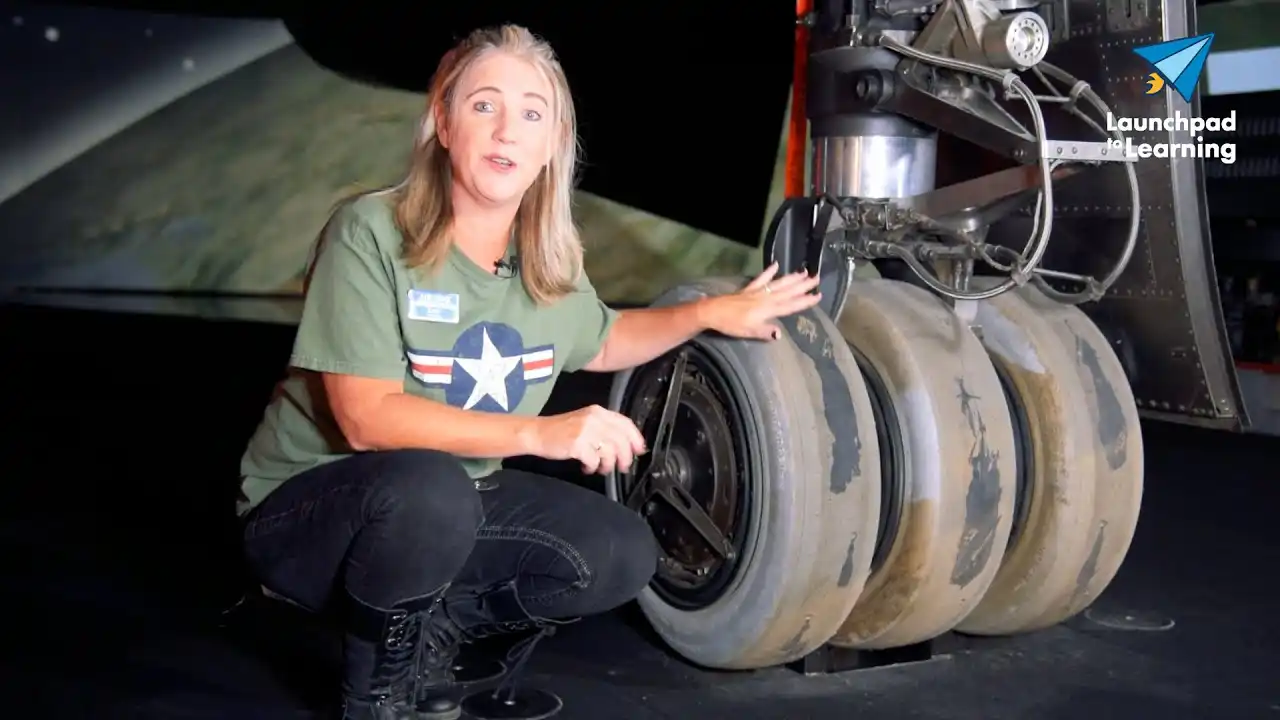
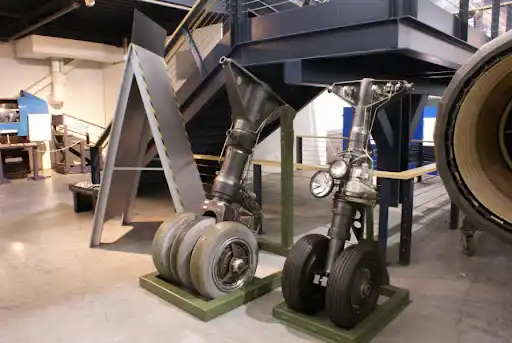
B.F. Goodrich ultimately developed a highly specialized solution. The tires incorporated a rubber compound infused with aluminum particles, giving them their distinctive metallic silver appearance. Contrary to popular belief, they were not made from silver. Instead, the aluminum-enhanced rubber helped reflect heat away from the tire’s core structure and improved its ability to withstand elevated temperatures.
The result was a tire unlike anything else operating in military aviation.
Each tire cost approximately $2,300 during an era when many aircraft tires cost only a fraction of that amount. Adjusted for inflation, the price becomes even more remarkable. Yet despite their sophistication and expense, these tires remained surprisingly fragile under certain circumstances.
The Remarkable Engineering Behind the Silver Tires
The aluminum-infused tire compound represented a classic example of aerospace engineering trade-offs. Solving one problem often creates another.
For the Blackbird, the primary challenge was thermal survival. Engineers knew that conventional rubber formulations would struggle to withstand the heat generated during the aircraft’s mission profile. By introducing large amounts of aluminum into the compound, they significantly improved the tire’s resistance to thermal damage.
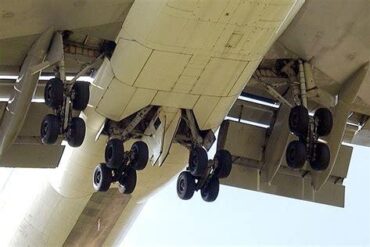
The tires also operated at an astonishing inflation pressure of approximately 415 psi.
To understand how extreme that figure was, consider the following comparisons:
- Typical passenger vehicle tire: approximately 32 psi
- General aviation aircraft tire: roughly 30–45 psi
- Boeing 787 tire: approximately 200 psi
- Space Shuttle tire: roughly 300–340 psi
- SR-71 Blackbird tire: 415 psi
The inflation medium itself was equally important. Rather than using ordinary compressed air, the tires were filled with nitrogen.
This decision was driven by thermal physics. During high-speed flight, temperatures around the landing gear could become extreme. Oxygen-containing air expands significantly when heated and introduces combustion risks. Nitrogen, being inert, eliminated those concerns and reduced the possibility of catastrophic tire failures.
Together, the aluminum compound and nitrogen inflation allowed the tires to survive environments that would have destroyed conventional designs.
Unfortunately, those same characteristics introduced a completely different weakness.
The Hidden Problem: Aluminum Reduced Tire Flexibility
The very material that protected the tires from heat also compromised their behavior under normal ground conditions.
Traditional rubber possesses significant elasticity. When a vehicle sits stationary, the tire deforms under load but generally returns to its original shape once movement resumes. This flexibility is one of the defining characteristics of rubber.
The SR-71’s aluminum-heavy tire compound behaved differently.
Adding substantial amounts of aluminum reduced the natural elasticity of the rubber matrix. While beneficial for heat resistance, it made the tire more susceptible to permanent deformation when subjected to prolonged loading.
This became a major issue because the Blackbird was not a lightweight aircraft.
A fully loaded SR-71 could weigh approximately 140,000 pounds. Even when parked, that enormous mass continuously pressed against the tires. Instead of temporarily flexing under load, portions of the tire could gradually develop permanent flat spots through a phenomenon known as cold flow.
Cold flow occurs when materials slowly deform under constant pressure without the presence of high temperatures. In the case of the SR-71, the stationary weight of the aircraft essentially reshaped portions of the tire over time.
The longer the aircraft remained parked, the greater the risk became.
Remarkably, this meant the tires could suffer serious degradation without the aircraft moving a single inch.
Why Sitting Still Was More Dangerous Than Landing
At first glance, the idea seems absurd.
How could a tire be damaged more by standing still than by supporting an aircraft landing at nearly 200 knots?
The answer lies in the difference between predictable wear and structural deformation.
Landing generates substantial friction and stress. However, the tire was specifically engineered for those forces. The wear occurred uniformly across the tread and followed patterns anticipated by engineers during the design process.
Permanent flat spots created by cold flow were entirely different.
When a tire develops an uneven shape, rotational forces become problematic during taxi and takeoff operations. At 415 psi, even minor structural irregularities could produce severe imbalances. Those imbalances increased the likelihood of internal separation, delamination, or catastrophic failure.
In other words, a tire damaged while parked became potentially more dangerous than one worn through normal operational use.
Maintainers therefore treated stationary storage as a serious concern. Ground crews frequently jacked up the aircraft to remove weight from the tires. When jacking was impractical, personnel sometimes rolled the aircraft short distances to redistribute loading across different sections of the tire.
These procedures were not optional maintenance rituals. They were essential measures designed to preserve tire integrity.
Takeoff Was Actually Harder on the Tires Than Landing
Another surprising aspect of Blackbird operations was the relative severity of takeoff versus landing.
Many assume landing represented the most punishing phase of flight because of the aircraft’s high approach speeds. In reality, takeoff often imposed greater stress on the tires.
The reason centered on aircraft weight.
During departure, the SR-71 carried fuel, equipment, crew, and mission systems. Although the aircraft typically launched with a partial fuel load before aerial refueling, takeoff still represented one of the heaviest points in the mission.
As the aircraft accelerated, tremendous loads transferred through the landing gear. Tire deformation, rotational acceleration, and runway forces combined to create intense stress concentrations.
Former Blackbird pilot Colonel Ken Collins noted that tire wear was particularly significant during rotation, the critical moment when the aircraft transitions from ground roll to flight.
Landing, by comparison, occurred at a lower aircraft weight because much of the fuel had already been consumed.
This distinction helps explain why tire life was often measured more heavily by takeoff cycles than by landings.
How the Drag Chute Protected the Tires
One of the SR-71’s most recognizable landing features was its drag parachute.
Immediately after touchdown, the parachute deployed behind the aircraft to generate aerodynamic braking force. While the chute helped shorten landing rolls, it also served another critical purpose.
It reduced stress on both the braking system and the tires.
Without the drag chute, much greater braking force would have been required from the wheels alone. That additional load would have increased tire temperatures, accelerated wear, and potentially reduced operational life even further.
Instead, aerodynamic drag absorbed a significant portion of the aircraft’s kinetic energy.
Because the silver tires were specifically engineered to tolerate heat, they generally handled landing friction effectively. Wear occurred, but it remained predictable and manageable.
The paradox remained striking: a tire designed to survive the demands of Mach 3 reconnaissance missions could be endangered by spending too much time parked on a ramp.
A Maintenance Burden Hidden Behind the Blackbird Legend
The story of the SR-71’s tires illustrates a broader reality about the aircraft itself.
The Blackbird is often remembered as an engineering masterpiece, and rightly so. Its performance remains extraordinary even decades after retirement. No operational manned air-breathing aircraft has surpassed its sustained speed record.
Yet maintaining that performance required enormous effort.
The aircraft’s titanium structure demanded specialized manufacturing. Fuel leaked on the ground until thermal expansion sealed gaps in flight. Engines operated in ways unlike conventional turbojets. Tires required constant monitoring, rotation, replacement, and protection from stationary loading.
Every component reflected a compromise between capability and practicality.
The tires became a perfect symbol of this balance. They solved one of aviation’s most extreme thermal challenges but introduced significant logistical complications in return.
What the Silver Tires Reveal About the SR-71’s Legacy
The silver tires of the SR-71 Blackbird represent far more than an unusual visual detail. They reveal the extraordinary lengths engineers were willing to go to achieve unprecedented performance.
Every aspect of the tire design reflected the aircraft’s central mission. Surviving Mach 3 flight mattered more than maximizing service life. Thermal resistance took priority over long-term elasticity. Mission success outweighed maintenance convenience.
As a result, the tires became both an engineering triumph and a logistical headache.
Their aluminum-infused construction enabled operations that conventional aircraft could never attempt. Yet that same innovation meant the tires could literally wear themselves out while supporting a stationary aircraft on the ground.
Few machines better illustrate the principle that extreme performance always comes with trade-offs.
The SR-71 Blackbird was capable of outrunning threats, crossing continents at incredible speed, and gathering intelligence from altitudes beyond the reach of most adversaries. But beneath that legendary capability sat a set of silver tires so specialized that remaining parked too long could be more damaging than landing at nearly 200 knots.
That paradox remains one of the most fascinating examples of aerospace engineering ever placed on a runway.