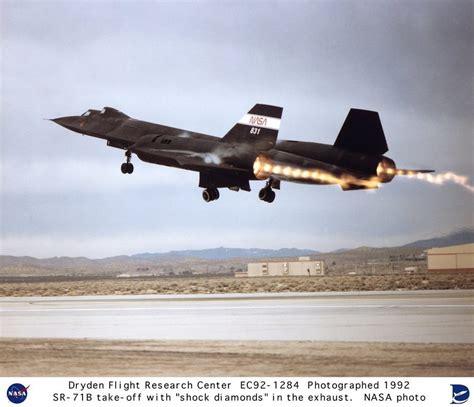
When a fighter jet lights its afterburner, the exhaust can suddenly appear to contain a string of brilliant, pulsing diamonds. These glowing shapes, often called shock diamonds, are a recognizable visual signature of high-performance jet engines. They are a direct consequence of compressible-flow physics, pressure differences, extreme temperatures, and supersonic exhaust.
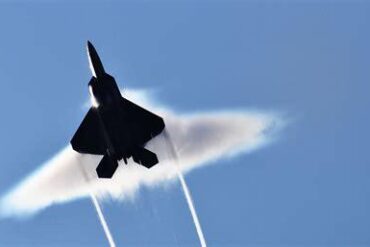
The aircraft itself does not have to be flying faster than sound. Shock diamonds form because the exhaust gases can leave the nozzle at supersonic velocity, even while the fighter remains stationary during takeoff or is traveling below Mach 1. The same phenomenon can also appear behind rockets and missiles.
The key is the interaction between the exhaust and the surrounding atmosphere. Once gases leave an engine nozzle at supersonic velocity, pressure differences cannot be corrected smoothly. Instead, the exhaust responds through a repeating sequence of compression and expansion waves, creating the luminous pattern visible behind an afterburning fighter.
How Fighter Jet Shock Diamonds Form
Inside a modern afterburning turbofan or turbojet, combustion produces extremely hot gases that are accelerated through the engine’s nozzle. When the afterburner is operating, additional fuel is injected into the exhaust stream downstream of the turbine. The fuel burns in the already-hot flow, increasing its temperature and energy.
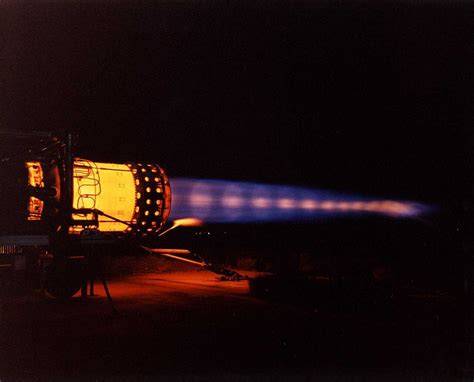
Once the exhaust emerges at supersonic speed, it cannot adjust its pressure smoothly. Instead, the flow responds through a repeating sequence of compression and expansion waves. If the pressure of the exhaust does not initially match atmospheric pressure, the plume repeatedly contracts and expands as it attempts to reach equilibrium.
Those alternating regions create the characteristic diamond pattern. Compression zones raise pressure and temperature, while expansion zones reduce them. Changing density, temperature, and light emission make these regions appear as bright and dark sections along the exhaust plume. The shapes are not solid objects or separate bursts of flame. They are visible evidence of a continuously changing supersonic flow field.
Why Afterburners Make the Diamonds Glow
The shock pattern itself does not automatically have to be brilliantly luminous. The intense glow comes primarily from extraordinary conditions inside the exhaust plume. An afterburner adds a second stage of combustion after the turbine, producing a much hotter and more energetic stream than the engine generates without augmentation.
That heat gives the exhaust an orange, yellow, or bluish-white appearance depending on fuel, engine design, viewing conditions, and light. The compression waves within the plume can intensify this effect. At certain locations, a normal shock forms across the supersonic flow. Gas passing through that shock experiences a sudden increase in pressure and temperature, which can help ignite residual fuel and produce a bright region.
This makes shock diamonds look like glowing rings or luminous disks inside the flame. The brightness is not simply the shock wave itself shining like a physical object. Instead, the shock changes the thermodynamic state of the gases, while combustion and radiation make those changes visible.
Atmospheric Pressure Controls the Pattern
The size and appearance of shock diamonds depend heavily on ambient atmospheric pressure. Near the ground, the atmosphere is relatively dense and exerts substantial pressure on the emerging exhaust. The plume may be overexpanded, meaning its pressure immediately outside the nozzle is lower than the surrounding atmosphere. The atmosphere squeezes the exhaust inward, after which the flow expands again.
At higher altitude, atmospheric pressure falls dramatically. The exhaust can instead become underexpanded, meaning its pressure remains higher than the surrounding air after leaving the nozzle. In that situation, the plume expands outward before compression waves push it back inward. The direction differs, but the result can still be repeating shock and expansion regions.
This explains why photographs of afterburning fighters at different altitudes can show noticeably different plume patterns. Lower-altitude exhaust tends to display smaller, more closely spaced diamonds, while thinner air at altitude allows the structures to expand and become more widely separated.
Why Shock Diamonds Change During Takeoff
During takeoff, an afterburning fighter can produce a dramatic chain of luminous diamonds because the engine is operating at a high thrust setting while the exhaust interacts strongly with dense atmospheric air. As the aircraft accelerates and climbs, both the engine’s operating conditions and the external pressure environment change.
Diamonds may stretch, spread, or become less numerous as the fighter gains altitude. Brightness also changes with daylight, viewing angle, exhaust chemistry, and afterburner fuel flow. The pattern is therefore dynamic rather than fixed, responding constantly to conditions around the nozzle.
A Visual Signature of Supersonic Physics
Shock diamonds are fascinating because they turn an invisible aerodynamic process into something the human eye can easily recognize. We cannot normally see pressure waves, density changes, or rapid thermodynamic transitions in a jet’s exhaust. The glowing plume makes those processes visible.
For fighters, the effect is dramatic because afterburners create high-energy exhaust conditions needed for spectacular plumes. The Pratt & Whitney F135 demonstrates the scale of that power, with substantially greater thrust when afterburning is used. The exhaust is not merely a fiery display; it is a visible map of pressure, temperature, velocity, and combustion.
The next time a fighter jet launches with a brilliant trail of glowing diamonds behind it, the spectacle has a precise physical explanation. The engine produces supersonic exhaust, the atmosphere forces it to compress and expand, and extreme temperatures make the structures visible. What looks like a string of glowing jewels is actually one of the clearest demonstrations of supersonic gas dynamics in everyday aviation imagery.