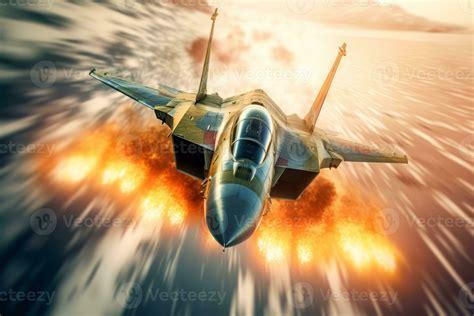
Supersonic speed has long represented the pinnacle of fighter jet performance, offering critical tactical advantages in both combat and reconnaissance missions. While afterburners have historically been the dominant method for pushing military aircraft past the sound barrier, an advanced capability—supercruise—is redefining what modern jets can achieve in terms of sustained supersonic flight. Understanding how these two systems operate, their respective benefits and limitations, and how they coexist in modern airframes is key to grasping the evolution of air superiority in the 21st century.
What Is Supercruise?
Supercruise is the ability of an aircraft to fly at supersonic speeds—defined as anything above Mach 1—without the use of afterburners. This is a significant leap forward in propulsion technology. Unlike afterburners, which temporarily flood the engine’s exhaust stream with additional fuel to achieve thrust spikes, supercruise relies entirely on high-efficiency engine design and aerodynamic optimization to maintain such velocities in a more sustainable and controlled manner.
At its core, supercruise is about maintaining supersonic flight for extended periods. This means reduced fuel consumption compared to afterburners, lower heat signatures, and a drastic reduction in acoustic detectability—crucial advantages in stealth and long-range operations.
The Mechanics and Drawbacks of Afterburners
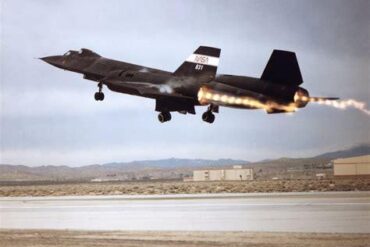
An afterburner works by injecting fuel directly into the jet exhaust stream and igniting it, creating an explosive boost in thrust. This system is typically used in brief, high-stress scenarios such as takeoff from short runways, high-G combat maneuvers, or quick escapes from hostile zones. The key components of an afterburner include:
- Fuel Injection System: Pumps fuel into the exhaust
- Flame Holder: Stabilizes combustion inside the nozzle
- Variable Exhaust Nozzle: Modulates gas flow to optimize thrust
While powerful, the drawbacks of afterburners are clear:
- Fuel Inefficiency: Afterburners can burn fuel up to three times faster than standard engine operation.
- Infrared Visibility: The bright plume increases visibility to enemy sensors and missile systems.
- Thermal Signature: Raises heat output, compromising stealth.
In essence, afterburners are brute-force tools, offering short bursts of massive acceleration but at a steep operational cost.
Supercruise vs. Afterburners: Key Distinctions
Where afterburners provide a momentary advantage, supercruise offers a strategic edge. The ability to fly at Mach 1.2 to Mach 1.5 without fuel-guzzling systems dramatically expands an aircraft’s effective range and loiter time. Here’s how they differ fundamentally:
- Thrust Source: Afterburners rely on fuel-rich combustion, while supercruise relies on aerodynamic and engine efficiency.
- Fuel Consumption: Afterburners are extremely wasteful, while supercruise is significantly more efficient.
- Usage Duration: Afterburners are used for seconds or minutes; supercruise can be sustained for hours depending on mission profile.
The Rise of Supercruise in Modern Jets
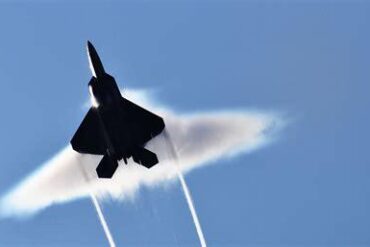
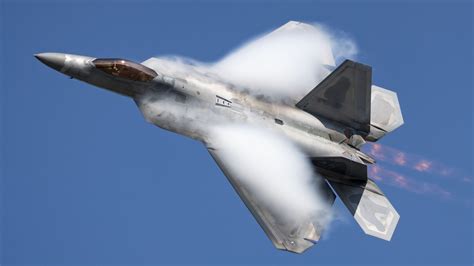
The ability to supercruise is rare and represents a high watermark in jet propulsion evolution. Few operational aircraft can achieve it reliably. One standout is the Lockheed Martin F-22 Raptor, which can fly above Mach 1.5 without engaging afterburners. This feat was confirmed in July 1999 by Colonel C.D. Moore, who remarked, “Yesterday the airplane demonstrated that it can achieve awesome speed, flying above 1.5 Mach at a low power setting, for a sustained period of time.”
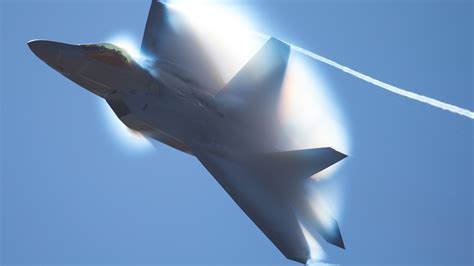
This capability gives the F-22 the ability to enter, strike, and exit hostile airspace with minimal radar exposure and fuel loss, a capability unmatched by earlier generation fighters.
Aircraft That Combine Supercruise and Afterburners
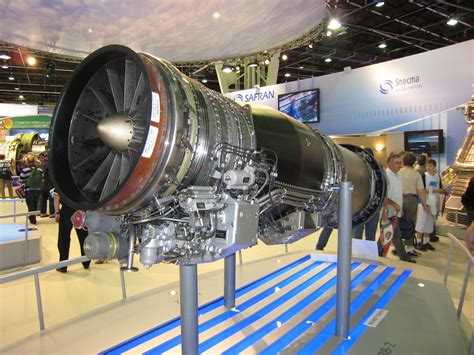
The Dassault Rafale, a multi-role fighter developed by Dassault Aviation, is another aircraft that incorporates both supercruise and afterburner capabilities. Designed for what the company terms “Omnirole” functionality, the Rafale can adapt to a wide range of missions through modular weapon systems and flexible airframe configurations.
Its M88-2 engines provide:
- 10,971 lbs of dry thrust (no afterburners)
- 16,620 lbs of thrust when afterburners are active
In practice, the Rafale can achieve:
- Mach 1.4 in supercruise mode
- Mach 1.8 when using afterburners
This makes it ideal for NATO operations where interoperability and mission flexibility are paramount.
Tactical Advantages of Supercruise
Aircraft with supercruise capabilities are at the forefront of aerial dominance, and here’s why:
1. Extended Range and Endurance
Without the need to consume vast amounts of fuel through afterburners, jets can travel farther and loiter longer. This allows for deep-strike missions and enhanced patrol coverage.
2. Stealth and Survivability
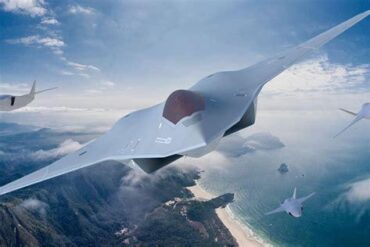
Supercruise allows for silent supersonic approach, minimizing both radar cross-section and infrared signature. It complements stealth airframes like the F-22 and the upcoming NGAD (Next Generation Air Dominance) platforms.
3. Time-to-Target Efficiency
Mission-critical responses, such as intercepts or high-speed strikes, become more practical when an aircraft can travel supersonic without a major tactical sacrifice in range or stealth.
Why Most Jets Still Rely on Afterburners
Despite its advantages, supercruise technology is not widespread. Most military jets still depend on afterburners due to the complexity and cost of engines capable of sustained supersonic thrust without fuel overuse. These limitations include:
- High-Precision Materials: Supercruise engines require heat-resistant alloys and advanced cooling systems.
- Advanced Aerodynamics: The aircraft must be aerodynamically optimized to avoid drag penalties.
- Development Costs: Integrating supercruise into older platforms is often prohibitively expensive.
For this reason, afterburners remain an indispensable part of many fleets. They offer instant power, and when lives are on the line, that capability is irreplaceable.
The Concorde: Civilian Supersonic Speed With Afterburners
While the Concorde is often remembered for its luxury and speed, it too relied on afterburners, particularly during takeoff and acceleration. Its ability to cruise at Mach 2.0 was facilitated by four Rolls-Royce/Snecma Olympus 593 turbojet engines, each fitted with afterburners. However, the Concorde could not supercruise in the technical sense, as it required periodic fuel injection to maintain supersonic speeds.
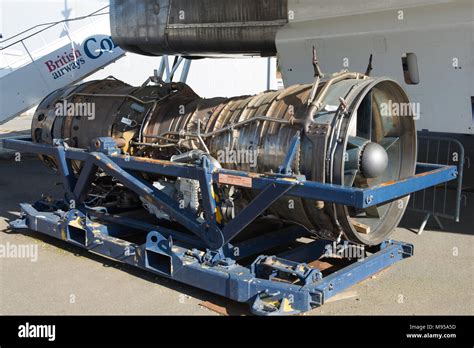
This highlights a key distinction: supercruise is not just about speed—it’s about sustainability at that speed without additional fuel boost mechanisms.
Future of Supercruise and Next-Gen Air Dominance
As military strategy pivots toward multi-domain operations and anti-access/area denial (A2/AD) scenarios, supercruise will likely become a standard feature in sixth-generation fighters. Programs like the U.S. Air Force’s NGAD and Europe’s FCAS (Future Combat Air System) are being developed with supercruise as a foundational performance criterion.
These platforms are expected to blend AI-assisted avionics, hypersonic missiles, and low-observable technology—making sustained supersonic capability without afterburners an operational necessity rather than a luxury.
Conclusion: Beyond Speed—Toward Efficiency and Dominance
Supercruise represents not just a technical achievement but a paradigm shift in aerial warfare. While afterburners remain crucial for short-term tactical needs, they are a blunt tool compared to the surgical precision and operational efficiency of supercruise. Jets like the F-22 Raptor and Dassault Rafale demonstrate how combining both capabilities enhances mission success while optimizing fuel use, stealth, and range. As aerospace engineering continues to evolve, the future of air dominance will belong to those who can fly fast, far, and undetected—without burning through their tanks in minutes.