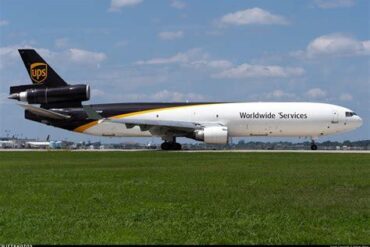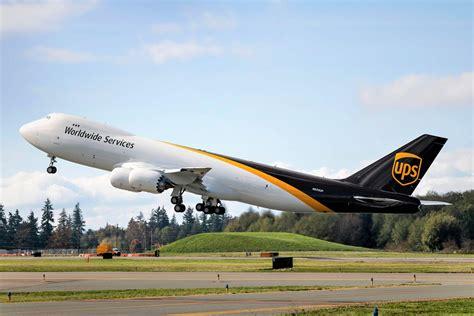
The global logistics network that moves millions of packages overnight depends less on glamour and more on ruthless efficiency. UPS Airlines operates one of the most extensive air cargo fleets in the world, yet a large portion of that fleet consists of aircraft many passenger airlines retired long ago. To outside observers, the sight of Airbus A300s, Boeing 757s, and aging MD-11s lifting off into the night can seem counterintuitive in an era obsessed with fuel efficiency and next-generation technology. In reality, the decision to rely on older widebody aircraft is not a compromise—it is a deliberate strategy rooted in financial discipline, operational realities, and a deep understanding of cargo economics.
Unlike passenger airlines, which must constantly refresh their fleets to attract customers and control fuel costs, UPS Airlines operates in a fundamentally different environment. Packages do not care about cabin aesthetics, engine noise, or inflight entertainment. What matters is reliability, payload capability, and cost control. The overnight parcel business rewards carriers that can move large volumes at predictable times while keeping capital expenses as low as possible. This is where older widebody aircraft quietly outperform their newer counterparts.
The backbone of the UPS air network is its tightly choreographed nighttime operation centered on the Worldport hub in Louisville, Kentucky. Aircraft converge from across North America and beyond, unload within minutes, and depart again before dawn. In this system, airplanes spend a significant portion of their day parked on the ground. For such low-utilization operations, owning a brand-new, highly efficient jet makes little financial sense. Instead, fully depreciated aircraft, acquired at a fraction of their original cost, deliver superior returns over decades of service.
The reliance on older widebodies is not a nostalgic attachment to the past. It is a calculated response to how cargo airlines generate value, how aircraft age structurally, and how capital costs can quietly erode profitability faster than fuel burn ever could.
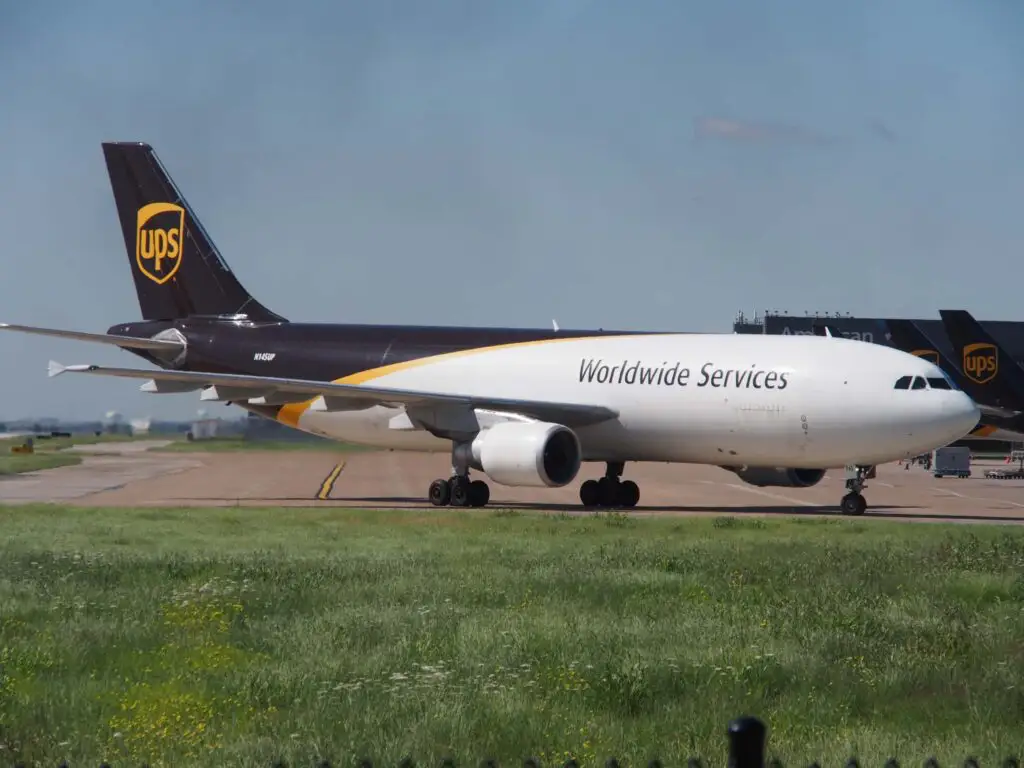
A Cargo Airline’s Economics Are Built on Capital Discipline
The single most important distinction between cargo and passenger airlines lies in how they deploy capital. Passenger airlines must keep aircraft flying as many hours as possible to justify their investment. A new widebody jet can cost well over $200 million, and even with discounts or leases, the monthly financial burden is enormous. To stay profitable, those aircraft must fly long hours every day, generating revenue seat by seat.
UPS Airlines faces a different equation. Its aircraft typically fly four to eight hours per day, primarily at night. During daylight hours, they often sit idle, waiting for the next sorting cycle. In such a scenario, paying for the depreciation and financing of a new aircraft becomes a financial liability rather than an advantage. A fully paid-off older widebody, even if it burns more fuel per hour, avoids the crushing fixed costs associated with new aircraft ownership.
Fuel efficiency, while important, is only one variable in the equation. Because UPS aircraft fly fewer hours, the absolute fuel penalty of operating older engines is far smaller than it would be for a high-utilization passenger carrier. What matters more is capital efficiency—how much revenue each aircraft can generate relative to its ownership cost. In this metric, older widebodies consistently outperform newer jets in the express cargo environment.
This financial logic explains why UPS continues to operate aircraft with an average fleet age of roughly 25 years, with some airframes exceeding 35 years of service. These aircraft are not obsolete assets; they are fully amortized tools that continue to deliver predictable returns with minimal financial risk.
Why Older Widebodies Fit the Overnight Parcel Network Perfectly
UPS’s operational model is built around predictability rather than flexibility. The nightly sort at Worldport is one of the most complex logistics operations on Earth, moving millions of parcels in a narrow time window. Aircraft must arrive on schedule, unload quickly, and depart without delay. Once this window closes, there is little economic incentive to fly additional routes during the day.
Older widebody aircraft are ideally suited to this rhythm. They offer high payload capacity, robust structural margins, and proven performance on short-to-medium haul routes. The Airbus A300-600RF, for example, remains a workhorse on regional and transcontinental sectors where volume density is high but frequency is limited. Its wide cargo hold allows UPS to move bulky freight efficiently without needing multiple smaller aircraft.
Crucially, these aircraft accumulate flight cycles much more slowly than passenger jets. Structural fatigue is driven more by takeoffs and landings than by calendar age. Because UPS aircraft often fly fewer legs per day, their airframes can remain structurally sound for decades longer than a short-haul passenger aircraft of the same age. This slow cycle accumulation allows UPS to safely operate aircraft for 35 to 40 years before metal fatigue becomes a limiting factor.
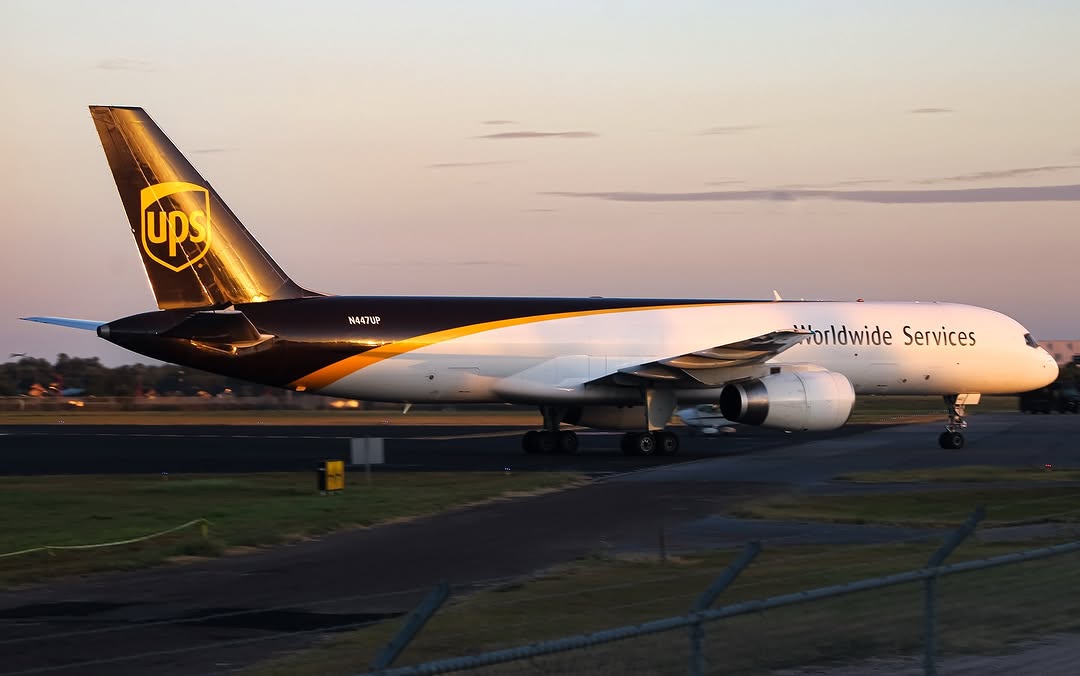
Passenger-to-Freighter Conversions Extend Aircraft Value
The cargo industry has long served as the second life for passenger aircraft, and UPS has mastered this transition. When passenger airlines retire widebodies like the Boeing 767, Boeing 757, or MD-11, those airframes often still have thousands of cycles left in their structural lifespan. Through Passenger-to-Freighter (P2F) conversions, UPS can acquire these aircraft at deeply discounted prices and transform them into purpose-built cargo machines.
A P2F conversion replaces the passenger cabin with a reinforced cargo floor, installs a large main-deck cargo door, and integrates modern cargo handling systems. The result is an aircraft that may be decades old on paper but is functionally optimized for freight operations. For UPS, this approach maximizes the total economic value of the airframe, often extending its useful life by 15 to 20 additional years.
This strategy also provides flexibility. By acquiring midlife aircraft rather than factory-fresh freighters, UPS can scale capacity without committing billions in upfront capital. It is a conservative approach, but one that aligns perfectly with the company’s long-term, buy-and-hold philosophy.
Maintenance, Not Age, Defines Reliability
One of the most persistent myths in aviation is that older aircraft are inherently unsafe or unreliable. In reality, reliability is determined far more by maintenance standards than by calendar age. UPS Airlines operates under some of the most rigorous maintenance programs in the industry, often exceeding regulatory requirements.
Every major system on an aircraft—from engines and hydraulics to avionics and flight controls—is subject to scheduled inspections, overhauls, and component replacements. Parts are swapped out long before failure, and critical structures are monitored using advanced non-destructive testing techniques. In this environment, a 30-year-old aircraft can be mechanically equivalent to a much newer one in terms of dispatch reliability.
UPS executives have repeatedly emphasized that if an aircraft can consistently meet its scheduled block time for the nightly sort, its age becomes largely irrelevant. What matters is whether it performs its role predictably within the logistics chain.
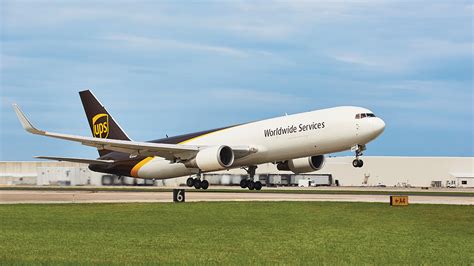
Avionics Upgrades Keep Old Aircraft Technologically Relevant
While airframes can last for decades, avionics technology evolves rapidly. To bridge this gap, UPS has invested heavily in cockpit modernization programs that effectively reset the technological clock on its older aircraft. A prime example is the comprehensive upgrade of the Airbus A300 fleet, which replaced legacy analog systems with modern Honeywell avionics and full LCD flight displays.
These upgrades ensure compliance with modern airspace requirements, improve situational awareness for pilots, and enhance integration with global air traffic management systems. More importantly, they extend the operational relevance of the aircraft by at least another decade. Airbus itself has indicated that such retrofits can significantly prolong service life, provided the underlying structure remains sound.
By treating the airframe as a permanent platform and the internal systems as modular components, UPS avoids the need for wholesale fleet replacement. This approach preserves capital while maintaining access to the most congested and technologically demanding airspaces in the world.
Fuel Costs Matter Less When Aircraft Sit Idle
Fuel is often cited as the primary reason airlines modernize their fleets, and for high-utilization passenger carriers, this is true. Fuel can account for 25 to 30 percent of operating costs, making efficiency gains critical. UPS, however, operates under different conditions.
Because its aircraft spend 12 to 16 hours per day on the ground, the relative importance of fuel efficiency diminishes. An older widebody that burns more fuel per hour but flies fewer hours per day can still be cheaper to operate overall than a new aircraft with high fixed costs. In effect, UPS trades higher variable costs for dramatically lower fixed costs—a trade that consistently favors older aircraft in its network.
This dynamic also explains why UPS has been cautious about introducing large numbers of new-build freighters. Unless utilization increases significantly, the financial benefits of newer technology remain marginal compared to the stability of a fully depreciated fleet.
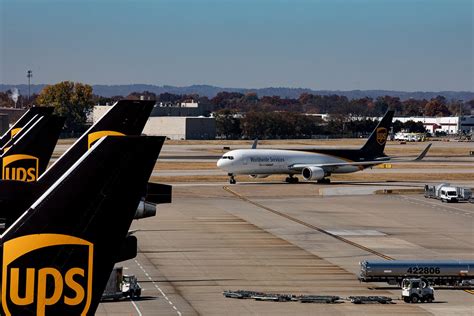
The MD-11 Case Highlights the Risks of Aging Fleets
While the strategy of operating older widebodies has proven successful, it is not without risk. The McDonnell Douglas MD-11 fleet illustrates the limits of the buy-and-hold model. Following a high-profile cargo incident in Louisville in late 2025, UPS grounded its remaining MD-11s for extensive inspections, disrupting operations and highlighting the vulnerability of aging tri-engine aircraft.
As aircraft age, unscheduled groundings become more likely, particularly when spare parts for legacy engines grow scarce. Manufacturers increasingly focus on supporting new-generation platforms, making components for older models harder to source and more expensive. When a grounding event affects a critical hub, the ripple effects can delay hundreds of thousands of time-sensitive shipments.
At a certain point, the cost of operational disruption and reputational risk can outweigh the savings from low ownership costs. The MD-11 situation underscores the importance of continuously reassessing fleet economics rather than assuming older is always better.
Competitive Contrast: UPS Versus Amazon Air and FedEx
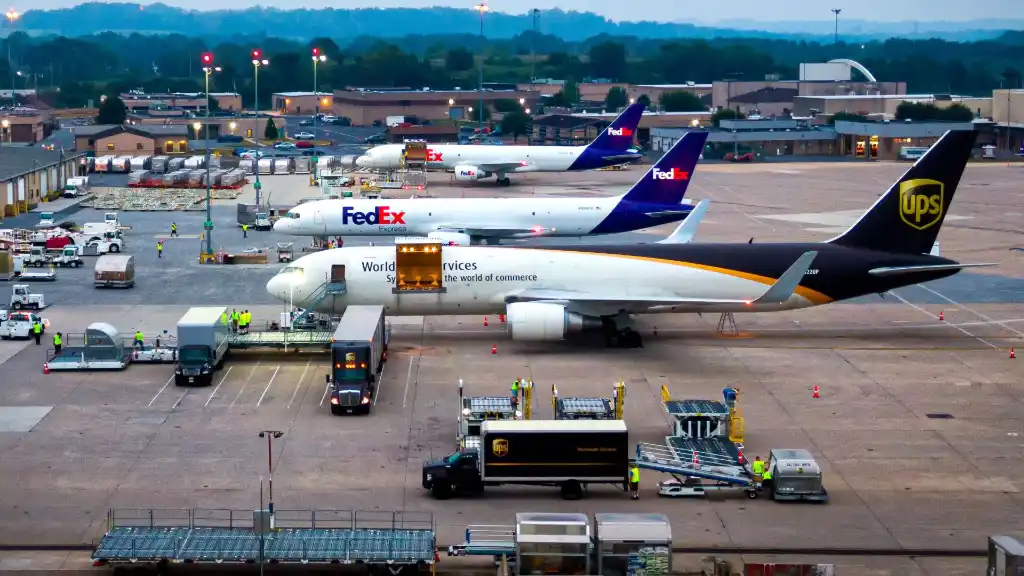
Comparing UPS to its competitors reveals how distinct its strategy truly is. Amazon Air has pursued an asset-light model, leasing relatively newer Boeing 737-800s and 767s to scale rapidly. This approach offers flexibility and quick expansion but comes with high recurring lease costs that persist regardless of economic conditions.
FedEx Express, by contrast, has invested heavily in fleet modernization, operating one of the youngest cargo fleets among the major carriers. The benefits include lower fuel burn and reduced emissions, but the trade-off is massive capital expenditure on factory-fresh freighters like the 777F.
UPS occupies a middle ground, but one firmly tilted toward ownership and longevity. By owning over 90 percent of its fleet outright, UPS insulates itself from lease market volatility and maintains financial resilience during downturns. The older fleet is not a sign of stagnation; it is a buffer against economic shocks.
Carbon Pressure and the Limits of Legacy Aircraft
Environmental considerations are beginning to challenge the long-term viability of older widebodies. As global carbon taxes tighten and sustainability reporting becomes more stringent, fuel efficiency gains translate directly into financial savings. Newer aircraft also offer compatibility with higher blends of sustainable aviation fuel (SAF), an area where older engines may face technical limitations.
UPS has acknowledged these pressures by selectively introducing newer aircraft where they make sense, particularly on longer-haul routes where utilization is higher. However, a full-scale replacement of legacy fleets remains unlikely in the near term. The company continues to weigh environmental costs against capital discipline, favoring incremental modernization over sweeping change.
Why the Strategy Still Works—and When It Won’t
UPS Airlines relies on older widebody aircraft because its business model rewards low ownership costs, predictable utilization, and long-term asset value. By aligning fleet strategy with operational reality, UPS has turned aging airframes into some of the most productive assets in global logistics.
The success of this approach depends on three critical conditions: rigorous maintenance, reliable access to spare parts, and a network structure that does not demand constant utilization. As long as these conditions hold, older widebodies will continue to outperform newer alternatives on a cost-per-package basis.
However, the strategy is not immutable. Supply chain constraints, regulatory shifts, and high-profile safety events can rapidly alter the calculus. The gradual transition toward aircraft like the Boeing 767-300F and, eventually, the 777-8F suggests that UPS understands the need for evolution, even as it defends the economic logic of its current fleet.
In the end, the reliance on older widebody aircraft is not about resisting change. It is about deploying capital where it delivers the greatest return. For UPS Airlines, the most valuable aircraft are not the newest ones on the ramp, but the ones that quietly deliver millions of packages on time, night after night, without draining the balance sheet.