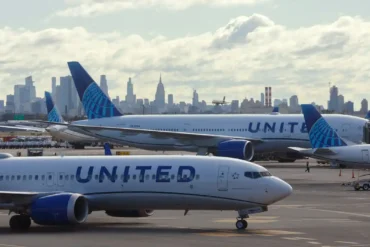
Global aviation rarely rewards uncertainty. Wars, geopolitical flashpoints, and sudden airspace closures normally send airline executives into defensive mode as fuel prices surge and route networks fracture. Yet amid the ongoing disruptions tied to the 2026 Middle East aviation crisis, one carrier appears to be navigating the turbulence with unusual confidence: United Airlines.
Instead of scrambling to adapt, the Chicago-based airline is quietly benefiting from a convergence of financial preparedness, network positioning, and shifting traveler behavior. While competitors reroute aircraft and absorb mounting operational costs, United’s strategic decisions made years earlier are now creating a subtle but meaningful competitive advantage.
The dynamics unfolding in global aviation reveal a fascinating truth about airline economics: resilience during crises often determines who gains market share when the skies stabilize.
Financial Resilience Gives United Airlines Strategic Stability
When airlines talk about preparation, they usually mean operational contingency plans. United went further. According to CEO Scott Kirby, the airline has spent years building a balance sheet designed to withstand severe geopolitical shocks.
The most striking number in this strategy is liquidity. United currently holds roughly $17 billion in cash reserves, an enormous cushion in an industry historically defined by thin margins and heavy debt. That war chest provides protection against one of aviation’s most dangerous threats: fuel price volatility.
Jet fuel represents one of the largest costs for airlines. When geopolitical conflict threatens oil supply routes, prices can spike dramatically. Airlines with weak liquidity must either cut capacity, raise fares sharply, or take on more debt. United, by contrast, has enough cash to continue operating even under extreme oil price scenarios.
In practical terms, this financial buffer allows the airline to maintain operational stability while competitors struggle to contain rising costs. Stability matters enormously during crises, because travelers gravitate toward airlines they believe will maintain schedules and avoid last-minute cancellations.
The philosophy behind United’s preparation reflects a broader strategic principle in aviation: crises often redistribute market power rather than simply damaging the industry as a whole.
How Middle East Airspace Disruptions Are Reshaping Global Routes
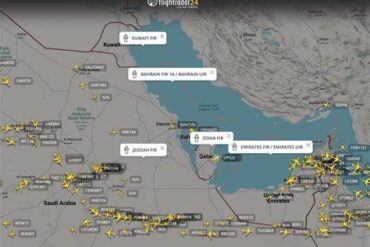
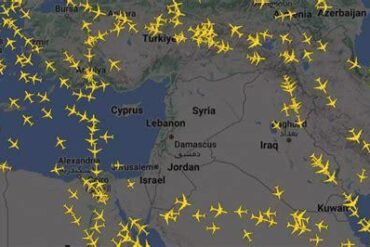
The current aviation disruption stems from escalating tensions involving Iran and the resulting closure or restriction of major portions of Middle Eastern airspace. For airlines operating between Europe and Asia, these corridors are critical. Losing access forces aircraft onto longer routes that burn more fuel and increase flight times.
For carriers heavily dependent on those corridors—particularly several European and Asian airlines—the impact is immediate. Flights must detour thousands of miles north or south, pushing operational costs higher and disrupting carefully optimized schedules.
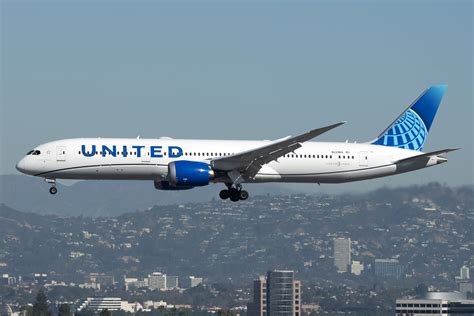
United Airlines, however, has relatively limited direct exposure to Middle Eastern airspace within its long-haul network. Its transatlantic focus and extensive North American connectivity mean many of its routes bypass the affected regions entirely.
That network structure now provides a subtle but powerful advantage. While competitors grapple with rerouting logistics, United continues operating much of its international network with minimal disruption.
This difference highlights a key reality of global aviation: geography can be as strategic as finance.
Passenger Behavior Is Quietly Shifting Toward United
Airline demand often reacts quickly to geopolitical uncertainty. Travelers—particularly corporate clients—prefer itineraries that avoid perceived risk zones. Even if flights remain technically safe, the mere presence of conflict along a route can influence booking decisions.
Recent booking data suggests this psychological shift is already underway. United recently recorded its strongest single day of ticket sales in company history, a remarkable milestone during a period of global instability.
The surge reflects a growing trend among passengers:
- Choosing routes that avoid Middle Eastern airspace
- Favoring airlines with stable operations and predictable schedules
- Preferring North American transit hubs over potentially disrupted regions
United’s extensive hubs in cities such as Chicago, Newark, Denver, and San Francisco create convenient alternatives for travelers who might otherwise transit through Middle Eastern or Eurasian gateways.
Network Scale Creates Competitive Momentum
Aviation networks behave like ecosystems. When disruptions shift traffic patterns, the largest and most diversified networks tend to capture the displaced demand.
United’s international footprint spans North America, Europe, Asia, and Latin America, enabling it to reroute passengers efficiently while maintaining connectivity across its system. Even when passengers change their itineraries to avoid certain regions, United can often accommodate them without losing the booking entirely.
That capability generates a powerful feedback loop:
- Travelers choose United for perceived reliability.
- Higher bookings increase aircraft utilization.
- Greater utilization strengthens profitability during disruptions.
Competitors facing higher fuel costs and longer routes may struggle to match fares or maintain capacity. Over time, this imbalance can shift market share toward the most resilient carriers.
Industry Turbulence Often Rewards the Strongest Airlines
Aviation history offers several examples of crises reshaping the competitive landscape. Volcanic eruptions, pandemics, and sudden airspace closures frequently accelerate consolidation within the industry.
Airlines with strong finances often emerge stronger because they can maintain investment while competitors retrench. Opportunities may include expanding routes, capturing abandoned market share, or acquiring valuable airport assets.
Airport gates, in particular, represent a strategic prize. At congested global hubs, gate access is tightly controlled and extremely valuable. When financially weaker airlines reduce operations, well-capitalized competitors can move quickly to secure these positions.
United’s leadership has repeatedly emphasized that liquidity provides flexibility, allowing the airline to respond rapidly to industry shifts that occur during crises.
Preparedness Is Turning Crisis Into Opportunity
Geopolitical shocks rarely benefit airlines in the short term. Fuel costs rise, flight times lengthen, and uncertainty unsettles travelers. Yet the current Middle East airspace disruption illustrates how preparation can transform adversity into strategic advantage.
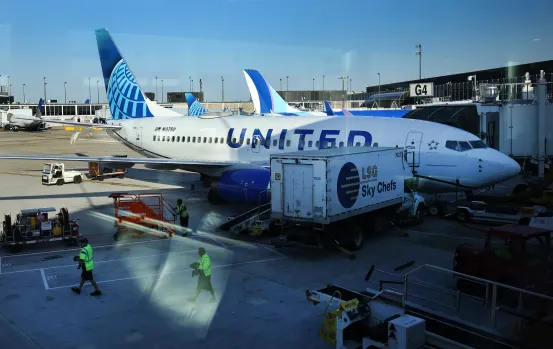
United Airlines entered the crisis with substantial cash reserves, diversified global routes, and limited exposure to the affected airspace corridors. Those factors now position the airline to capture demand from passengers seeking stability and reliability.
Whether the disruption lasts weeks or evolves into a prolonged geopolitical standoff remains uncertain. Aviation markets can shift rapidly as governments reopen airspace or conflicts de-escalate.
For now, however, the evidence is clear. Record bookings, financial resilience, and favorable network geography have placed United in a position many airlines rarely enjoy during global crises.
In the volatile world of aviation, the carriers that prepare for chaos often become the ones best equipped to profit from it.