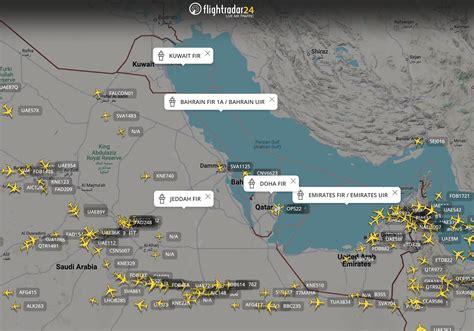
On February 28, 2026, a swift and unexpected shutdown of major Middle Eastern airspace caused a significant ripple effect across the global aviation industry. The closure, triggered by US and Israeli airstrikes on Iran followed by rapid retaliation, led to widespread flight disruptions that impacted both passengers and airlines for hours. The shutdown of airspace by countries such as Iran, Iraq, Kuwait, Bahrain, and Qatar caused dozens of long-haul flights to divert, turn back, or remain airborne for extended periods, some reaching up to 14 hours. This unprecedented event exposed the vulnerabilities in global flight operations and highlighted the immense dependence on the Middle East as a crucial aviation hub.
Unprecedented Airspace Closures Disrupt Global Aviation Routes
The Middle East has long been a critical junction for international flights, with major hubs like Dubai International Airport (DXB) and Doha Hamad International Airport serving as essential links between Europe, Asia, and Africa. The airspace shutdown, however, grounded much of this infrastructure as airlines scrambled to adjust their routes. The closure was prompted by escalating tensions in the region, following a coordinated attack by the US and Israel on Iranian military targets. In retaliation, Iran closed its airspace, while Iraq, Kuwait, Bahrain, and Qatar quickly followed suit, effectively isolating the region’s airports from the international aviation network.
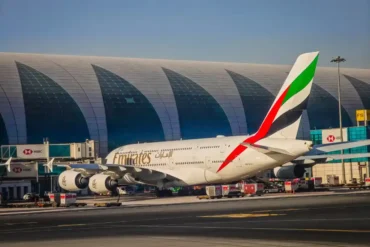
Among the most notable flight disruptions was Emirates Flight 220, which was en route from Orlando International Airport (MCO) to Dubai. This flight spent around 14 hours in the air, only to be forced to divert after exhausting all fuel options. Similarly, American Airlines Flight 120, originating from New York’s John F. Kennedy International Airport (JFK), was airborne for approximately 13 hours before returning to the US. These cases, while extreme, were not isolated. Flights from major carriers like Qatar Airways also found themselves forced to turn back, with travelers stuck mid-flight for hours on end.
Airline Responses and Impact on Passengers
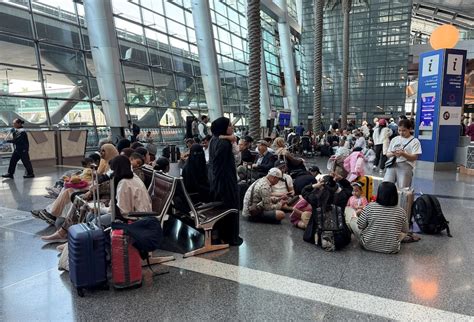
The operational collapse in the Middle East caused an immediate strain on airlines, many of which had no choice but to halt services to and from the affected airports. Emirates suspended most of its network, while Qatar Airways paused all services to Doha, warning passengers that delays would continue even after the airspace reopened. Dubai International, one of the busiest airports in the world, also ceased operations entirely, further exacerbating the crisis. Passengers found themselves stranded in airports with no clear timeline for resumption of flights, adding to the uncertainty and confusion.
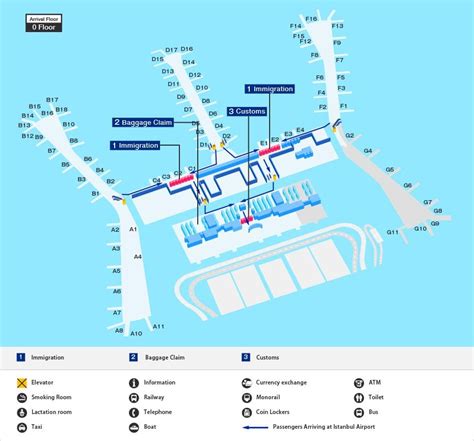
The ripple effect of these closures extended far beyond the Middle East. Major European and Asian routes, which typically rely on Gulf hubs for connection, saw major delays and diversions. With Muscat and Istanbul emerging as common diversion destinations, passengers were often left with no option but to disembark in airports unfamiliar with handling large numbers of wide-body jets. As rebooking and onward travel became complicated, passengers faced considerable disruptions. In many cases, flight connections were missed, and travelers found themselves stranded at airports with no onward flights or clear rebooking options.
The Operational Chaos for Airlines and Airports
Airlines were faced with logistical challenges as they attempted to manage an unprecedented wave of cancellations and diversions. Some airlines had to rebook passengers on flights that were already full, creating additional challenges in securing available seats for passengers. Meanwhile, airports not equipped to handle large surges in passenger traffic quickly became overcrowded, straining resources meant for a much smaller volume of travelers. With limited ground transport and hotel availability, many passengers were forced to wait in chaotic conditions as the situation unfolded.
In addition to the operational chaos, the timing of the airspace shutdown also posed significant problems. Airlines operating in the region were already grappling with the residual impacts of the Russia-Ukraine conflict, which had already forced longer detours in European airspace. This meant that flights passing through the region were already restricted, and the sudden airspace closure compounded delays. For some passengers, the combination of unexpected diversions and crowded airports meant that they were effectively stranded with little to no information about when they might be able to resume their journeys.
The Ripple Effect on Global Aviation Infrastructure
The rapid escalation in the Middle East not only disrupted individual flights but also highlighted the fragility of global aviation infrastructure. Major Gulf hubs serve as vital connecting points for international travelers, and the sudden closure of their airspace crippled the ability of airlines to move passengers across key global routes. The chaos caused by these closures was compounded by a wave of frustrated travelers attempting to track the status of their flights using flight-tracking platforms.
As the airspace closures unfolded, millions of people flocked to popular flight-tracking websites to witness the developments in real time. However, these platforms quickly became overwhelmed by the surge in traffic, leading to slow loading times and error messages. Flight-tracking site engineers worked tirelessly to resolve the issue, but the overwhelming demand showed just how reliant the public had become on these digital tools to monitor such large-scale disruptions. With thousands of flights affected, including those bound for other regions, the global aviation community was forced to confront the consequences of this unprecedented shutdown.
The Passenger Experience: Fatigue and Uncertainty
For the passengers caught in the middle of this chaos, the experience was grueling and frustrating. Travelers who had spent hours in the air only to be diverted were faced with the uncertainty of their immediate future. Many found themselves dropped off in unexpected destinations with no clear pathway forward. Some passengers on Qatar Airways flights found themselves in Rome, while others on Emirates were sent to Istanbul. These passengers had to navigate new visa and entry requirements, sometimes without access to their checked baggage or medications. This added a layer of difficulty to an already stressful situation.
Airlines and airports attempted to mitigate the chaos by deploying extra staff to assist with rebooking and providing accommodations. However, the logistical challenges were immense. Travelers who had been stranded for hours on end, many of whom had already been delayed for days due to the crisis, faced an uncertain future. While airlines and airports made efforts to accommodate affected passengers, the impact on their experiences was undeniable.
The Aftermath: A Wake-Up Call for Global Aviation
As the dust settled and airspace began to reopen, the full extent of the disruption became clearer. An estimated 870 flights out of 3,400 scheduled flights in the region were canceled, with another 145 diverted to 73 different airports. The chaos highlighted the vulnerability of global air traffic corridors and the interconnectedness of international flight operations. This crisis, fueled by geopolitical instability, served as a wake-up call for the aviation industry. It underscored the importance of maintaining stable airspace access, particularly in regions that serve as critical junctions for international flight networks.
As the aviation community works to recover from the disruption, the event will likely spark discussions about contingency planning, regional security, and the resilience of global air traffic infrastructure. While the immediate impacts of this airspace shutdown will eventually fade, the lessons learned will continue to shape the future of air travel in an increasingly unpredictable world.