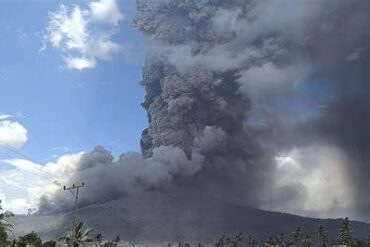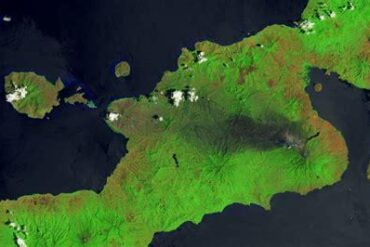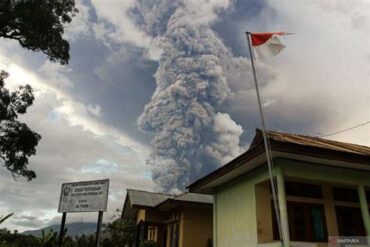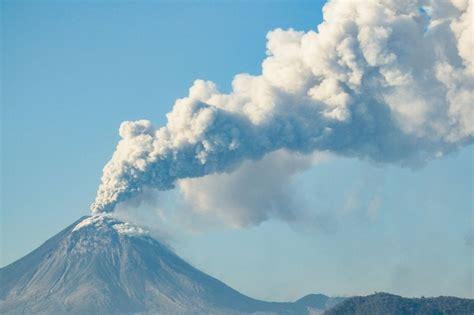
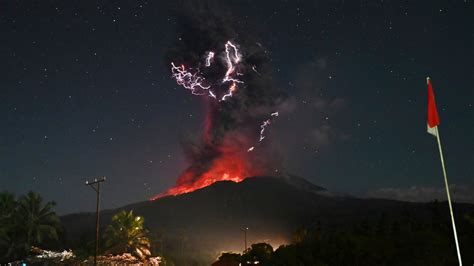
The recent eruption of Mount Lewotobi Laki-laki, situated in the East Nusa Tenggara province of Indonesia, has unleashed a wave of travel disruptions that has significantly impacted air travel across the region. On Tuesday, the volcano spewed ash approximately 11 kilometers (7 miles) into the atmosphere, prompting the Indonesian government to elevate its alert level to the highest tier. This volcanic activity has led to a cascade of flight cancellations and delays, stranding thousands of passengers and compelling authorities to implement urgent safety measures.
On Wednesday, the situation escalated as Mount Lewotobi Laki-laki erupted once more, releasing a 1-kilometer (0.62-mile) high ash cloud, raising alarms among local residents and the aviation sector alike. The repercussions of this natural disaster extend far beyond the immediate vicinity of the eruption, with volcanic ash drifting over multiple areas of Indonesia, affecting major tourist hubs and international travel corridors.
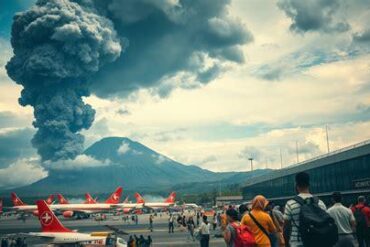
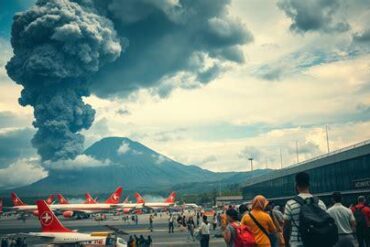
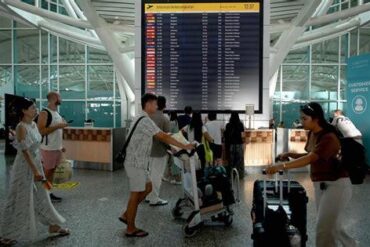
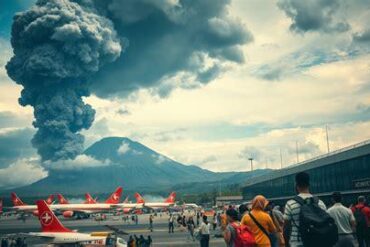
As reported by Indonesia’s Ministry of Transportation, at least 26 flights—both international and domestic—have been delayed or cancelled due to the eruption. This disruption has left over 14,000 passengers stranded or unable to reach their destinations. Key routes connecting Bali, one of Indonesia’s premier tourist destinations, to international locations such as India, Singapore, and Australia have been severely affected. Bali’s Denpasar International Airport, a crucial gateway for travelers heading to the island, confirmed the suspension of numerous flights, including those operated by Singapore Airlines, AirAsia, and Qantas’ budget carrier JetStar.
Impact on Major Airlines
Singapore Airlines has publicly acknowledged the cancellation of four flights between Bali’s Denpasar Airport and Singapore. Their budget subsidiary, Scoot, has also halted operations to both Bali and the nearby island of Lombok. These cancellations have created significant challenges for passengers attempting to complete their travel itineraries, with airlines struggling to accommodate those affected by the disruptions. JetStar, a low-cost airline under the Qantas umbrella, also announced multiple cancellations of morning flights from Australia to Bali. The airline has cautioned travelers about potential delays in afternoon services, attributing this uncertainty to the ongoing impact of the ash cloud on air travel. In a midday travel bulletin, JetStar encouraged passengers to remain vigilant and monitor flight status updates for the most current information.
AirAsia Flight Disruptions
AirAsia, which operates extensively in both Malaysia and Indonesia, has not been spared from the tumultuous effects of the eruption. Several flights traveling to and from Bali, Lombok, and Labuan Bajo have either been cancelled or rescheduled. The airline has communicated to its passengers that the unpredictable nature of air travel due to volcanic ash is causing significant disruptions, and it is striving to minimize delays while prioritizing passenger safety. The ash cloud’s presence has rendered it impossible for airlines to maintain regular schedules, leading AirAsia to work diligently on rescheduling flights wherever feasible.
Airport Closures and Evacuations
In response to the crisis, local authorities in East Nusa Tenggara have closed three airports, including Fransiskus Xaverius Seda Airport in Maumere, as a precautionary measure aimed at safeguarding passenger safety. These airport closures are expected to persist from Wednesday through Thursday while officials evaluate the safety risks associated with the volcanic activity. The Ministry of Transportation has emphasized that these closures are essential for preventing accidents and mitigating risks posed by volcanic ash clouds, which can inflict severe damage on aircraft engines and disrupt overall airport operations.
While the focus has predominantly been on air travel disturbances, the eruption of Mount Lewotobi Laki-laki has also profoundly affected communities residing near the volcano. Local authorities have been compelled to evacuate residents from two villages located in the immediate vicinity of the eruption, as part of a broader emergency response initiative designed to protect lives and mitigate harm stemming from volcanic activity. Reports indicate that the streets of the two affected villages are now blanketed with thick layers of ash, gravel, and sand. Thankfully, no casualties have been reported thus far; however, the situation remains fluid, and efforts are ongoing to ensure that all affected residents are safely relocated to designated shelters.
The fallout from the eruption has severely disrupted daily life, with numerous local businesses and public services temporarily suspended. Agriculture has not escaped the impact either, as crops have been coated in falling volcanic debris. Although the long-term ramifications on the local economy are yet to be determined, the immediate priority remains the safety of both residents and travelers affected by the eruption.
The Government’s Response
In light of the ongoing crisis, the Indonesian government has been closely monitoring the situation, deploying emergency response teams to the affected regions. The country’s National Disaster Mitigation Agency (BNPB) has maintained constant communication with local authorities to ensure that all necessary safety measures are effectively implemented. In addition to facilitating evacuations, the BNPB is providing vital assistance to those displaced by the eruption, including shelter, food, and medical support. Furthermore, Indonesia’s Volcanology and Geological Disaster Mitigation Center (PVMBG) continues to issue regular updates on volcanic activity. Experts advise residents living near Mount Lewotobi Laki-laki to remain on high alert, as the possibility of further eruptions looms. They caution that the volcano may remain active for an extended period, with ongoing monitoring of seismic activity and ash emissions to deliver the most accurate and timely information possible.
Ongoing Travel Disruptions and Safety Concerns
As the volcanic eruptions persist, travelers are urged to stay informed regarding the status of their flights and to maintain flexibility in their travel arrangements. Airlines and airports are diligently working to restore normal operations; however, the unpredictability caused by the volcanic activity complicates any attempts to forecast when air travel will return to normalcy. It is strongly advised that travelers check directly with their airlines for the latest updates, as the likelihood of continued flight cancellations and delays remains until the ash cloud dissipates and volcanic activity subsides. Meanwhile, authorities continue to prioritize the safety of both local populations and tourists, with efforts ongoing to manage this crisis effectively.
Conclusion
The eruption of Mount Lewotobi Laki-laki has instigated widespread disruption across East Nusa Tenggara, resulting in substantial impacts on air travel and local communities. While government agencies and airlines are working tirelessly to navigate this complex situation, the volcanic activity presents an ongoing threat that demands vigilance from all involved. As these eruptions continue, the paramount focus remains on safeguarding the lives of those affected by this natural disaster, with emergency measures in place to protect residents and ensure the eventual restoration of air travel once the volcanic activity diminishes.