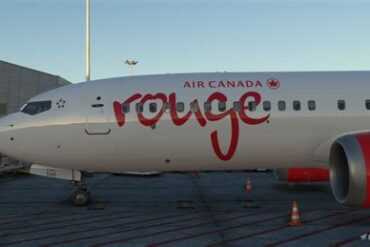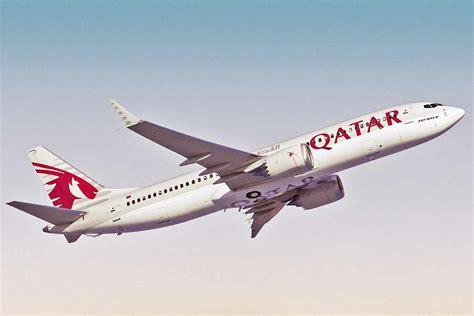
In a decisive move that reshapes the narrowbody fleet strategy of one of the world’s most influential carriers, Qatar Airways has officially terminated its entire Boeing 737 MAX 10 order, opting instead to double down on the Airbus A321neo family as the foundation of its short- and medium-haul operations. This bold step comes amid prolonged certification delays surrounding Boeing’s troubled narrowbody aircraft and marks a renewed alliance with Airbus following the resolution of a long-standing dispute.
This high-stakes pivot reflects more than a preference for one aircraft type over another—it encapsulates Qatar Airways’ sharpened focus on performance certainty, delivery reliability, and network efficiency as it charts a course for aggressive regional and global growth.
Breaking Ties with the Boeing 737 MAX 10: A Pragmatic Retreat
Qatar Airways’ decision to walk away from the Boeing 737 MAX 10 program represents one of the most high-profile rejections of the model to date. The airline had previously committed to 25 aircraft with options for an additional 25, a deal initially intended to shore up narrowbody capacity following a rift with Airbus.
However, persistent delays in the aircraft’s certification—pushing its likely entry into service to 2026 or later, and some forecasts suggesting 2027 or beyond—made the prospect untenable for an airline that prizes operational precision. In a commercial landscape where timing, flexibility, and reliability are non-negotiable, the uncertainties plaguing the MAX 10 rendered it a risk Qatar Airways was no longer willing to take.
The cancellation eliminates dependency on an aircraft whose timeline is increasingly ambiguous and allows the airline to consolidate its fleet with a trusted, proven airframe: the Airbus A321neo.
Realigning Strategy: Embracing the Airbus A321neo for Regional Dominance
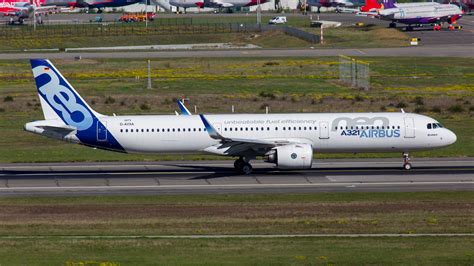
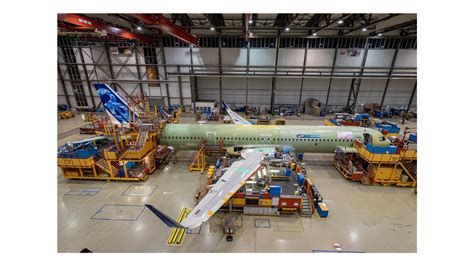
Qatar Airways’ renewed confidence in Airbus manifests in the reinstatement of a substantial order for 50 Airbus A321neo aircraft, including 10 A321LR variants. Deliveries are scheduled to begin in 2026, coinciding with the airline’s broader regional expansion initiatives. This fleet renewal signals more than a simple equipment swap—it’s a comprehensive strategic realignment.

The A321neo has rapidly become the benchmark for next-generation narrowbody aircraft, prized for its fuel efficiency, extended range, and versatile cabin configurations. For Qatar Airways, the model provides a tailored solution that supports:
- Expanded flight frequencies on key regional routes
- Entry into underserved secondary markets
- Lower per-seat operating costs
- Reduced environmental footprint
By standardizing around a single narrowbody manufacturer, the airline achieves greater cohesion in crew training, parts inventory, technical support, and maintenance operations, all of which are crucial to maintaining its hallmark punctuality and service excellence.
Strategic Benefits of the A321neo and A321LR
The decision to include both the standard A321neo and the longer-range A321LR allows Qatar Airways to fine-tune its network with precision and flexibility. While the A321neo excels on high-density short routes across the Middle East, North Africa, and South Asia, the A321LR opens new opportunities to fly longer regional sectors, such as deep into Central Asia or Eastern Europe, without the cost burden of a widebody.
The A321LR’s range of up to 4,000 nautical miles makes it a game-changer for point-to-point service, especially in thin markets that lack the traffic to support a Boeing 787 or Airbus A350 but remain strategically vital for business and diplomatic connectivity.
Moreover, the A321neo’s capability to accommodate over 200 passengers in a high-density layout or offer premium seating in two-class configuration gives the airline room to adapt to varying demand profiles.
Operational Synergy at Hamad International Airport
This realignment significantly impacts Qatar Airways’ operations at Hamad International Airport, its global hub in Doha. With a unified Airbus narrowbody fleet, the airline can optimize:
- Gate and terminal planning
- Aircraft utilization
- Flight crew scheduling
- Maintenance cycles
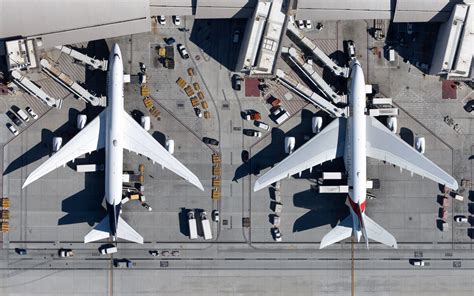
Such streamlining translates directly into cost savings, on-time performance, and enhanced passenger experience—hallmarks of Qatar Airways’ brand promise. As the airline expands its frequency-driven model in the region, consistent fleet performance becomes a cornerstone of network integrity.
Boeing Still Essential: Widebody Commitments Continue
It is crucial to underscore that Qatar Airways’ pivot away from the 737 MAX 10 does not signal an across-the-board departure from Boeing. In fact, the airline remains deeply committed to Boeing’s widebody offerings, having placed a monumental order for up to 210 aircraft, including:
- 130 Boeing 787 Dreamliners
- 30 Boeing 777-9s
- Options for 50 more widebodies
These aircraft underpin Qatar Airways’ long-haul aspirations, enabling routes from Doha to the Americas, Australasia, and Africa with unmatched fuel efficiency, comfort, and capacity. The Dreamliner’s composite fuselage, low noise profile, and long range make it ideal for high-demand intercontinental travel, while the 777X series promises to push performance benchmarks further.
This bifurcated fleet strategy—Airbus for narrowbody, Boeing for widebody—allows the airline to leverage each manufacturer’s core competencies without compromise.
Revisiting the Past: From Dispute to Reconciliation with Airbus
Qatar Airways’ relationship with Airbus has not been without turbulence. In 2021, a very public dispute over surface degradation on the A350 led to the cancellation of several aircraft orders and the airline’s brief foray into Boeing’s narrowbody portfolio.
But following a legal settlement and diplomatic rapprochement, the two aviation giants are once again aligned. The A321neo order signals the restoration of trust and represents one of the most significant reconciliations in recent aviation history.
This renewed partnership not only stabilizes the airline’s fleet planning but also sends a strong message to the industry: Qatar Airways values technical excellence, delivery discipline, and long-term collaboration above all.
Fleet Composition: Present and Future
Qatar Airways’ current narrowbody roster consists primarily of:
- 27 Airbus A320s, configured for 132–144 passengers
- 3 Boeing 737 MAX 8s, each seating 176 passengers
These 737 MAX 8s—acquired during the Airbus impasse—are likely to be retired or repurposed, given the airline’s directional shift. Their presence in the fleet is now an operational anomaly.
Looking ahead, the future fleet will be dominated by:
- 40 Airbus A321neos
- 10 Airbus A321LRs
- Deliveries commencing from 2026
This transition ensures the airline maintains one of the youngest, most efficient narrowbody fleets in global aviation. It also aligns Qatar Airways with evolving regulatory and sustainability standards as governments and consumers demand lower carbon emissions and cleaner air travel.
Future Airbus Orders: A350 and A330neo Under Consideration
While the Airbus narrowbody orders are locked in, discussions are ongoing within Qatar Airways regarding further widebody acquisitions from Airbus. Options under review include:
- Additional A350-1000s to bolster premium long-haul services
- The Airbus A330-900neo as a potential replacement for aging A330s in the medium-haul category
Such acquisitions would enhance network resilience and reflect the airline’s evolving sustainability strategy, taking advantage of newer engines, lighter airframes, and noise-reducing technologies that improve passenger comfort and environmental performance.
A Forward-Thinking Blueprint for Competitive Edge
Qatar Airways’ strategic maneuver underscores a forward-thinking blueprint: minimize complexity, maximize reliability, and align aircraft choice with route economics. The cancellation of the Boeing 737 MAX 10 order is not an indictment of Boeing as a manufacturer, but a tactical decision rooted in pragmatism, operational certainty, and fleet harmonization.
By placing its narrowbody future in Airbus’ hands while retaining Boeing’s prowess for intercontinental expansion, the airline has created a best-of-both-worlds scenario that ensures capacity, flexibility, and responsiveness to market dynamics.

This landmark decision will likely ripple across the global aviation sector, prompting peers to scrutinize their own fleet strategies as the race to modernize intensifies.
Conclusion: Certainty Over Optimism
In the aviation world, hope is not a strategy—performance is. Qatar Airways’ exit from the Boeing 737 MAX 10 program and its embrace of the Airbus A321neo reflects a leadership mindset that prizes action over ambiguity.
With its fleet plan now realigned around aircraft that deliver today—not years from now—the airline is well-positioned to lead the next era of premium regional aviation, strengthen its global footprint, and uphold the reliability its passengers and partners have come to expect.
This pivot is not merely about replacing metal in the sky. It’s about setting a foundation for sustainable, strategic, and scalable growth in an era where the margin for uncertainty is razor-thin—and every delivery counts.