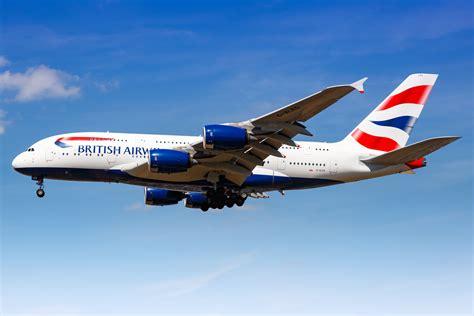
British Airways remains one of aviation’s most intriguing outliers. While much of the industry quietly stepped away from the Airbus A380, the airline has doubled down on the aircraft’s strengths, shaping its long-haul strategy around routes that can truly absorb its scale. In 2026, that philosophy becomes sharper, more disciplined, and more revealing. The A380 is no longer a symbol of unchecked expansion, but a precision tool deployed where demand, yield, and slot scarcity converge.
The result is a compact yet potent network that tells a story about where British Airways sees its future premium traffic, how it manages operational risk, and why the superjumbo still matters in a world obsessed with smaller, more flexible widebodies. Understanding where British Airways will fly its Airbus A380s in 2026 offers a rare glimpse into how one of Europe’s flagship carriers is rewriting the rulebook for the world’s largest passenger aircraft.
British Airways ordered twelve Airbus A380s in 2007, entering service as the third European operator of the type. Every one of those aircraft remains active today, a distinction that sets the airline apart from peers that retired or parted out their fleets. With an average fleet age just over eleven years, these jets sit comfortably in the middle of British Airways’ long-haul age profile, neither legacy relics nor shiny newcomers. Their continued presence is not nostalgic stubbornness; it is a calculated decision rooted in capacity economics and premium demand.
The A380’s role inside British Airways has narrowed with time, but it has also grown more intentional. Rather than scattering the aircraft across a sprawling route map, the airline now concentrates them on a small number of sectors where their size is an asset rather than a liability. That shift defines the 2026 schedule and explains both what is included and what has quietly disappeared.
British Airways and the Airbus A380: A Fleet with a Purpose
British Airways’ relationship with the Airbus A380 has matured into something pragmatic and unsentimental. Each aircraft has logged between roughly 33,500 and 44,000 flight hours, a level of utilization that reflects steady, disciplined deployment rather than aggressive cycling. About half the fleet is fully owned, while the remainder sits under various financing structures, giving the airline flexibility without forcing an early exit.
In a fleet that ranges from decades-old Airbus A319s to near-new Airbus A350s and Boeing 787-10s, the A380 occupies a unique middle ground. It is large, complex, and undeniably expensive to operate, yet it delivers something no other aircraft in the fleet can replicate: massive capacity paired with a deeply premium-heavy cabin mix. That combination is the foundation of its survival.
British Airways has quietly accepted that the A380 is not a general-purpose long-haul aircraft. It thrives only on routes with stable, predictable demand and a high concentration of premium travelers. The 2026 route map reflects that reality with almost brutal clarity.
The Core A380 Network British Airways Will Operate in 2026
In 2026, British Airways will deploy its Airbus A380s on just seven long-haul routes from London Heathrow. Each destination earns its place through a blend of passenger volume, premium yield, and strategic importance. This is not a list built on novelty or experimentation; it is a roster of confidence markets.
The selected destinations are Johannesburg, Miami, San Francisco, Los Angeles, Boston, Dallas–Fort Worth, and Dubai. Every one of these cities represents a market where British Airways can reliably fill nearly five hundred seats without resorting to heavy discounting. Several also sit behind slot-constrained airports, where upgauging is often the only practical way to grow.
Johannesburg and Miami stand out immediately. Both routes are scheduled to receive twice-daily A380 service, making them the most intensive users of the aircraft in the network. This level of commitment signals extraordinary confidence in year-round demand, particularly in premium cabins.
San Francisco and Los Angeles follow closely behind. San Francisco will see a daily A380, supported by an additional daily Boeing 777-300ER, while Los Angeles combines a daily A380 with two daily 777-300ER flights. These West Coast routes are among British Airways’ most lucrative, blending technology-driven business travel with high-end leisure demand.
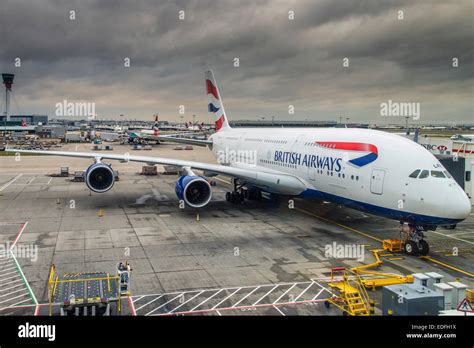
Dubai, by contrast, is a shorter but strategically vital sector. One daily A380 flight is complemented by two Boeing 787 services, balancing capacity with frequency in a market that feeds both premium point-to-point traffic and onward connections.
Boston and Dallas–Fort Worth round out the list, with A380 services scheduled to resume later in 2026 rather than at the start of the year. Their inclusion underscores how selective the network has become; even strong transatlantic markets must prove they can sustain the aircraft’s scale.
Why the 2026 A380 Network Is Smaller but Stronger Than Before
Compared with 2025, the 2026 A380 network is more concentrated and deliberately smaller. Two notable routes, Washington Dulles and Singapore, have been removed from the schedule. Both previously hosted regular A380 service, and both generated substantial seat capacity. Their absence is telling.
On paper, Washington and Singapore look like natural A380 markets. In practice, they exposed the aircraft’s weaknesses. Filling nearly five hundred seats day after day leaves little room for seasonal swings, geopolitical disruptions, or competitive shifts. When demand softens, the A380 magnifies the problem.
By pulling the aircraft from these routes, British Airways reduces its exposure to volatility. Smaller widebodies can absorb fluctuations with far less financial pain, even if they sacrifice raw capacity. This is not a retreat; it is a refinement of risk management.
The airline has learned that the A380 works best when everything aligns: demand must be deep, consistent, and premium-heavy. When those conditions are not guaranteed, flexibility matters more than spectacle.
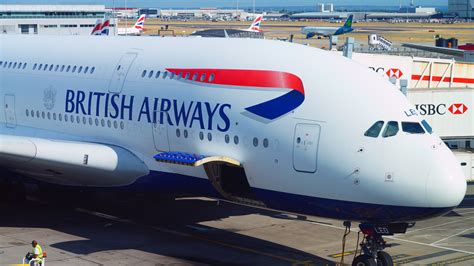
The Longest Airbus A380 Routes British Airways Will Fly
Distance adds another layer of complexity to A380 operations, and British Airways’ 2026 schedule includes some of its longest missions ever for the type. The crown jewel is London Heathrow to Johannesburg, stretching approximately 4,884 nautical miles. With block times hovering around eleven hours, this route combines extreme distance with robust demand, a rare pairing that plays directly to the aircraft’s strengths.
London to Los Angeles follows closely at about 4,741 nautical miles, often pushing block times beyond eleven hours westbound. This route exemplifies why the A380 still matters: slot constraints at both ends, relentless demand, and a passenger mix that heavily favors premium cabins.
San Francisco, Dallas–Fort Worth, and Miami fill out the long-haul spectrum, each offering a blend of distance and volume that justifies the aircraft’s deployment. Even the shortest A380 route in the network, London to Boston, still exceeds 2,800 nautical miles, reinforcing that these jets are reserved for serious long-haul work.
While these distances are impressive, they remain modest compared with the longest A380 operations globally. Emirates’ Dubai–Auckland service and Qantas’ ultra-long-haul missions operate at the outer limits of the aircraft’s endurance. British Airways, by contrast, prioritizes operational reliability over record-setting range.
Inside the British Airways A380 Cabin: Designed for Premium Density
The interior configuration of British Airways’ Airbus A380s reveals more about the airline’s strategy than any route map. Each aircraft carries 469 seats across four cabins, with an unusually strong emphasis on premium travel.
At the nose sits a 14-seat First Class cabin, arranged in a 1-2-1 layout. These seats convert into fully flat beds measuring roughly six feet six inches, longer than those found in business class. This cabin exists for one reason: to capture the highest-yield passengers on the airline’s most important routes.
Business class, branded Club World, occupies a substantial footprint with 97 seats spread across both decks. The distinctive yin-yang layout, while divisive, allows British Airways to pack in capacity without sacrificing lie-flat comfort. Premium Economy, marketed as World Traveler Plus, adds another 55 seats, bridging the gap between luxury and volume.
The remaining 303 seats sit in World Traveler economy, ensuring that the aircraft still delivers sheer scale. This balance allows British Airways to hedge its bets, capturing premium revenue while maintaining competitive economy pricing.
Cabin Retrofits Signal Long-Term Commitment to the A380
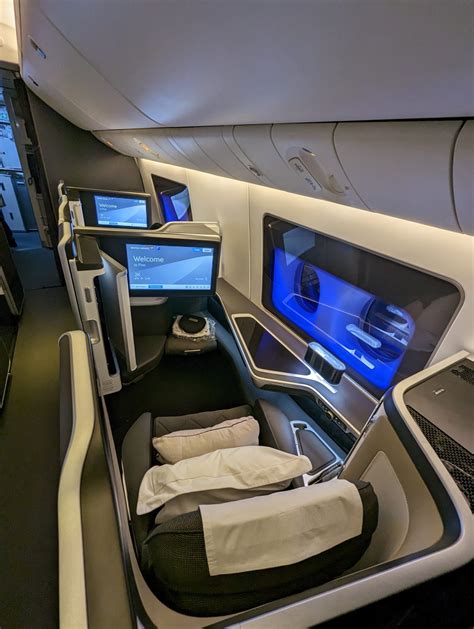
British Airways’ recent cabin retrofit program sends a clear message: the A380 is not living on borrowed time. Interior upgrades now account for a significant share of the airline’s capital expenditure, with particular attention paid to first class on the A380.
The redesigned first class seat introduces a more enclosed, suite-like feel without crossing into claustrophobic territory. Curved walls, integrated mood lighting, and enhanced privacy features elevate the experience to meet modern expectations. Storage improvements are equally telling. External wardrobes capable of holding small suitcases eliminate the need for overhead bins, opening up headspace and creating a calmer, more refined environment.
These changes are not cosmetic. They are strategic investments aimed at preserving the aircraft’s relevance in the premium market. An airline planning to retire the A380 in the near term would not pour resources into such upgrades.
What the 2026 A380 Strategy Reveals About British Airways
Taken as a whole, British Airways’ 2026 Airbus A380 deployment reflects a philosophy built on restraint and confidence. The airline is no longer chasing network breadth with the world’s largest passenger jet. Instead, it is anchoring the aircraft to a handful of routes where it delivers undeniable value.
This approach minimizes operational risk. A cancelled A380 flight strands far more passengers than a delayed 787 or A350, amplifying disruption and cost. By focusing on routes with deep demand pools and robust recovery options, British Airways protects both its reputation and its balance sheet.
At the same time, the strategy maximizes the A380’s unique strengths. On slot-constrained routes with heavy premium demand, upgauging is often the only way to grow. The A380 allows British Airways to do exactly that, turning scarcity into advantage.
The Future of the Airbus A380 at British Airways Beyond 2026
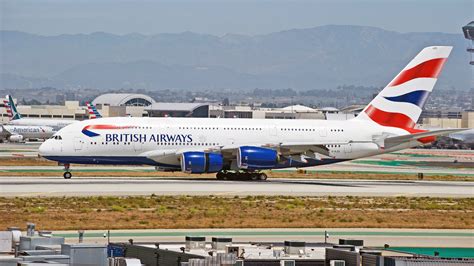
Looking beyond 2026, the Airbus A380’s role at British Airways appears narrow but stable. Expansion into new markets is unlikely, yet a sudden withdrawal seems equally improbable. As long as demand on core routes like Johannesburg, Los Angeles, and Miami remains strong, the aircraft will continue to serve as a capacity and premium revenue anchor.
In an industry increasingly obsessed with efficiency and flexibility, British Airways has carved out a contrarian niche. The A380 survives not because it is fashionable, but because it still makes economic sense in very specific circumstances. The 2026 route network is proof that when deployed with discipline, even the world’s largest passenger jet can earn its keep.
Where British Airways will fly its Airbus A380s in 2026 is more than a list of destinations. It is a statement of intent, a declaration that size still matters when matched with strategy, and a reminder that aviation’s most ambitious aircraft still has a meaningful role to play.