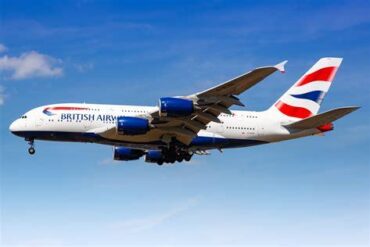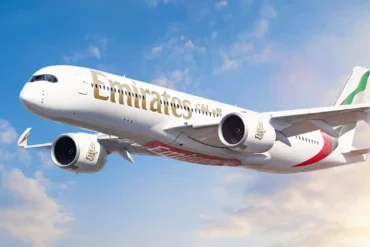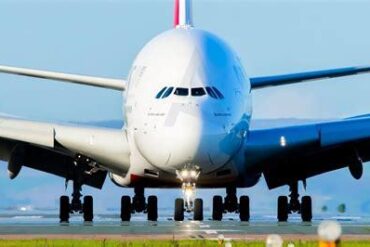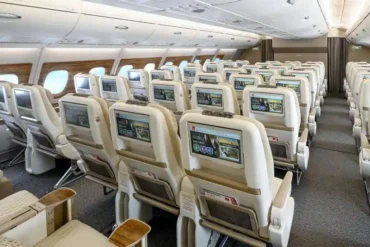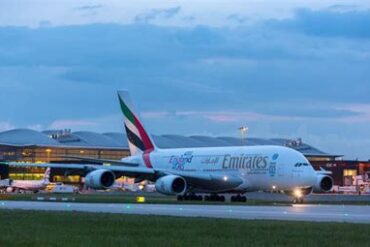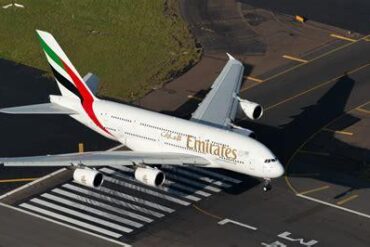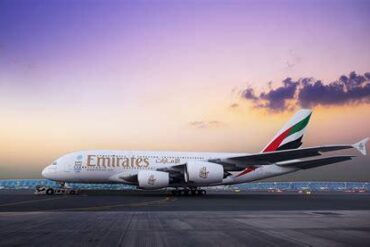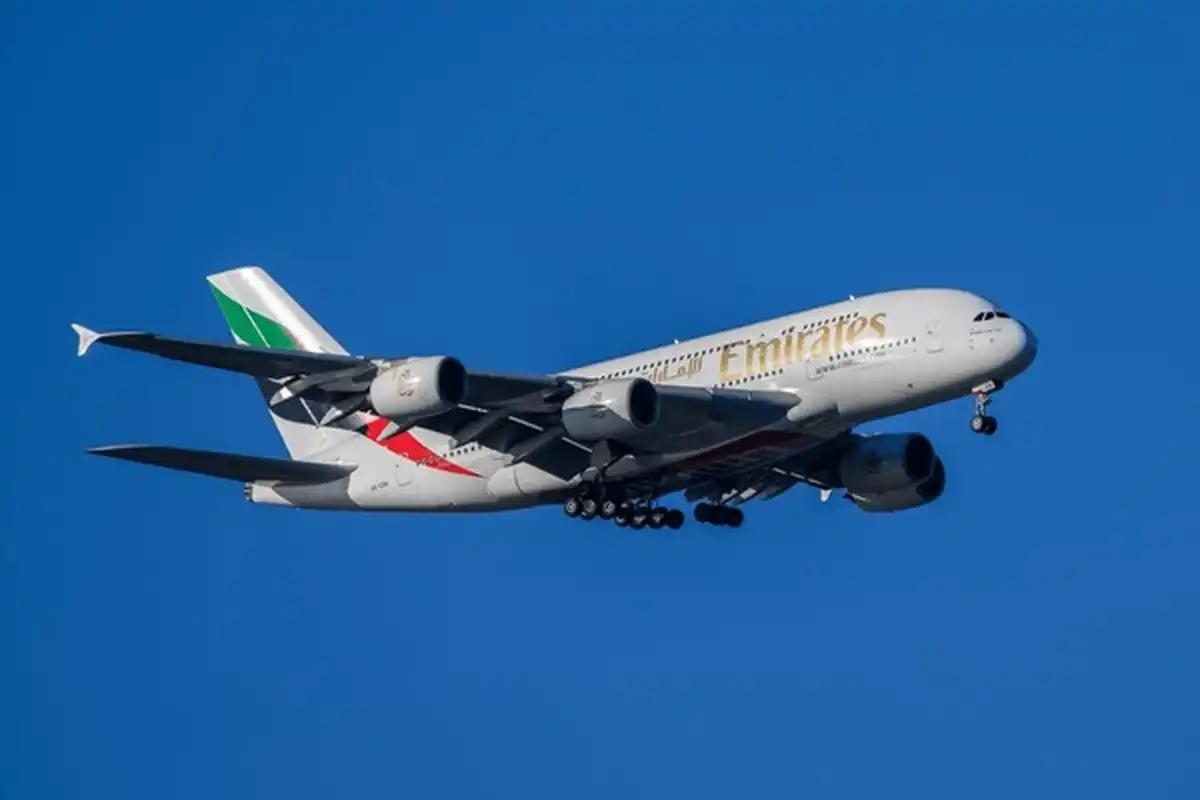
The Airbus A380 remains the flagship of the Emirates fleet, a symbol of both capacity and comfort. With a staggering 116 units in service, Emirates not only leads the world in A380 operations but also defines how this aircraft type is used globally. In 2026, the airline continues to leverage its massive double-decker for premium international connectivity, targeting high-density long-haul routes where demand, prestige, and connectivity intersect.
The A380 is a critical component in maintaining Emirates’ super-connector strategy through Dubai International Airport, serving as a bridge between continents. In this in-depth report, we examine where Emirates will deploy its A380s throughout the world in 2026, analyzing each region with strategic insight and operational detail.
Emirates A380 Presence in the Americas: Selective Yet Strategic
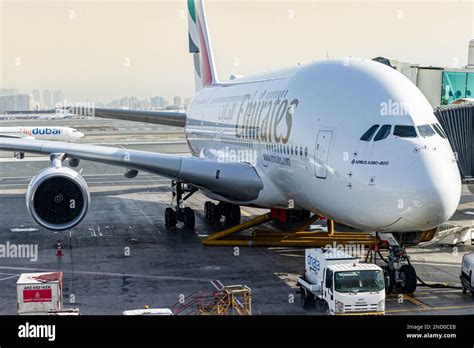
Despite the vast size and economic power of the Americas, Emirates’ A380 presence remains focused and measured. The aircraft will serve just seven destinations across North and South America.
In South America, the only A380 route is to São Paulo (GRU), operating once daily. Similarly, Toronto Pearson International Airport (YYZ) in Canada sees a single daily A380.
However, the United States hosts the largest A380 footprint in the Americas, with the superjumbo flying into:
- New York John F. Kennedy (JFK) – Double daily, plus an additional fifth-freedom flight via Milan, making three daily A380s to JFK.
- Los Angeles (LAX) – Once daily
- San Francisco (SFO) – Once daily
- Houston George Bush Intercontinental (IAH) – Once daily
- Washington Dulles (IAD) – Once daily
Despite limited reach in terms of destinations, the JFK operation stands out as Emirates’ single busiest A380 outstation in the Americas. This reflects not just market demand, but the strategic importance of New York as a transcontinental and transatlantic gateway.
Dominant European Operations: The Beating Heart of Emirates’ A380 Network
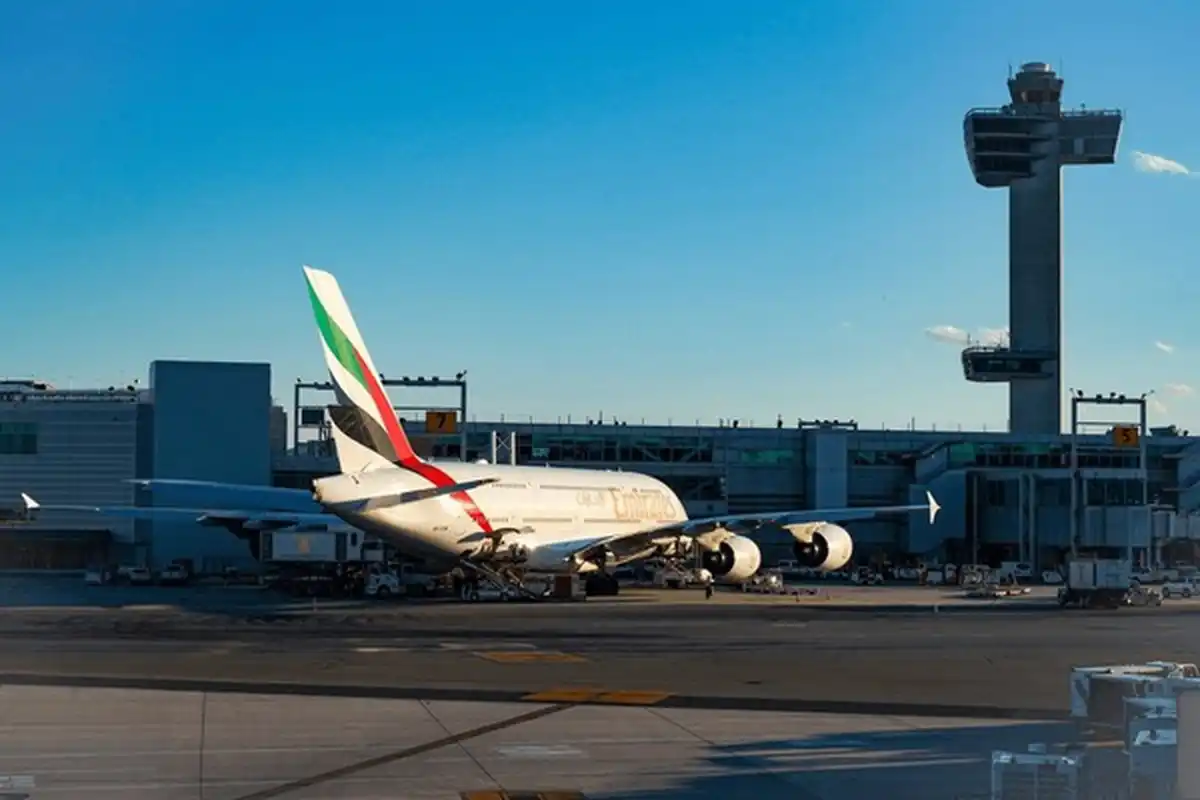
Europe is the epicenter of Emirates’ A380 operations in 2026, with 21 airports served. The region offers shorter flight times, high demand for premium cabins, and ideal geographic positioning for transfers to Asia and Africa.
The United Kingdom remains the most critical A380 market in Europe:
- London Heathrow (LHR) – A staggering six daily A380 flights, Emirates’ busiest global route.
- London Gatwick (LGW) – Daily
- Manchester (MAN) – Daily
- Glasgow (GLA) – Daily
- Birmingham (BHX) – Daily
In France, the A380 serves both Paris Charles de Gaulle (CDG) and Nice (NCE), while in Germany, Emirates connects to Frankfurt, Munich, and Düsseldorf with daily flights. The A380 also touches down in Amsterdam, Zurich, Milan, Rome, and Vienna, covering the core financial and cultural hubs of Western and Central Europe.
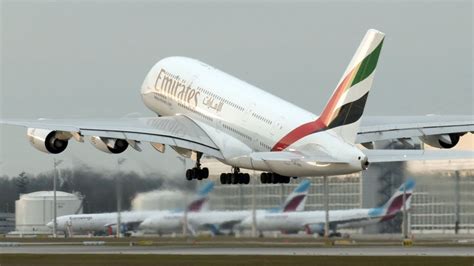
The inclusion of Moscow Domodedovo (DME) with two daily A380 flights underscores Emirates’ ability to serve destinations avoided by other carriers due to geopolitical considerations. In Istanbul, the A380 runs one of the three daily flights, supported by a 777 and an A350.
This robust European network supports Emirates’ long-standing strategy of capturing premium traffic flows between Europe and Asia, especially important given current airspace restrictions over Russia that alter traditional routing.
African and Middle Eastern Routes: Measured Deployment in Niche High-Demand Markets
In Africa, Emirates adopts a targeted approach. The A380 serves just four destinations, but with strategically scheduled frequencies:
- Cairo (CAI) – Three daily flights
- Casablanca (CMN) – Daily
- Mauritius (MRU) – Twice daily
- Johannesburg (JNB) – Daily
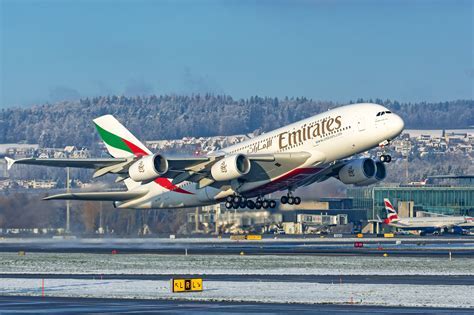
These markets represent a blend of tourism and diaspora travel where the A380’s capacity and luxury product are well-received.
In the Middle East, where flights are short and frequency-driven, the A380 is used sparingly:
- Jeddah (JED) – Three daily A380 flights
- Amman (AMM) – Daily
Most regional services are now assigned to Boeing 777-300ERs and the newer Airbus A350-900s, which offer better economics for short-to-medium haul operations. Emirates’ decision to configure A350s without crew rest areas indicates a focus on medium-haul density routes, leaving A380s to longer services.
Asian Megaroutes: High-Frequency, High-Demand Connections
Asia is the second most important region after Europe for Emirates’ A380 operations. The aircraft serves 12 routes, catering to high-volume, high-yield markets, particularly where premium traffic is strong.
In South Asia, only India sees A380 service:
- Mumbai (BOM) – Daily
- Bengaluru (BLR) – Daily
Other South Asian nations rely on the 777 or A350 due to infrastructural or demand constraints.
East Asia, however, sees a broader A380 footprint:
- Tokyo Narita (NRT) – Daily
- Osaka (KIX) – Daily
- Seoul Incheon (ICN) – Daily
- Taipei (TPE) – Daily
- Shanghai (PVG) – Daily
- Hong Kong (HKG) – Twice daily (one direct, one via Bangkok)
The Southeast Asian sector is led by Bangkok (BKK) with four daily A380 flights, making it Emirates’ second-busiest A380 route globally. In addition:
- Singapore (SIN) – Thrice daily
- Kuala Lumpur (KUL) – Daily
- Denpasar, Bali (DPS) – Daily
These routes underscore Emirates’ dominance in connecting East and Southeast Asia to Europe and North America, especially for leisure and business travelers demanding high standards.
Oceania: A380 Backbone of Emirates’ South Pacific Strategy
Emirates operates six A380 routes to Oceania, forming the backbone of its operations in this distant but critical market. Emirates’ ability to consolidate traffic through Dubai gives it an edge over airlines reliant solely on point-to-point demand.
In Australia:
- Sydney (SYD) – Thrice daily
- Melbourne (MEL) – Twice daily
- Brisbane (BNE) – Daily
- Perth (PER) – Daily
One of Sydney’s A380 flights continues to Christchurch (CHC) in New Zealand under fifth freedom rights.
Additionally, Emirates operates the longest scheduled A380 flight in the world between Dubai and Auckland (AKL), maintaining a daily service.
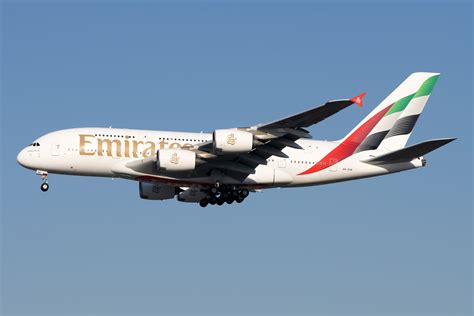
The Oceania region sees higher average frequencies per route than the Americas, reflecting intense travel demand between Europe and Australasia. With the growing adoption of premium economy and increasing comfort expectations, the A380 remains a pivotal asset.
Aircraft Configuration Insights: Matching Capacity with Market Needs
Emirates maintains several configurations for the A380, each optimized for different route types. Most aircraft include:
- 14 First Class suites
- 76 Business Class seats
- 427–557 Economy seats
- Selective aircraft with 56 Premium Economy seats
For shorter routes or lower premium demand, Emirates uses configurations with no First Class and higher Economy density, such as the 388J variant. In contrast, the 388V and 388Y types include Premium Economy, signaling deployment on routes with affluent but cost-sensitive travelers.
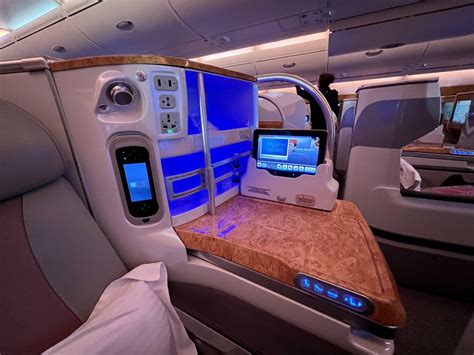
This level of customization enables Emirates to match each aircraft to route demand while maintaining brand prestige.
The Strategic Outlook: A380 Still Central to Emirates’ Vision
In 2026, the Emirates A380 remains at the heart of the airline’s global network, despite increasing competition from fuel-efficient twin-engine aircraft. It enables the airline to:
- Maximize slot-constrained airports like LHR, JFK, BKK
- Deliver unmatched passenger experience, especially in First and Business Class
- Offer high-capacity solutions for mega-demand markets
While some competitors have retired the A380 or limited its use, Emirates has doubled down, investing in cabin retrofits and expanding Premium Economy offerings. In the context of its 261-aircraft fleet, the 116-strong A380 line represents both a statement of ambition and a practical solution to high-volume international travel.
From London to Auckland, from Bangkok to São Paulo, the Emirates A380 is more than just an aircraft—it’s a mobile extension of Dubai’s global brand and a strategic enabler of the carrier’s intercontinental dominance.