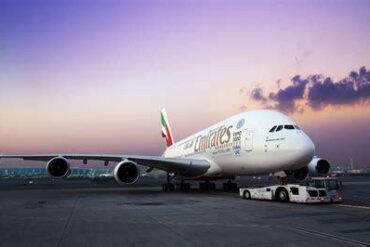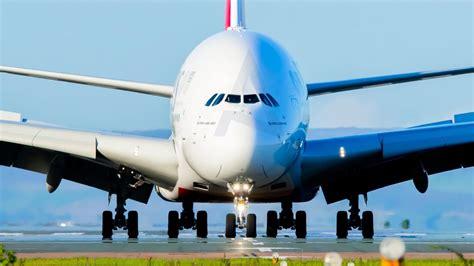
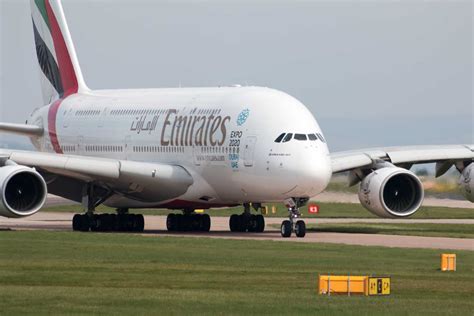
Emirates is setting a new benchmark in high-volume long-haul travel by rolling out its record-breaking 615-seat Airbus A380s on major leisure-heavy routes. As the global aviation sector accelerates toward full recovery, the Dubai-based carrier is maximizing its superjumbo potential, prioritizing passenger volume and cost-efficiency over traditional luxury configurations. These deployments, set for the high-demand summer 2025 period, mark a pivotal move in Emirates’ strategic shift toward scalable capacity and fleet optimization.
Reimagining the A380: Capacity Over Premium
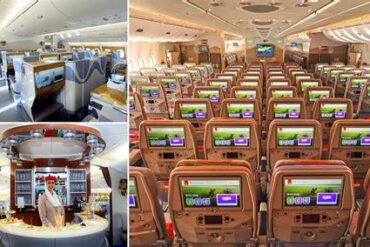
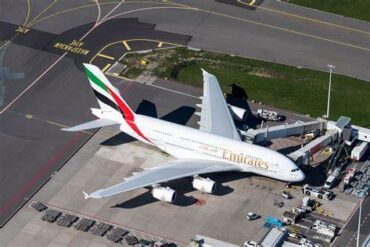
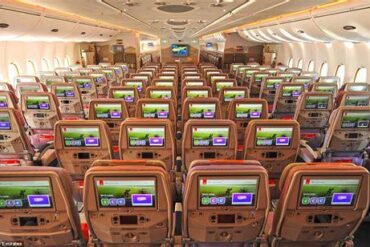
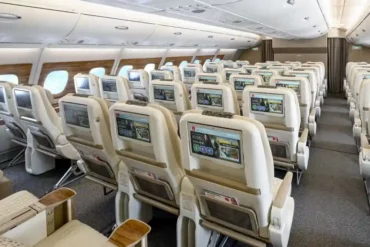
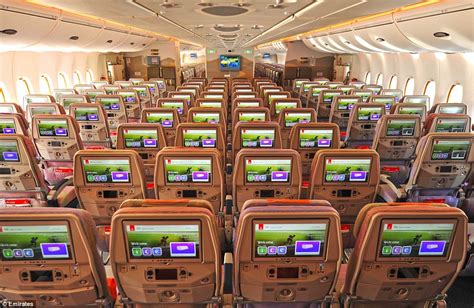
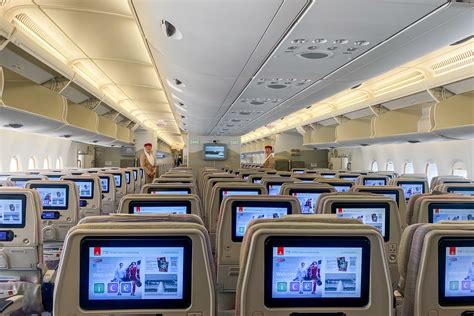
The Airbus A380 has long been the flagship of Emirates’ fleet, celebrated for its dual-deck luxury and onboard amenities. But not all A380s are created equal. Emirates’ two-class A380 variant, uniquely configured with 615 seats, is now the highest-capacity commercial aircraft in service. With 557 economy seats and a reduced 58-seat business class, this variant ditches first class altogether in favor of mass transport efficiency.
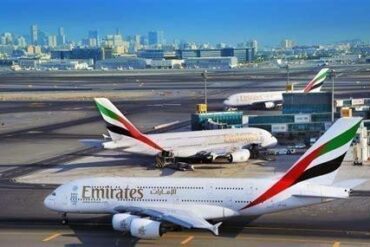
The airline currently operates 15 of these ultra-high-capacity jets, more than any other carrier worldwide. This configuration shift reflects a pragmatic response to changing passenger trends — in particular, the increasing dominance of budget-conscious leisure travel over premium demand on specific routes.
Strategy Behind the Density: Targeting High-Yield Leisure Corridors
Rather than chasing premium margins, Emirates is opting to scale up operations on routes with dense year-round economy demand. By filling more seats per flight, the airline offsets lower per-ticket yields with significantly higher passenger volume. This is particularly relevant in markets with limited business travel and underutilized first-class cabins.
Destinations like Copenhagen, Prague, Bali, and Mauritius fall into this category, where the real value lies in transporting more travelers per rotation rather than elevating service tiers. It’s a volume-driven strategy that aligns with post-pandemic travel patterns and ensures sustainable profitability.
Summer 2025 Deployment: A Network Optimized for Volume
Emirates has designated July through September 2025 as a period of maximum high-density A380 deployment, positioning the 615-seat variant on routes where it can make the greatest impact. According to internal scheduling data, the following routes will feature the high-capacity aircraft:
- Copenhagen: 1x daily, 100% 615-seat variant
- Prague: 1x daily, 100%
- Manchester: 3x daily, 66%
- Bangkok: 2x daily, 40%
- Kuala Lumpur: 1x daily, 33%
- Taipei: 1x daily, 60%
- Mauritius: 1x daily, 50%
- Birmingham: 1x daily, 50%
- Bali: 1x daily, 50%
- London Gatwick: 1x daily, 33%
- Düsseldorf: 1x daily, 50%
These routes are carefully selected to align with Emirates’ connecting hub strategy at Dubai International Airport. Flights are scheduled to enable tight connection windows and efficient aircraft turnaround.
Rejoining the A380 Club: Prague and Copenhagen
Two of the most notable reintroductions are Copenhagen and Prague, both of which have now returned to full A380 operations after temporary down-gauging during the pandemic years. Their reinstatement marks not only a recovery milestone but a major upscaling, as both cities now exclusively receive the 615-seat configuration.
- Prague, served by Emirates since 2010, had early exposure to the A380 in 2015 and transitioned to daily service in 2016. As of 2025, it receives the largest-capacity A380 daily.
- Copenhagen, added in 2011, similarly welcomed the A380 in 2015 and now features the 615-seat version year-round.
Flight schedules are calibrated for optimal global connectivity:
Copenhagen Schedule (Local Time)
- Depart Dubai: 08:20 → Arrive Copenhagen: 13:15
- Depart Copenhagen: 16:00 → Arrive Dubai: 00:20 (+1)
Prague Schedule (Local Time)
- Depart Dubai: 08:35 → Arrive Prague: 13:00
- Depart Prague: 16:10 → Arrive Dubai: 23:55
Manchester: Emirates’ A380 Anchor in Northern England
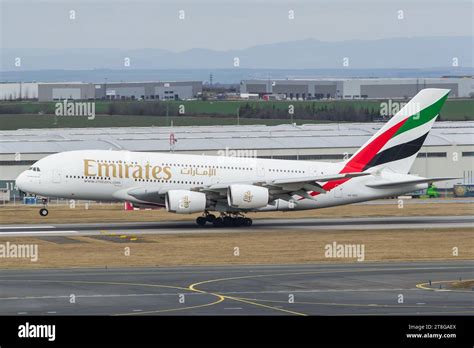
The UK remains one of Emirates’ strongest European markets, and Manchester Airport is the linchpin of that strategy outside London. Currently, Manchester enjoys three daily A380 flights, two of which use the 615-seat layout, while the third operates with the 468-seat four-class model — Emirates’ most premium-focused configuration.
This diversified capacity plan allows Emirates to tailor services based on time-of-day demand:
- Morning and mid-afternoon services lean toward economy-heavy capacity, ideal for leisure and VFR (visiting friends and relatives) traffic.
- The midday departure utilizes the four-class setup, capturing premium and business travelers connecting through Dubai.
Tentative winter 2025 planning suggests the possibility of a fourth daily service, which could be operated by a Boeing 777-300ER, further expanding the airport’s widebody connectivity.
Tentative Winter Departures from Dubai to Manchester:
- 02:40 – 615-seat A380
- 07:10 – 484-seat A380
- 14:30 – 615-seat A380
- ~16:00 – Boeing 777-300ER (pending)
Operational Efficiency: Why the 615-Seat A380 Makes Financial Sense
Flying a 615-seat aircraft may appear ambitious, but in practice, it results in lower per-seat costs. With high-density cabin layouts, Emirates achieves greater fuel economy per passenger kilometer, translating into substantial savings on fuel, crew costs, airport fees, and turnarounds.
These jets are also lighter than the fully-luxury four-class variants due to the absence of first-class suites and onboard lounges. The reduced weight helps mitigate one of the most common criticisms of the A380 — its high operating cost.
Additionally, with the airline’s massive investment in route-specific cabin planning, Emirates now has unmatched fleet agility. It can assign the right aircraft to the right market, balancing premium services on routes like New York and Sydney, while unleashing the economy giants on routes to Asia, Europe, and the Indian Ocean.
A Glimpse Into the Future: What This Means for Global Aviation
The decision to deploy high-density A380s on key routes sends a signal to the industry: high-capacity long-haul is back. As global demand recovers — particularly for long-awaited family travel, tourism, and budget vacations — Emirates is one of the few carriers positioned to meet that demand without adding frequencies or compromising on comfort.
By streamlining premium offerings and maximizing lower-yield segments, the airline is writing a new chapter in widebody economics. Other legacy carriers may watch closely — especially those grappling with fleet renewal costs and post-pandemic debt loads.
In a world where business class demand may not fully return to pre-COVID levels, the Emirates 615-seat A380 could represent the most practical future for the ultra-long-haul market.
Conclusion: Emirates Rewrites the Superjumbo Playbook
As competitors phase out their A380 fleets or restrict them to flagship routes, Emirates continues to innovate — not by adding luxury, but by scaling access. Its latest move to aggressively deploy record-capacity aircraft where they matter most is a bold, calculated step that could reshape international travel economics.
Rather than retiring the superjumbo, Emirates is making it more relevant than ever by leveraging capacity, efficiency, and global reach. The 615-seat A380 is not just a plane — it’s a strategic asset engineered to meet the evolving demands of a dynamic, price-sensitive global traveler base.