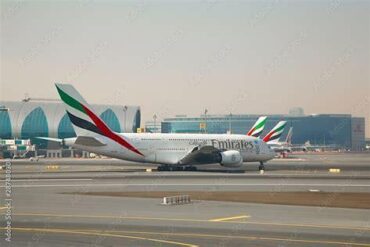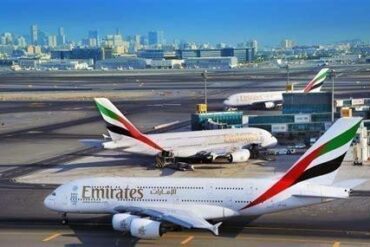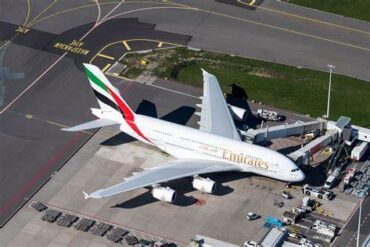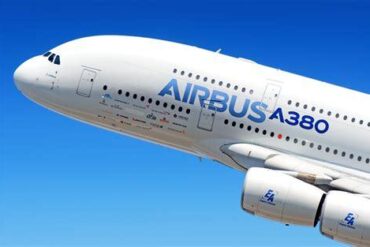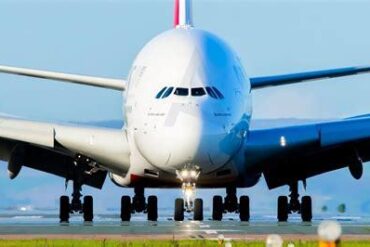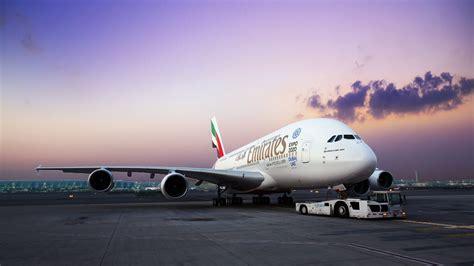
Emirates has quietly made one of its most consequential capacity adjustments in years, trimming 20% of flights operated by its 615-seat Airbus A380s, the highest-capacity commercial aircraft in service anywhere. The move reshapes how the Dubai-based carrier deploys its most extreme high-density jets, reflecting shifting demand patterns, yield discipline, and a recalibration of leisure-heavy routes as 2026 approaches.
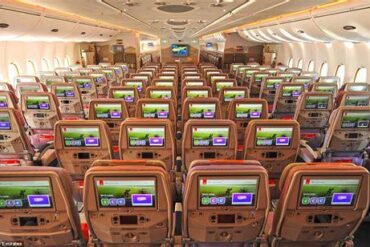
The airline operates 116 Airbus A380s, but only 15 aircraft carry the ultra-dense, two-class configuration that has become something of an aviation outlier. These jets eliminate first class and premium economy entirely, replacing luxury with scale. The result is a layout designed to move enormous volumes of passengers efficiently, not to chase premium yields.
This strategy has long dictated where the aircraft flies. The 615-seat A380 is deliberately assigned to high-volume, lower-yield markets, often leisure-driven destinations where filling seats matters more than selling suites. That logic still holds—but the network itself is tightening.
By early 2026, Emirates’ schedule shows the configuration disappearing from a number of familiar city pairs, signaling a notable contraction rather than a simple seasonal shuffle.
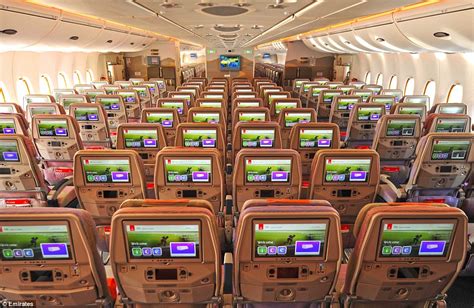
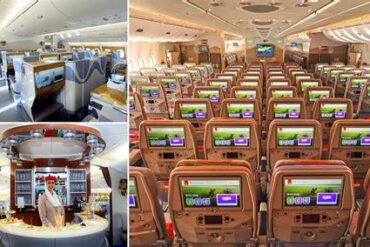
The economics behind the decision are blunt. With 557 economy seats and just 58 business class seats, these aircraft rely on consistently high load factors to generate strong sector revenue. Filling more than 600 seats per departure, sometimes multiple times a day, is a demanding proposition even for an airline as globally connected as Emirates. When demand softens or premium mix improves elsewhere, the incentive to deploy such dense aircraft weakens fast.
Why Emirates’ 615-Seat A380 Is a Special Case
Unlike Emirates’ other A380 variants—some carrying first class suites, onboard showers, and premium economy—the 615-seater is a pure volume machine. Business class capacity is sharply reduced, and the cabin experience is optimized for throughput rather than indulgence.
That makes it unsuitable for high-premium corporate markets under normal conditions. The aircraft appears there only as a tactical move, such as during peak seasons, special events, or when premium demand is already saturated by other daily frequencies. Otherwise, the opportunity cost is simply too high.
Routes Losing the 615-Seat A380 in 2026
Data comparing 2025 operations with current 2026 schedules shows the ultra-dense A380 exiting several routes entirely. These include Bahrain, Casablanca, Hong Kong, Milan Malpensa, Singapore, and Vienna. In isolation, the change looks dramatic, but most of these markets only saw sporadic or limited deployments of the configuration last year, sometimes just a handful of flights.
More revealing are the changes happening within the current year, where the aircraft is being pulled from routes that had seen more regular use.
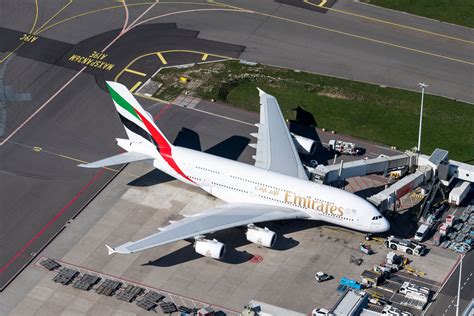
Key Markets Dropped or Paused This Year
The most striking adjustments involve destinations that either lose the configuration outright or see it replaced by smaller A380 variants. Bali (Denpasar) remains completely paused for all A380 operations, despite its popularity, raising ongoing questions about when—or if—the superjumbo will return.
Elsewhere, Copenhagen loses all A380 service entirely, while Kuala Lumpur, Munich, and Taipei retain the aircraft type but transition to lower-capacity A380s. Jeddah experiences a temporary withdrawal, with the configuration scheduled to return later in the year using different layouts.
These shifts underscore a broader trend: Emirates is not abandoning the A380, but it is becoming far more selective about which A380, and how many seats, it sends into each market.
A 20% Year-Over-Year Drop in 615-Seat Flights
Across the network, the numbers tell the story clearly. Emirates planned 4,774 outbound flights using the 615-seat A380 last year. That figure has now fallen to 3,828 departures, a 20% reduction year over year based on early February data.
The aircraft is still scheduled on 24 routes, but several of these involve single-day or one-off appearances in cities such as Barcelona, Glasgow, Istanbul, Medinah, Paris Charles de Gaulle, and Vienna. These are tactical deployments rather than sustained commitments, often tied to short-term demand spikes.
London and Manchester Tell a Bigger Story
Some of the most eye-catching percentage drops occur in the UK. London Gatwick sees a 45% reduction in 615-seat A380 flights, while Manchester is down roughly 25%. On the surface, this looks like retrenchment. In reality, it reflects fleet optimization rather than retreat.
Gatwick’s overall frequency is increasing to four daily flights, supported by the introduction of the Airbus A350, while Manchester is actually seeing more first-class-equipped A380s than at any point since 2019. Capacity remains robust; it is simply being redistributed toward higher-yield configurations.
What This Means for Emirates’ A380 Strategy
The takeaway is not that Emirates is stepping back from the A380, but that it is refining how extreme density fits into its network. The 615-seat superjumbo remains unmatched in raw capacity, yet its role is narrowing as demand becomes more segmented and premium recovery continues.
As winter 2026–2027 schedules evolve, some of these cuts could reverse. For now, the message is clear: the world’s largest passenger aircraft is still flying—but not everywhere, and not in its most crowded form.