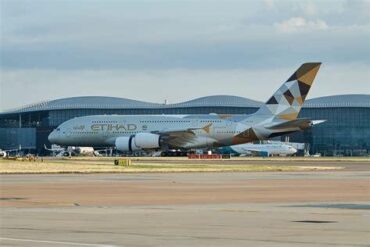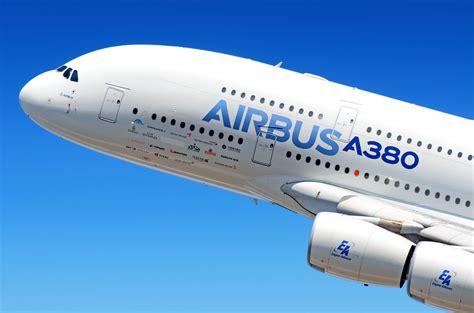
The aviation landscape around New York JFK has changed dramatically, and the decline happened with a swiftness that almost feels theatrical. In just twelve months, three airlines—Asiana, Etihad, and Lufthansa—have withdrawn Airbus A380 service from one of the world’s most competitive gateways. Only Emirates and Korean Air remain committed to operating the double-deck giant into 2026, marking one of the steepest year-over-year reductions in JFK’s superjumbo footprint.
Cirium data for the first ten months of 2025 versus 2026 confirms a stunning 39% drop in A380 flights. The contraction sharpens further in the peak of next year’s summer, where scheduled A380 departures fall by 47%, assuming Korean Air keeps its current timetable capped at March.
The change illuminates more than just altered fleet planning. It reveals how airlines are rethinking long-haul strategies, premium seating demand, and the economics of high-capacity aircraft following turbulent global market cycles.
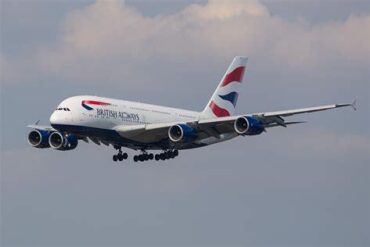
Asiana, Etihad, And Lufthansa Step Back From The Superjumbo
The trio of airlines exiting JFK’s A380 roster each tell different stories, yet their decisions converge on the same crossroads: the superjumbo no longer aligns with their immediate priorities.
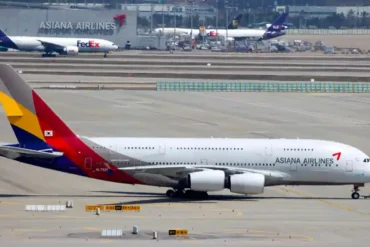
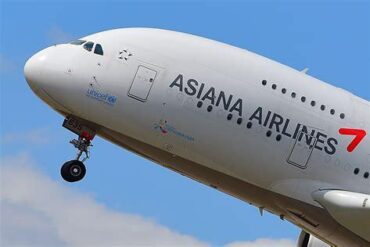
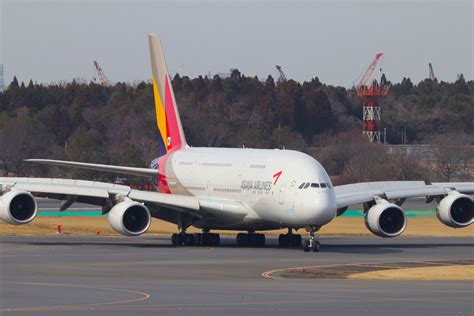
Asiana had deployed its 495-seat A380 on the Seoul–JFK route in the heart of the 2025 summer season. This seasonal strategy was long-standing, driven by peak demand between late May and early September. However, current planning shows a double-daily A350-900 operation replacing the A380 in 2026. Asiana is well known for last-minute widebody reshuffles, meaning the superjumbo is not completely out of the picture—but for now, it is absent from next year’s plan.
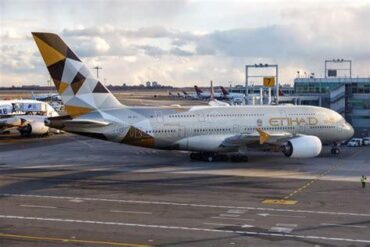
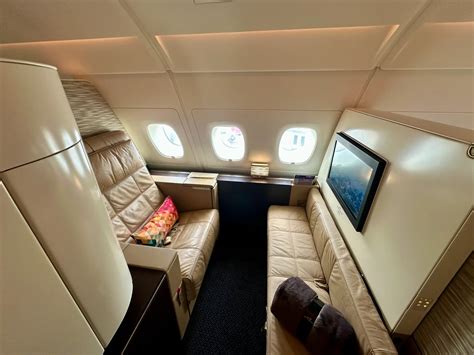
Etihad’s story unfolded even faster. Returning the 486-seat A380 to JFK in April 2024 after its pandemic-era grounding, the Abu Dhabi flag carrier reverted to the A350-1000 just fourteen months later. The A380 has been redeployed to Toronto, while JFK sees a mixture of A350s and 787-9s in 2026. The airline’s strategy is now clearly centered on premium-efficient long-haul twins rather than high-capacity quadjets.
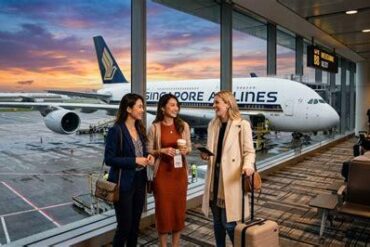
Lufthansa’s withdrawal marks the end of a notable chapter. Once operating 509-seat A380s from both Frankfurt and Munich, the German carrier consolidated all superjumbo flying out of Munich following fleet reactivations in 2023. JFK enjoyed a seasonal A380 rotation for three consecutive years, but 2026 brings only the A350-900, while Mumbai unexpectedly inherits the Munich A380.
Emirates And Korean Air: The Last Two Standing
Two carriers remain committed to offering A380 service to New York—one firmly, one tentatively.
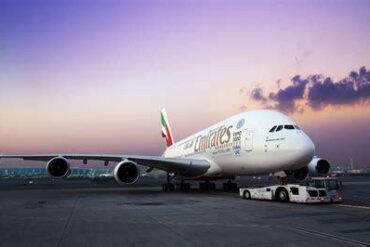
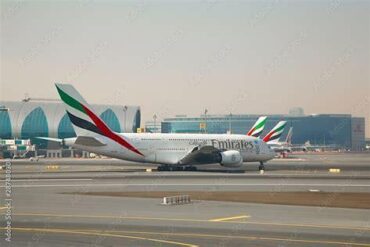
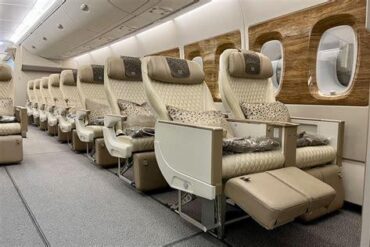
Emirates remains the powerhouse on this front. Its three daily New York flights continue to be served by the A380, reinforcing JFK as a top-tier market for the airline’s premium economy expansion and its high-yield cabin mix. Emirates at one point operated four daily superjumbo departures to JFK, and while that peak may not immediately return, the airline maintains the only truly robust A380 presence in the region.
Korean Air’s commitment is less fixed but still significant. The carrier currently schedules its 407-seat A380 daily through March 28, 2026. After that date, timetables transition to the Boeing 777-300ER, and no A380 flights are shown anywhere in the airline’s summer network. The airline originally intended to retire the A380 fleet in 2026, but the plan is now on hold. Industry observers expect Korean Air to extend A380 operations past March, though official confirmation has not yet arrived.
A Snapshot Of A380 Movements: January 2026
The first week of January shows how sparse A380 activity has become at JFK. Emirates offers morning, early afternoon, and late-evening superjumbo departures, while Korean Air anchors its schedule with a single daily rotation to Seoul. The contrast between the three-airline bustle of 2025 and the pared-down 2026 environment illustrates a profound shift in the airport’s long-haul profile.
JFK Falls In The Global Rankings For A380 Traffic
Between January and October 2026, 61 airports worldwide will see A380 operations. JFK, once among the upper tiers, now falls to 14th place, slipping four positions compared to 2025. Cities such as Dubai, London Heathrow, Singapore, Sydney, Bangkok, Munich, Los Angeles, Doha, Abu Dhabi, Paris CDG, Seoul Incheon, Tokyo Narita, and Johannesburg now surpass New York in superjumbo activity.
If Korean Air extends its A380 program into summer 2026, JFK could climb to 13th. Should Asiana unexpectedly return with seasonal service, the ranking could improve further to 12th. Both outcomes remain plausible, reinforcing how fluid long-haul planning can be when airlines juggle premium demand, aircraft availability, and shifting global market patterns.
A New Phase For JFK’s Long-Haul Identity
The reduction of A380 service at JFK marks a turning point in its long-haul evolution. The airport’s connectivity remains strong, but the aircraft operating those routes are transitioning to more fuel-efficient twins, reshaping the silhouette of international travel in and out of New York.
JFK now stands at the threshold of a new chapter—one defined not by the size of the aircraft but by the flexibility, frequency, and sophistication of the fleets serving it. While the A380’s footprint has diminished, its legacy at JFK remains vivid, and the possibility of selective returns keeps the story dynamic.
The coming months will reveal whether the superjumbo sees a resurgence or fades further from New York’s skies, but for now, its presence has never felt more exclusive—and more uncertain.