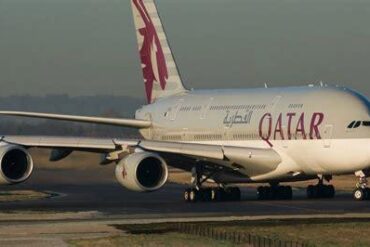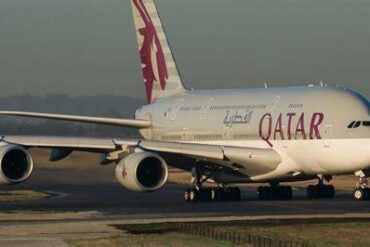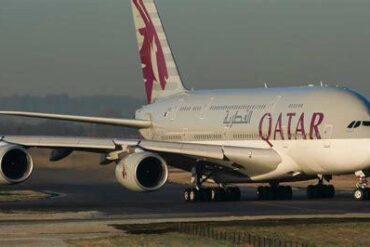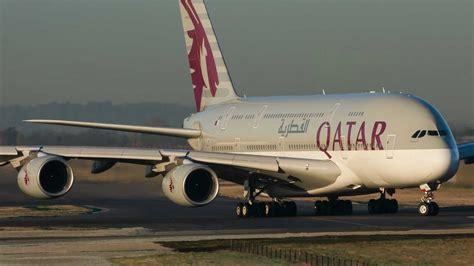
Qatar Airways has made another significant adjustment to its long-haul fleet strategy, confirming that the Airbus A380 will no longer return to Guangzhou Baiyun International Airport (CAN) during the upcoming Northern Hemisphere winter schedule. The decision represents the latest in a series of network revisions that continue to reshape the airline’s superjumbo operations, leaving only a handful of destinations scheduled to receive regular A380 service.
The latest scheduling update removes the double-deck aircraft from the Doha Hamad International Airport (DOH)–Guangzhou route beginning October 25, 2026. Instead, the airline will operate the service using the smaller Boeing 777-300ER, marking another reduction in A380 deployment as Qatar Airways continues refining capacity across its global network.
Although the Guangzhou route itself remains intact with daily service, the aircraft substitution is notable because it significantly changes the onboard passenger experience. The Airbus A380 accommodates 517 passengers and includes a First Class cabin, while the Boeing 777-300ER operating the route seats 412 passengers without offering First Class. As a result, premium seating capacity drops considerably despite the relatively modest reduction in total seats.
The move follows similar schedule changes affecting Singapore and Sydney, where Qatar Airways has also removed all planned Airbus A380 operations. Together, these cancellations eliminate every scheduled A380 service to Australia while substantially reducing the aircraft’s footprint across Asia.
Qatar Airways Continues Scaling Back Airbus A380 Operations
The latest schedule adjustment highlights a broader shift in Qatar Airways’ long-haul fleet planning. Only weeks ago, the airline intended to restore Airbus A380 flights to Guangzhou after more than six years away from the Chinese city. The aircraft had previously served the route between 2016 and early 2020 before the COVID-19 pandemic forced its withdrawal.
Its anticipated return was expected to coincide with the beginning of the International Air Transport Association (IATA) winter scheduling season. Instead, passengers will continue seeing the Boeing 777-300ER operate the route throughout both the summer and winter seasons.
While the Boeing 777 remains one of the world’s most capable long-haul aircraft, the replacement reflects a clear reduction in premium product availability. Approximately 11% of the Airbus A380’s seating capacity is dedicated to premium cabins, compared with roughly 6% aboard the Boeing 777-300ER.
Daily schedules between Doha and Guangzhou remain unchanged, ensuring network connectivity despite the aircraft downgrade. Travelers will still benefit from Qatar Airways’ extensive onward connections through Doha, particularly to destinations across Africa, Europe, and the Middle East.
Winter 2026 Network Reduced to Three Airbus A380 Destinations
Following the latest revisions, Qatar Airways plans to operate the Airbus A380 on only three routes during the Winter 2026 season.
Those destinations are:
- Bangkok Suvarnabhumi Airport
- London Heathrow Airport
- Paris Charles de Gaulle Airport
Bangkok is initially scheduled to receive one daily Airbus A380 before increasing to two daily flights from December. Meanwhile, London Heathrow and Paris Charles de Gaulle will each continue receiving one daily superjumbo service.
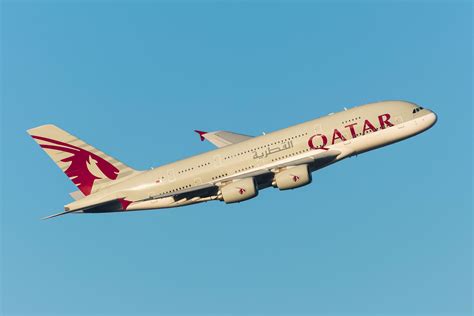
The reduction represents a dramatic contraction compared with previous schedules. Routes once planned for Guangzhou, Singapore, and Sydney have now disappeared entirely from the Airbus A380 network, leaving the future of additional aircraft deployments uncertain.
The airline currently has eight Airbus A380s, although only half of the fleet has returned to active service following operational disruptions earlier in 2026. Whether the remaining aircraft will eventually return remains unknown, and Qatar Airways has yet to outline a long-term strategy for the type.
Fleet Changes Follow Earlier Operational Disruptions
Qatar Airways’ changing Airbus A380 strategy comes after a turbulent period for the fleet. Between mid-April and mid-June 2026, all eight superjumbos were temporarily grounded because of regional operational disruptions linked to the conflict involving Iran.
Service gradually resumed during June, beginning with flights to Bangkok and London before Paris rejoined the network later in the month. At the time, many observers expected additional destinations—including Guangzhou—to follow.
Instead, the opposite has occurred. Rather than expanding Airbus A380 operations, the airline has continued reducing scheduled deployments, suggesting a more cautious approach to operating its largest aircraft.
Current schedules indicate only 90 Airbus A380 departures from Doha during November 2026. During the same month one year earlier, 194 departures had been scheduled. That represents a reduction of approximately 54%, illustrating how rapidly the fleet’s role within Qatar Airways has evolved.
Guangzhou Remains a Critical Gateway Despite Aircraft Downgrade
Although Guangzhou loses the Airbus A380, the destination remains strategically important within Qatar Airways’ network.
The Pearl River Delta, anchored by Guangzhou, represents one of the world’s largest metropolitan economies and continues generating strong demand for international air travel. Qatar Airways has served Guangzhou since 2008, connecting southern China with destinations throughout Europe, Africa, and the Middle East via Doha.
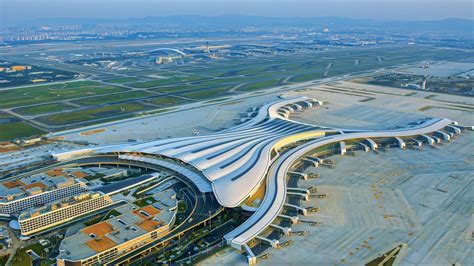
Passenger booking data demonstrates the city’s importance as a connecting market. More than 240,000 passengers traveling through Guangzhou connected onward via Doha during the previous twelve-month period, with Africa accounting for nearly six out of every ten connecting itineraries.
The strongest onward destinations include Algiers, Entebbe, Lagos, São Paulo, Amman, Casablanca, Istanbul, Nairobi, Dar es Salaam, and Johannesburg. These travel patterns reflect Guangzhou’s longstanding commercial ties with numerous African economies, making the city one of China’s most significant gateways for business and trade with the continent.
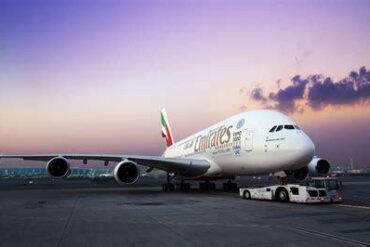
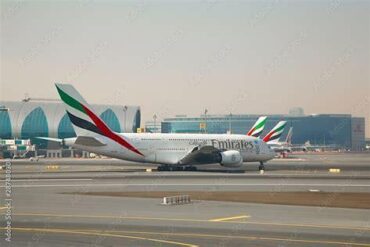
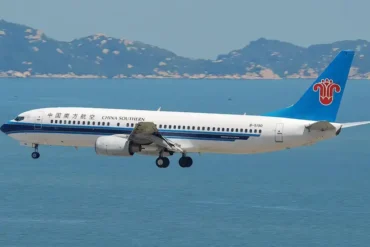
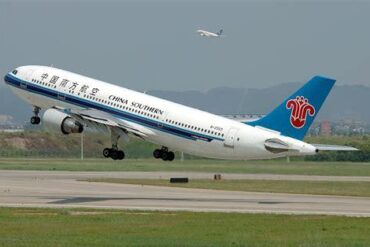
The competitive landscape also remains active. China Southern continues serving Doha with Boeing 787 aircraft in close partnership with Qatar Airways, while Emirates maintains Airbus A380 operations between Dubai and Guangzhou. Future competition is expected to intensify further as additional Gulf carriers expand their presence in the Chinese market.
Uncertainty Surrounds the Airbus A380’s Long-Term Future
The latest schedule revisions raise fresh questions about the future role of the Airbus A380 within Qatar Airways’ fleet.
While the aircraft continues serving several flagship destinations, each successive schedule update has reduced its overall network presence. Whether these changes represent temporary adjustments or the beginning of a permanent fleet transition remains unclear.
For now, passengers hoping to experience Qatar Airways’ flagship superjumbo will have far fewer opportunities than in previous years. With Guangzhou, Singapore, and Sydney disappearing from the schedule, the airline’s iconic Airbus A380 has become increasingly concentrated on a small number of high-demand trunk routes, reflecting a more selective deployment strategy as Qatar Airways continues balancing capacity, operational flexibility, and premium travel demand.