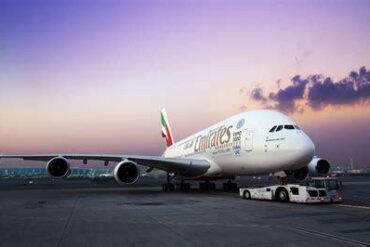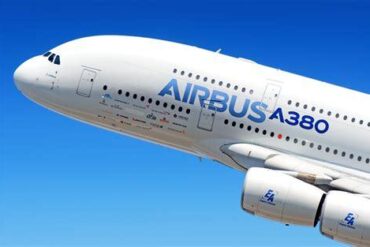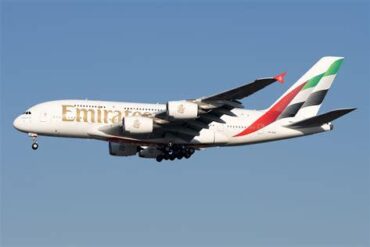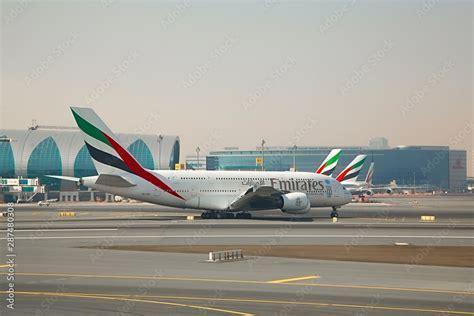
Emirates remains the undisputed king of the Airbus A380 era. No other airline has tied its global identity so closely to the double-decker giant, and no carrier has operated the aircraft at the same scale. Even today, the Dubai-based airline still controls more than 100 active A380s, representing one of the largest concentrations of widebody capacity in commercial aviation history. Yet despite the aircraft’s continued importance, Emirates has quietly reduced its superjumbo footprint across a growing number of international destinations.
The latest schedule analysis reveals that the airline has now ended Airbus A380 operations on 23 routes, marking another major shift in how the carrier deploys its flagship aircraft. While the A380 remains central to Emirates’ long-haul strategy, the network has become increasingly selective, prioritizing routes with consistently high premium demand, constrained airport slots, and dense passenger flows.
The changes also underline how dramatically the global aviation market has evolved since the aircraft’s glory years in the 2010s. Some airports once celebrated the arrival of the giant jet as a landmark occasion. Others built infrastructure upgrades specifically to accommodate it. Now, many of those same destinations no longer see the aircraft at all.
The timing of these network adjustments is especially notable because Emirates is simultaneously introducing a new three-class A380 configuration with 569 seats, replacing certain ultra-dense two-class 615-seat layouts. The new cabin strategy reflects a broader move toward premium optimization rather than maximum passenger volume.
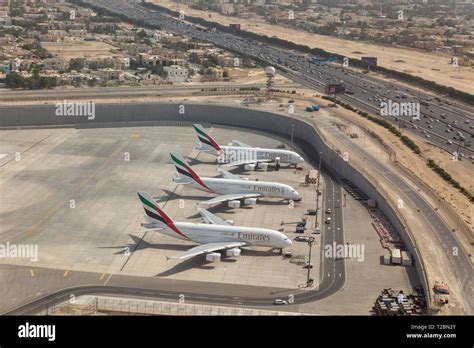
Emirates Continues To Dominate The Airbus A380 Era
Although Emirates was not the launch customer of the Airbus A380, it ultimately became the aircraft’s defining operator. The airline transformed the jet into a symbol of luxury long-haul travel, using it to connect Dubai with nearly every major global market. First Class shower suites, onboard lounges, and enormous passenger capacity helped turn the aircraft into both a transportation tool and a marketing powerhouse.
According to fleet data, Emirates still operates roughly 116 passenger-configured A380s, an extraordinary number considering many competing airlines retired large portions of their fleets during the pandemic years. Carriers including Lufthansa and Singapore Airlines drastically reduced their A380 operations, while Emirates doubled down on keeping the aircraft relevant.
However, retaining the fleet does not mean maintaining every historical route. Schedule analysis between June 2026 and February 2027 shows that 23 destinations previously served by the Emirates A380 are no longer scheduled to receive regular operations from the superjumbo.
Importantly, some temporary suspensions linked to geopolitical instability were excluded from the analysis because those routes may still regain A380 service later. The focus instead falls on routes that currently show no scheduled return for the aircraft.
Beijing Once Dominated Emirates’ Former A380 Network
Among all discontinued routes, Beijing stands far above the rest. Emirates operated 4,741 departing A380 flights from Dubai to the Chinese capital, accounting for more than half of all departures among the 23 removed routes.
The route was historically one of the airline’s most important Asian superjumbo markets. Emirates first introduced the A380 to Beijing in 2010, and for years the aircraft symbolized booming China-Gulf demand. The combination of tourism, business traffic, and connecting passengers helped sustain massive capacity.
Yet the post-pandemic aviation environment changed the equation dramatically. Chinese international traffic recovery lagged behind many other global markets, and airlines across the industry adjusted capacity strategies accordingly.
Curiously, Emirates has temporarily returned the A380 to Beijing for a brief May 2026 run using the 468-seat version of the aircraft. Industry observers believe the short-term deployment may be linked to operational disruptions and temporary demand spikes associated with instability in the Gulf region. Still, from June onward, Beijing disappears once again from the regular Emirates A380 network.
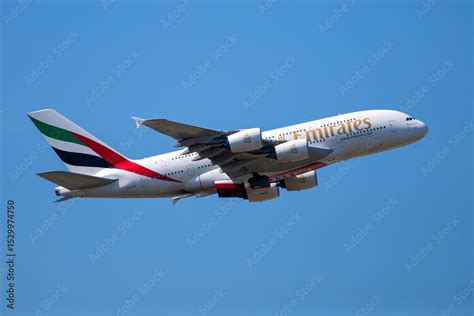
Hamburg, Kuwait, And Riyadh Lose Regular Superjumbo Operations
Several routes recorded hundreds of historical A380 departures before eventually disappearing from the network.
Hamburg accumulated 743 departures and became one of Europe’s more recognizable Emirates A380 stations. The aircraft last appeared regularly on the route in 2022. The service once highlighted strong German demand for premium long-haul travel via Dubai, particularly among business travelers and connecting passengers heading toward Asia and Africa.
Kuwait City also maintained a surprisingly large A380 presence with more than 1,500 departures. Despite the relatively short flight time, Emirates used the superjumbo to handle intense regional demand during peak periods between 2014 and 2018.
Meanwhile, Riyadh experienced intermittent A380 operations across several periods. The route combined political significance, corporate demand, and dense regional traffic, making it a natural candidate for periodic superjumbo deployment.
The disappearance of these services illustrates how Emirates increasingly concentrates the aircraft on routes where ultra-high capacity produces maximum economic efficiency. Operating an A380 today requires far more than passenger volume alone. Airlines must carefully balance premium revenue, airport infrastructure, operational costs, and fleet flexibility.
Short-Haul And Experimental A380 Routes Quietly Vanished
Some of the most fascinating discontinued routes were never intended as permanent A380 markets. Instead, they served as operational experiments, celebration flights, or airport capability demonstrations.
Muscat became Emirates’ shortest scheduled A380 route at just 189 nautical miles. The unusual deployment generated enormous aviation enthusiasm because seeing the world’s largest passenger aircraft on such a short regional sector felt almost surreal.
Other destinations experienced only symbolic or one-time appearances. These included Chicago, Warsaw, Tel Aviv, Brussels, and Delhi.
In many cases, the aircraft arrived to celebrate a route launch, commemorate an anniversary, or test airport readiness for future operations. For local aviation enthusiasts, these rare appearances became memorable events that attracted crowds of photographers and industry observers.
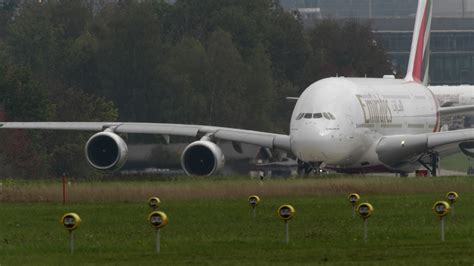
Emirates Is Reshaping The Future Of The A380
The shrinking route list does not signal the end of the Airbus A380 at Emirates. Far from it. The airline still relies heavily on the aircraft across major trunk routes linking Dubai with destinations such as London, Sydney, New York City, and Paris.
Instead, the network evolution reflects a more disciplined and data-driven deployment strategy. Emirates no longer uses the A380 simply because an airport can handle it. The airline now deploys the aircraft where premium density, slot limitations, and sustained long-haul demand justify its enormous operating footprint.
At the same time, the arrival of refreshed cabin products and reconfigured seating layouts shows Emirates still sees long-term value in the aircraft. The superjumbo may no longer dominate as many destinations as it once did, but it remains central to the airline’s identity and competitive strategy.
For aviation enthusiasts, however, the updated route list marks the end of an era for dozens of airports that once hosted the world’s most iconic passenger aircraft.