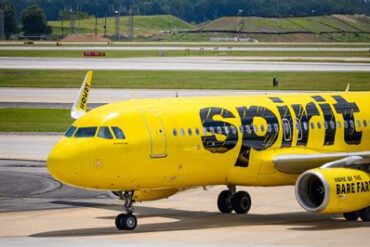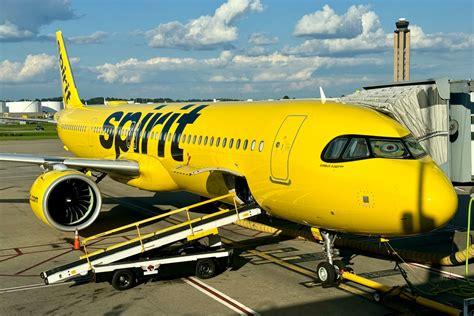
Spirit Airlines is undergoing one of the most significant transformations in its history. The ultra-low-cost carrier, long known for its aggressive expansion and rock-bottom fares, is now dramatically reducing parts of its route network as it attempts to stabilize its finances and redefine its future. Recent schedule updates reveal a sweeping reduction in international service across the Caribbean and Central America, along with additional domestic cuts that collectively reshape the airline’s footprint ahead of the summer travel season.
The changes signal more than routine schedule adjustments. They reflect a strategic shift designed to streamline operations, reduce losses on underperforming routes, and concentrate resources in markets where demand and profitability are more predictable. For an airline navigating a complex restructuring process, the path forward appears to involve becoming smaller, leaner, and more focused.
Spirit’s decision to slash routes arrives during a crucial period for the company as it prepares to exit Chapter 11 bankruptcy protection for the second time. With billions in debt and aircraft lease obligations weighing on the balance sheet, the airline’s leadership is attempting to reset the business model while preserving its core identity as a low-fare carrier.

Spirit Airlines’ Restructuring Plan Reshapes Its Strategy
The airline’s route reductions are part of a broader financial restructuring designed to dramatically improve its long-term stability. Spirit has reached an agreement in principle with creditors that would cut its debt and lease obligations from roughly $7.4 billion to around $2.1 billion, a move that significantly lowers the financial burden on the company.
Reducing debt is only one part of the plan. The airline is also reassessing how it deploys its aircraft and which markets it serves. Instead of spreading operations across a wide range of destinations, the new strategy prioritizes a concentrated network anchored by a handful of strong hubs and high-demand routes.
Executives have emphasized several pillars behind what they call the “New Spirit” approach:
- Doubling down on established core markets such as Fort Lauderdale, Orlando, the New York region, and Detroit
- Increasing premium revenue opportunities through expanded Big Front Seat capacity and enhanced premium economy offerings
- Eliminating weak midweek flights and reallocating aircraft to periods of higher demand
- Reducing the size of the fleet while renegotiating expensive aircraft leases
The airline ultimately plans to operate approximately 100 aircraft, a noticeable reduction compared with previous fleet plans. By aligning the fleet with a smaller route network, management hopes to increase efficiency and eliminate money-losing flying.
This strategic reset is also intended to position the airline for future consolidation opportunities in the industry. Spirit previously agreed to be acquired by JetBlue Airways, but the deal was blocked by a federal court in 2024 on antitrust grounds. Now, executives suggest that emerging from bankruptcy as a healthier standalone airline could open the door to new partnerships or acquisitions.
Major International Route Cuts Across the Caribbean and Central America
The most visible impact of Spirit’s restructuring is the wave of international route cancellations scheduled to begin in mid-April 2026. According to the latest schedule filings, the airline will eliminate 11 international routes and reduce frequencies on 22 additional routes.
Many of these changes affect destinations in the Caribbean and Central America, regions that historically played a key role in Spirit’s network strategy due to their popularity with leisure travelers.
Fort Lauderdale, one of the airline’s largest operational bases, will see some of the most dramatic reductions. The airline is eliminating service from Fort Lauderdale-Hollywood International Airport to three destinations:
- Grand Cayman – ending April 13
- Managua, Nicaragua – ending April 14
- San Salvador, El Salvador – ending April 15
Beyond these cancellations, multiple routes will see sharp frequency reductions. Flights to Guatemala City, once offered twice daily, will drop to just four per week. Service to Guayaquil, Ecuador will decline from daily flights to only two weekly departures.
Other destinations across Colombia and the Caribbean will also experience significant cuts, meaning that even when Spirit remains in a market, travelers will see far fewer flights available.

Fort Lauderdale: The Epicenter of the Network Shake-Up
Fort Lauderdale has long served as a cornerstone of Spirit Airlines’ network, particularly for routes linking the United States with Caribbean and Latin American destinations. However, the restructuring effort has placed the airport squarely at the center of the airline’s capacity reduction strategy.
In addition to the three international cancellations, 18 routes from Fort Lauderdale will experience reduced frequencies, affecting cities including:
- Bogotá, Colombia
- Cartagena, Colombia
- Medellín, Colombia
- San Juan, Puerto Rico
- Santo Domingo, Dominican Republic
- Montego Bay, Jamaica
- Punta Cana, Dominican Republic
- Aruba
These cuts do not necessarily indicate that the destinations themselves are unprofitable. Instead, they suggest that the airline is recalibrating how often it flies to them in order to better match demand patterns.
In practical terms, Spirit appears to be shifting toward a model that emphasizes higher load factors and better aircraft utilization, rather than maintaining frequent service that might leave seats empty during slower travel periods.
Orlando and Houston Also Face Network Reductions
While South Florida experiences the most significant changes, other Spirit hubs are also seeing their international offerings trimmed.
At Orlando International Airport, the airline is canceling flights to three destinations:
- Bogotá, Colombia
- Cancún, Mexico
- San José, Costa Rica
These routes will disappear from the schedule beginning in mid-April, leaving fewer options for travelers seeking low-cost international flights from Orlando.
Meanwhile, Houston George Bush Intercontinental Airport is losing four planned routes that had not yet launched. Spirit had previously announced service to Guatemala City, San Pedro Sula, San Salvador, and Tegucigalpa, but all four have now been scrapped before their scheduled June debut.
Competitive pressures appear to have influenced some of these decisions. In Houston, Frontier Airlines entered several of these markets before Spirit could begin service. In South Florida, JetBlue Airways launched flights on multiple routes that Spirit is now cutting or reducing.
When operating on razor-thin margins, competing directly with other low-cost carriers can quickly erode profitability.
Domestic Network Cuts Add to the Airline’s Retreat
International routes are not the only casualties of Spirit’s restructuring. The airline continues to trim its domestic schedule as well, further reducing the overall size of its network.
From Fort Lauderdale, Spirit will discontinue service to several U.S. cities, including:
- Charleston, South Carolina
- Cleveland, Ohio
- Kansas City, Missouri
- Key West, Florida
- Las Vegas, Nevada
Other bases are seeing reductions too. Detroit Metropolitan Wayne County Airport will lose flights to Charlotte and Fort Myers, while Newark Liberty International Airport will see the airline end service to Savannah, Georgia.
Additionally, Spirit will stop operating the Miami–Boston route, eliminating another point-to-point connection from its schedule.
These domestic adjustments mirror the same philosophy guiding the international cuts: eliminate routes that consistently struggle to generate profit.
A Leaner Network Designed for Survival
Taken together, the international and domestic cuts reveal a clear strategic direction. Spirit Airlines is intentionally shrinking its route map to match a smaller fleet and a more disciplined operating model.
This transformation represents a departure from the airline’s earlier growth strategy, which prioritized rapid expansion and entering as many markets as possible with ultra-low fares. That approach helped the carrier grow quickly but also exposed it to intense competition and volatile profitability.
The revised strategy focuses on core routes, stronger yields, and higher-value seating options such as the airline’s Big Front Seat product. By tightening its schedule and concentrating flights during peak travel periods, Spirit aims to increase aircraft utilization while avoiding unprofitable midweek flying.
Whether this approach will ultimately succeed remains uncertain. The airline industry is notoriously cyclical, and low-cost carriers often face pressure from both traditional airlines and rival budget operators.
Still, the restructuring plan signals a decisive shift. Spirit Airlines is no longer trying to be everywhere at once. Instead, it is attempting to rebuild as a smaller, more disciplined airline—one that can survive in an increasingly competitive aviation market while maintaining the low fares that defined its brand.