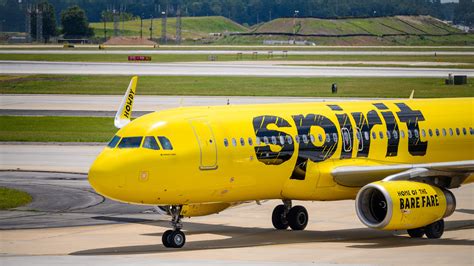
Spirit Airlines has dramatically scaled back its presence at Harry Reid International Airport (LAS) in Las Vegas, removing 23 routes from its schedule and slashing thousands of flights as the ultra-low-cost carrier restructures operations during its recovery from Chapter 11 bankruptcy protection. The reduction represents one of the most significant network contractions at the airport in recent years and underscores the depth of Spirit’s operational overhaul.
Las Vegas has long been a cornerstone of leisure-focused air travel in the United States, making it a natural fit for budget airlines that depend heavily on vacation traffic. However, Spirit’s latest scheduling data shows the airline retreating sharply from the market, signaling a strategic pivot toward fewer but more focused routes.
According to aviation analytics firm Cirium, Spirit scheduled 4,957 one-way departures from Las Vegas during the second quarter of 2025. In stark contrast, the airline plans to operate just 1,434 departures during the same period in Q2 2026, marking a staggering 71.1% year-over-year reduction.
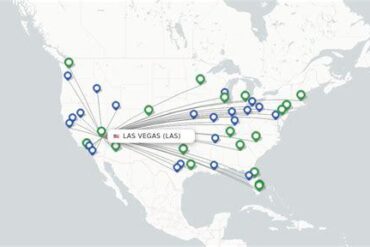
This dramatic drop means Spirit will serve only 14 destinations from Las Vegas, compared with 37 routes during the previous year’s second quarter. For an airport that ranks among the eight busiest in the United States, the change significantly reshapes the competitive landscape for both passengers and airlines operating in the region.
Massive Flight Reductions Reshape Spirit’s Las Vegas Network
The airline’s cuts are not sudden or entirely unexpected. Over the past year, Spirit has gradually reduced its West Coast footprint while rethinking the structure of its network. Cities such as Albuquerque, Portland, Sacramento, and San Diego had already been dropped earlier as the airline trimmed underperforming routes.
Las Vegas, often dubbed “Sin City”, typically thrives on tourism-driven traffic. Low-cost airlines like Spirit historically capitalize on this demand by offering cheap fares to weekend travelers and vacationers. Yet the carrier’s recent financial struggles forced leadership to reconsider where its aircraft and crews should be deployed.
Industry analysts believe the move reflects a shift toward strengthening core operational hubs rather than maintaining an expansive network with thinner margins.
Brett Snyder, president of the aviation consultancy Cranky Flier, explained that the airline’s strategy now centers around cities where it already has strong operational foundations. According to Snyder, Spirit is increasingly focused on markets such as Fort Lauderdale, Orlando, New York, and Detroit, where its presence is deeper and operational efficiencies are easier to achieve.
The result is a scaled-down but potentially more stable route network as Spirit attempts to stabilize its finances.
The 14 Destinations Spirit Still Serves From Las Vegas
Despite the sharp reductions, Spirit has not abandoned Las Vegas entirely. The airline continues to maintain flights to 14 destinations, ensuring the city remains part of its broader network. Many of these routes connect major metropolitan regions or key leisure markets.
The West Coast remains the most heavily served region from Las Vegas, with several California airports maintaining relatively strong flight frequencies. These routes continue to generate demand thanks to short flight times and steady tourism traffic between Nevada and California.
Among the busiest routes still scheduled:
- Hollywood Burbank Airport (BUR) – 251 flights
- John Wayne Airport, Santa Ana (SNA) – 242 flights
- Los Angeles International Airport (LAX) – 163 flights
- Reno-Tahoe International Airport (RNO) – 160 flights
These routes highlight Spirit’s continued reliance on short-haul West Coast travel, which tends to produce higher load factors and quicker aircraft turnaround times.
Outside California and Nevada, Spirit also maintains service to several key domestic hubs. Houston Intercontinental Airport (IAH) stands out with 148 flights scheduled in Q2 2026, making it one of the airline’s busiest routes from Las Vegas.
Other cities remaining in the network include Detroit (DTW), Newark (EWR), Dallas/Fort Worth (DFW), Chicago O’Hare (ORD), and Kansas City (MCI). These routes connect Las Vegas to major population centers across the United States.
Lower-frequency services continue to operate to Atlanta (ATL), Fort Lauderdale (FLL), Indianapolis (IND), and Nashville (BNA), offering additional connectivity despite the airline’s overall network contraction.
Bankruptcy Restructuring Drives Strategic Changes
The route reductions come as Spirit Airlines works through a complicated financial restructuring process. The carrier filed for Chapter 11 bankruptcy protection, aiming to reorganize its debt and stabilize its business model after years of intense competition and financial pressure.
While bankruptcy proceedings often signal trouble, they can also create opportunities for companies to rebuild operations in a more sustainable way. Spirit’s current strategy appears to focus on operational reliability and improved profitability, even if that means shrinking its footprint in certain markets.
Part of this transition involves reconsidering the airline’s traditional ultra-low-cost “bare fare” model, which relies on extremely cheap base tickets with additional charges for bags, seats, and other services. Spirit now plans to introduce more premium-style offerings, mirroring trends seen among other U.S. budget airlines.
These changes aim to attract passengers willing to pay slightly higher fares for improved comfort and reliability, while still maintaining the airline’s cost-efficient DNA.
Pilot Recalls Signal Stabilization Efforts
Despite the large network cuts, there are signs that Spirit may be stabilizing. Recently, the airline recalled around 500 pilots who had previously been furloughed, a move that suggests operational adjustments are underway.
However, the recall does not necessarily indicate rapid expansion. Instead, industry observers note that pilot attrition has been higher than expected, meaning Spirit must replenish staffing levels to maintain its reduced schedule.
In other words, the airline is rebuilding its workforce to support a smaller but more reliable operation, rather than preparing for aggressive growth.
For Las Vegas travelers, the immediate impact is clear: fewer Spirit flights and fewer route options compared with previous years. Yet the airline’s continued presence on several high-demand routes ensures that ultra-low fares will likely remain part of the competitive landscape at Harry Reid International Airport.
The broader story unfolding at Spirit Airlines illustrates a familiar theme in aviation: airlines sometimes need to shrink before they can grow again. In a sector where razor-thin margins meet unpredictable demand, strategic retreats can be just as important as expansion.