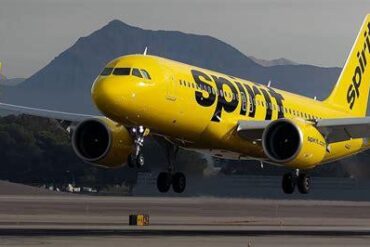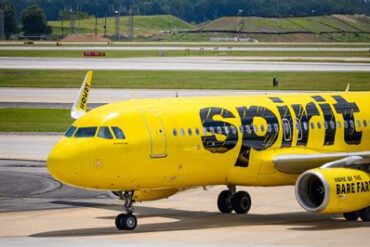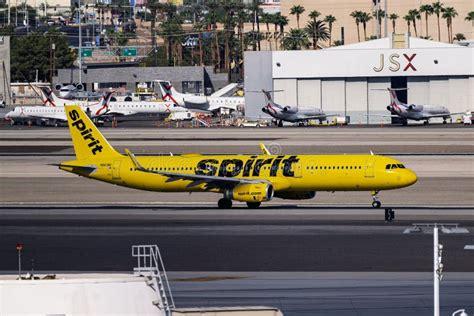
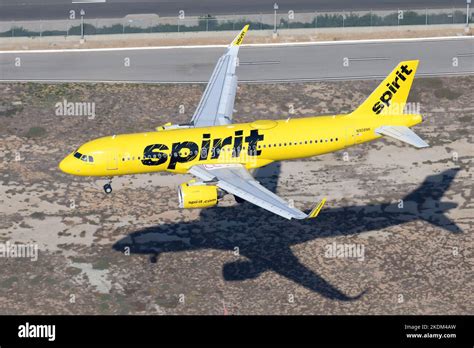
Spirit Airlines’ presence in Las Vegas came to a symbolic and emotional conclusion on May 29, 2026, when the final aircraft associated with the carrier departed Harry Reid International Airport for long-term storage. As the Airbus A320 climbed away from the Nevada desert, the pilot performed a traditional wing wave, creating a memorable farewell that marked the end of an era for one of America’s most recognizable ultra-low-cost airlines.
The Last Spirit Airlines Aircraft Leaves Las Vegas
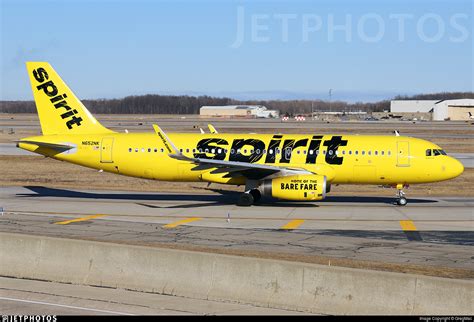
The aircraft, registered N652NK, departed Las Vegas at 9:59 a.m. on a short ferry flight bound for Pinal Airpark in Marana, Arizona. The journey lasted just 53 minutes, touching down at 10:52 a.m. What would ordinarily have been a routine repositioning flight instead became a poignant aviation moment, symbolizing the final chapter of Spirit Airlines’ operations in a city that had served as one of its important bases for more than a decade.
As the Airbus A320 lifted into the morning sky, observers witnessed a wing wave—a maneuver in which the aircraft gently rocks from side to side. The gesture is a long-standing aviation tradition often performed during retirements, final departures, commemorative flights, or special occasions. For aviation enthusiasts and former Spirit employees, it represented a heartfelt goodbye from both the aircraft and the crew.
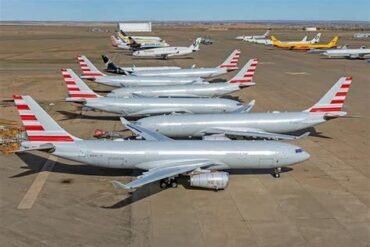
The departure also marked the last Spirit Airlines jet to leave Las Vegas following the carrier’s shutdown and subsequent fleet dispersal. Across the United States, dozens of former Spirit aircraft have been ferried to storage facilities as leasing companies determine their future operators and long-term plans.
Why Pinal Airpark Became the Aircraft’s Final Destination
Pinal Airpark has long been one of the aviation industry’s most important storage and maintenance facilities. Located in the dry Arizona desert, the site offers ideal conditions for preserving aircraft. Low humidity significantly reduces the risk of corrosion, making it a preferred destination for airlines and leasing firms seeking to store valuable assets.
The arrival of N652NK adds another former Spirit aircraft to the growing collection of jets awaiting reassignment, sale, lease transfer, or possible future reactivation. The facility is not merely a parking area; it also supports extensive maintenance, overhaul, and aircraft preservation programs.
For aircraft owners and lessors, placing airframes in desert storage helps protect millions of dollars in equipment while market conditions stabilize. Given the large number of former Spirit aircraft now in transition, facilities such as Pinal Airpark have become central to the airline’s post-collapse story.
A Closer Look at Airbus A320 N652NK
N652NK was among the more recognizable members of Spirit Airlines’ fleet. Delivered in December 2017, the aircraft was approximately eight and a half years old at the time of its final flight from Las Vegas. Manufactured as part of the Airbus A320 family, the jet embodied Spirit’s high-density, low-cost operating model.
Powered by two IAE V2527-A5 engines, the aircraft carried up to 182 passengers. Its cabin configuration reflected Spirit’s strategy of maximizing seating capacity while still offering a premium option through its popular Big Front Seat product.
Passengers who selected Big Front Seat enjoyed wider seating arranged in a 2-2 configuration, generous legroom with approximately 36 inches of pitch, and enhanced cushioning. Although Spirit never marketed these seats as traditional business class, they provided a significantly more comfortable experience than standard economy seating.
The remaining 174 seats were dedicated to the airline’s core economy product, supporting the carrier’s mission of delivering low fares while allowing customers to purchase additional services based on individual preferences.
Spirit Airlines’ Rise and Sudden Collapse
The farewell flight cannot be separated from the broader story of Spirit Airlines’ downfall. For years, the carrier battled mounting financial pressures that intensified following the COVID-19 pandemic. While the airline managed to survive several challenging periods, profitability remained elusive amid fluctuating demand, rising operating costs, and increasing competitive pressure.
By early 2026, the airline faced an increasingly difficult financial environment. Escalating fuel prices, liquidity concerns, and unsuccessful efforts to secure sufficient investment capital pushed the company toward an irreversible crisis. Attempts to obtain rescue financing ultimately failed, leaving management with limited options.
On May 2, 2026, Spirit Airlines officially ceased operations. The shutdown brought an abrupt end to one of the most recognizable brands in American aviation and affected thousands of employees across flight operations, maintenance, customer service, and corporate departments.
At the time operations ended, Spirit maintained a fleet of more than 90 aircraft, consisting entirely of Airbus A320-family variants. Those aircraft included the Airbus A320-200, A320neo, A321-200, and A321neo. Since the shutdown, aircraft have gradually been redistributed to storage facilities while lessors evaluate future opportunities.
Las Vegas and Spirit Airlines: A Relationship Spanning More Than a Decade
Las Vegas played a significant role in Spirit Airlines’ growth strategy. The airline established a base at the airport in 2012 and steadily expanded service to leisure destinations across the United States. The city’s strong tourism demand aligned perfectly with Spirit’s low-fare model, helping the carrier attract millions of price-conscious travelers over the years.
For many employees and frequent passengers, the final departure of N652NK represented more than the movement of a single aircraft. It symbolized the conclusion of a long-standing relationship between the airline and a city that had become one of its most visible operational centers.
The wing wave performed during departure transformed a routine ferry flight into a lasting aviation memory. As the yellow Airbus disappeared into the desert sky en route to Arizona, it carried with it the final visible reminder of Spirit Airlines’ presence in Las Vegas. While the aircraft now rests in storage, the farewell gesture ensured that its departure would be remembered as a fitting tribute to an airline whose bright yellow jets once formed a familiar part of the city’s skyline.