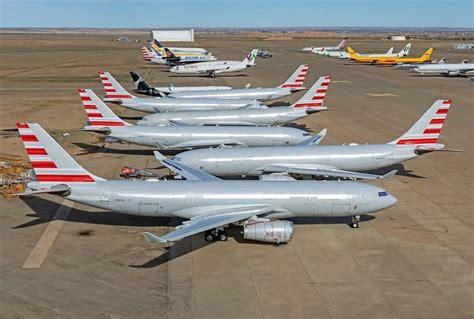
American Airlines’ COVID-era fleet restructuring created one of the most fascinating stories in modern aviation: dozens of widebody aircraft that appeared destined for retirement in the New Mexico desert are now finding unexpected second careers. While many aviation enthusiasts assumed the airline’s aircraft stored at Roswell International Air Center included retired Boeing 747s, the reality was very different. American Airlines’ pandemic-era desert fleet consisted mainly of Boeing 767-300ERs and Airbus A330-300s, aircraft that had served thousands of international flights before being grounded by the collapse in global travel.
The story of these aircraft is not simply about airplanes parked in the desert. It is about how airlines make difficult decisions during crises, how changing market conditions reshape fleets, and how aging passenger aircraft can sometimes return to the skies in completely different roles. After spending nearly five years in storage, some former American Airlines widebodies are preparing for new chapters, including service with Vietnam’s emerging carrier Sun PhuQuoc.
American Airlines Did Not Send Boeing 747s to Roswell During COVID-19
The image of retired aircraft resting in the desert often brings one aircraft type to mind: the Boeing 747. Known as the “Queen of the Skies,” the 747 became one of the most recognizable commercial aircraft ever built, and several airlines did send their retired jumbo jets to storage facilities during the COVID-19 pandemic.
However, American Airlines was not among them.
The airline had already ended its Boeing 747 passenger operations decades before the pandemic. American’s last standard Boeing 747 left the fleet in 1985, while its two Boeing 747SP aircraft remained in service until 1992. By the time COVID-19 disrupted global aviation in 2020, the airline had long moved away from four-engine jumbo jets and had built its long-haul network around more efficient twin-engine aircraft.
Instead, the widebody aircraft American sent to Roswell represented a different era of aviation. The stored aircraft included Boeing 767-300ERs and Airbus A330-300s, both of which had played important roles in American’s international network before the pandemic forced airlines worldwide to dramatically reduce capacity.
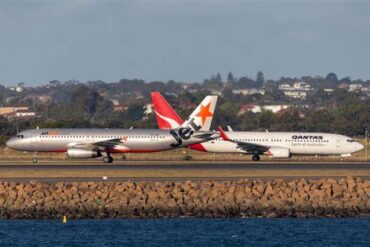
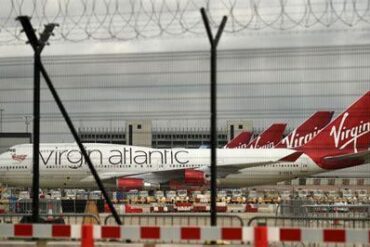
The confusion surrounding American’s Roswell aircraft highlights how strongly the 747 remains connected with aircraft storage facilities. Because airlines such as KLM, British Airways, and Qantas retired large 747 fleets during the pandemic, many aviation observers naturally associated any desert storage operation with the iconic jumbo jet.
The actual story, however, was about aircraft that were still highly valuable despite no longer fitting American’s future fleet strategy.
American Airlines’ Fleet Transformation Before and During the Pandemic
Before COVID-19 changed the aviation industry, American Airlines operated one of the world’s largest commercial fleets. The airline had gone through decades of evolution, moving from a diverse fleet that included aircraft such as the Boeing 747 and MD-11 to a more streamlined operation focused on efficiency.
During the 1970s and early 1980s, American operated Boeing 747s as part of its international expansion. However, changing economics pushed airlines toward smaller and more efficient aircraft. Twin-engine aircraft offered lower fuel consumption, reduced maintenance costs, and greater flexibility compared with large four-engine jets.
By the 2000s, American had become heavily focused on Boeing aircraft. That strategy changed in 2011 when the airline placed a major order for Airbus A320-family aircraft, beginning a gradual shift toward a more balanced fleet.
The COVID-19 pandemic accelerated decisions that American had already been considering. With international travel demand collapsing and airlines facing unprecedented financial pressure, carriers worldwide retired older aircraft earlier than expected.
American used the crisis as an opportunity to simplify its fleet. The airline retired several aircraft types, including:
- Boeing 757-200 aircraft
- Boeing 767-300ER aircraft
- Airbus A330 aircraft
- Embraer E190 aircraft
- Bombardier CRJ200 regional jets
For widebody operations, the retirement of the 767 and A330 marked a major change. American increasingly relied on newer Boeing 787 Dreamliners and Boeing 777 aircraft, which offered better fuel efficiency and lower operating costs.
Today, American’s long-haul fleet is centered entirely around Boeing widebody aircraft, with the 777 and 787 Dreamliner forming the backbone of its international network.
Why Roswell International Air Center Became American’s Aircraft Storage Choice
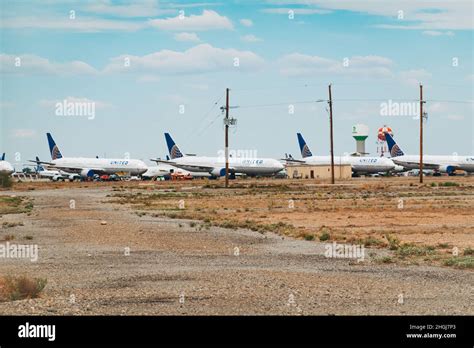
Aircraft storage locations are not chosen randomly. Airlines carefully evaluate factors such as climate, available space, maintenance capability, and access to aviation specialists.
For American Airlines, Roswell International Air Center in New Mexico became an important location during the pandemic because it offered nearly ideal conditions for long-term aircraft preservation.
The facility has a long aviation history. Originally developed as Roswell Army Airfield during World War II, the site later became Walker Air Force Base before transforming into a commercial aviation center. Today, Roswell supports aircraft storage, maintenance, refurbishment, component recovery, and aircraft dismantling operations.
The surrounding environment provides one of the biggest advantages. New Mexico’s dry desert climate dramatically reduces corrosion risks compared with humid regions. With extremely low humidity, limited rainfall, and hundreds of sunny days each year, aircraft can remain parked outdoors for extended periods with less environmental damage.
The massive open space available at Roswell is another major factor. During the pandemic, airlines around the world suddenly needed somewhere to place aircraft that had no immediate role in their networks. Storage facilities filled quickly, and locations like Roswell became critical parts of the aviation ecosystem.
For American, Roswell was not necessarily a final destination for every aircraft. Instead, it became a holding point where the airline and aviation companies could determine whether each aircraft would return to service, be converted, or be dismantled for parts.
The Boeing 767 Found a Second Life as a Freighter Aircraft
Among American’s retired aircraft, the Boeing 767 has proven to be one of the most successful candidates for a second career.
The 767 was one of the aircraft most affected by American’s fleet modernization strategy. The airline replaced the type with the newer Boeing 787 Dreamliner, which offered improved efficiency, greater range, and modern passenger features.
However, the aircraft’s passenger retirement did not mean the end of its useful life.
The Boeing 767 has become one of the most popular passenger-to-freighter conversion platforms in the world. Its size, range, and operating economics make it particularly attractive for cargo operators.
During conversion, aircraft undergo extensive modifications. Passenger interiors are removed, reinforced floors are installed, and large cargo doors are added to allow freight loading. Companies specializing in aircraft modification, including Israel Aerospace Industries, have converted many passenger 767s into dedicated freighters.
The growth of e-commerce has created strong demand for medium-sized cargo aircraft. Operators require aircraft capable of carrying significant payloads while maintaining reasonable operating costs, and the 767 fits this role exceptionally well.
A former American Airlines 767-300ER, registered as N394AN, became one example of this transition. After leaving Roswell, the aircraft traveled for conversion work, demonstrating how aircraft once considered retired can continue contributing to global aviation.
Former American Airlines A330 Aircraft Prepare for Vietnam Comeback
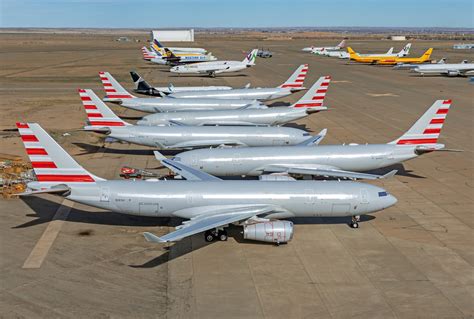
Perhaps the most surprising development from American’s Roswell storage fleet involves the Airbus A330.
Eight former American Airlines Airbus A330-300 aircraft are expected to join Vietnam’s Sun PhuQuoc in 2026. After spending years parked in the New Mexico desert, these aircraft are set to return to commercial passenger operations.
The A330 entered American’s fleet through its 2013 merger with US Airways. The aircraft became an important part of the airline’s international operations, serving routes from hubs such as Charlotte and Philadelphia.
American’s A330 fleet connected passengers with destinations across Europe and beyond, including cities such as London, Dublin, Munich, and other international markets. The aircraft also served domestic long-distance routes where additional capacity was needed.
However, American eventually decided to simplify its widebody fleet around Boeing aircraft. The airline canceled its previous Airbus A350 plans and focused its future international strategy on the 787 Dreamliner and 777.
For Sun PhuQuoc, acquiring former American A330s provides a relatively affordable way to expand its fleet. Instead of purchasing expensive new aircraft, the airline can introduce proven widebody jets with remaining useful life.
For the aircraft themselves, the deal represents a remarkable turnaround. After years sitting inactive in desert storage, they are preparing to return to the skies and begin another chapter under a new airline.
Not Every Aircraft Escaped the Roswell Desert
While some aircraft found new opportunities, others were never expected to fly again.
Aircraft retirement is often not about the age of the airplane alone. Many aircraft are valuable because of their components, even when operating them as complete aircraft no longer makes economic sense.
Several American Airlines Boeing 757s and 767s were acquired for parts support. Aviation companies can recover engines, avionics systems, landing gear, and other components that remain valuable for active aircraft fleets.
The Boeing 757 is a particularly interesting example. Although passenger demand for the type has declined, the aircraft remains important in cargo operations. Since production ended in 2004, spare parts have become increasingly valuable.
Older Airbus A330 aircraft also faced different outcomes. While some younger A330 variants remain active with other airlines, older examples may be dismantled when the cost of returning them to service exceeds their market value.
This process may seem like the end of an aircraft’s story, but aircraft recycling plays a crucial role in aviation. Components recovered from retired aircraft help keep thousands of other airplanes operating safely around the world.
Why the Boeing 747 Passenger Market Collapsed After COVID-19
The confusion around American’s Roswell aircraft is closely connected to a much larger aviation story: the dramatic decline of the passenger Boeing 747.
The pandemic accelerated the retirement of many 747 fleets, but the aircraft’s decline had started years earlier.
Airlines gradually shifted toward efficient twin-engine aircraft such as the Boeing 787 Dreamliner and Airbus A350. These aircraft could fly long distances with lower fuel consumption and fewer maintenance requirements.
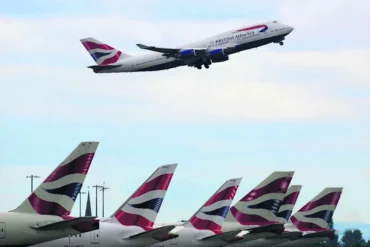
Major airlines including KLM, Qantas, Virgin Atlantic, and British Airways retired their passenger 747 fleets during or shortly after the pandemic. The decisions reflected a broader industry transformation rather than a temporary reaction to falling demand.
The traditional airline model that favored large aircraft was changing. Instead of operating massive aircraft between major hubs, airlines increasingly preferred smaller long-range aircraft that could serve more direct routes.
The Boeing 747 was designed for an era when airlines needed enormous passenger capacity between major international gateways. Modern aviation has moved toward flexibility, efficiency, and point-to-point connectivity.
Although the 747 remains important in cargo operations, its passenger era has effectively ended.
The Legacy of American Airlines’ Roswell Aircraft
American Airlines’ COVID-retired widebody aircraft demonstrate how unpredictable the aviation industry can be.
Some aircraft that appeared finished have found new careers. Boeing 767s are becoming freighters, while Airbus A330s are preparing to return to passenger service with a new airline in Vietnam. Others have contributed through parts recovery, supporting aircraft that remain active around the world.
The Roswell desert was not simply a parking area for unwanted airplanes. It became a crossroads where aircraft histories changed direction.
The pandemic forced airlines to make unprecedented decisions, but it also created opportunities for aircraft to move into new roles. American Airlines’ former widebodies show that retirement is not always the final chapter. In aviation, an aircraft parked in the desert may still have many years of flying ahead.