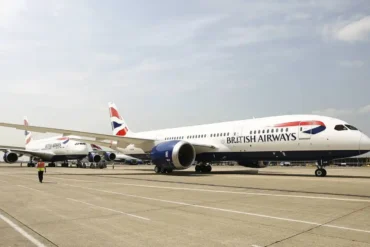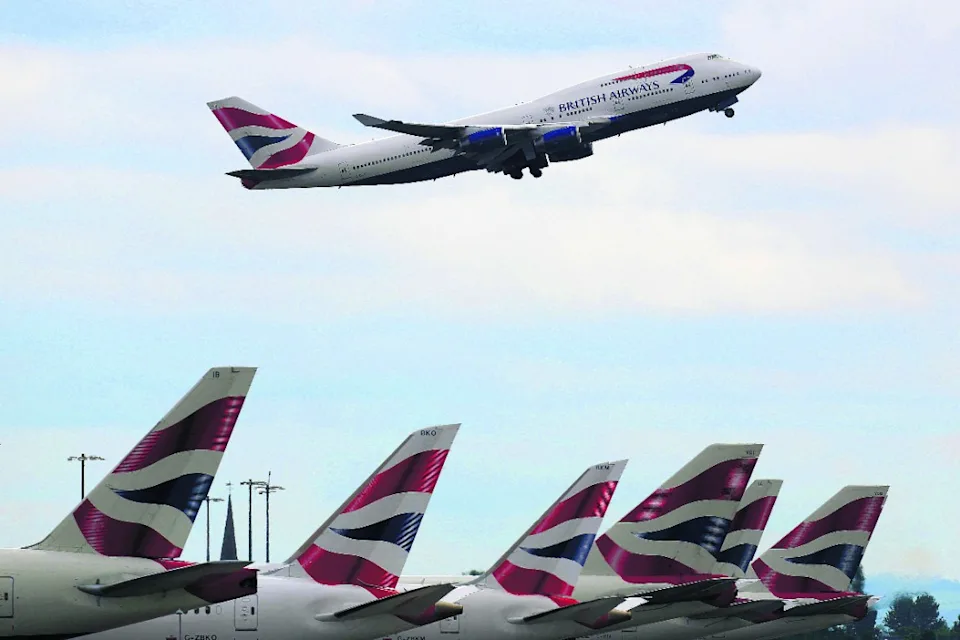
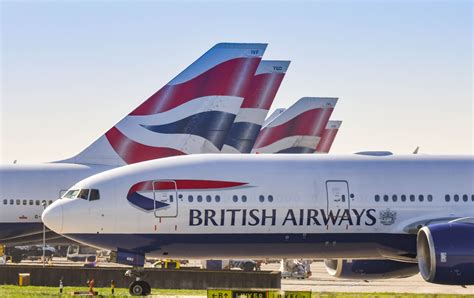
The parent company of British Airways, International Airlines Group (IAG), is once again in the spotlight — not for operational setbacks or travel delays, but due to mounting shareholder unrest over a controversial executive pay package. As the global aviation industry enjoys a lucrative post-pandemic rebound, IAG’s latest move to award its CEO a significant one-time share award has sparked criticism from powerful investors and advisory groups alike. With the annual general meeting scheduled for June 18, the tension between shareholder interests and corporate governance principles is now reaching a critical inflection point.
Shareholder Backlash Fueled by Executive Compensation Concerns
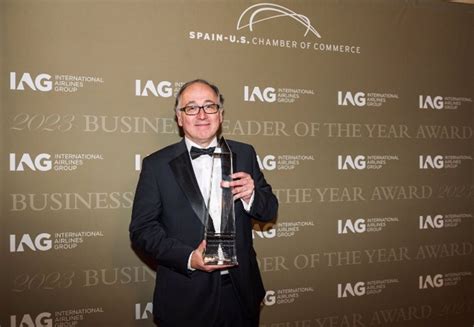
Luis Gallego, CEO of IAG, earned £4.6 million in 2024 — a notable rise from £3.1 million in 2023. This surge in compensation has not gone unnoticed. Institutional Shareholder Services (ISS), one of the most influential proxy advisory firms in the world, has taken a firm stance against the proposed remuneration policy. The core of the controversy lies in a one-off share award intended for Gallego, which ISS argues has been layered over an already lucrative restricted stock plan (RSP), with no proportional reduction to existing incentives.
According to ISS, the bonus is tethered to IAG’s operating margin performance, with targets that exceed the company’s medium-term ambitions. This has raised eyebrows among critics, who argue that the structure creates redundant reward mechanisms and opens the door for excessive executive pay.
ISS stated in a client-facing report: “While the company’s rationale is noted, material concerns are identified with the concurrent operation of the one-time award and the existing RSP, particularly as no reduction has been made to the RSP opportunity.”
Such critique is not only about the scale of the award but also the governance principles underpinning its approval. The report further warned that the plan might send the wrong message to the broader market, at a time when shareholders are increasingly scrutinizing executive reward systems.
IAG’s Justification and the Pay Competitiveness Debate
From IAG’s perspective, the move is a strategic necessity. The board argues that the one-time share award is part of a broader compensation alignment strategy designed to:
- Bring the CEO’s pay closer to comparable FTSE 100 peers.
- Address internal pay compression between Gallego and other senior executives.
- Enhance IAG’s attractiveness in the competitive talent market.
However, ISS appears unconvinced that these justifications warrant such a substantial augmentation of Gallego’s pay. Critics within the investment community fear that IAG may be leaning too far into performance-based equity awards without ensuring a transparent, proportional mechanism that aligns incentives with long-term shareholder value.
Financial Recovery and Record-Breaking Stock Growth
The controversy comes at a time when IAG is enjoying one of its strongest financial runs since the pandemic decimated the airline industry. As of early June 2025, IAG’s shares are trading around 330p, representing an astounding 90% increase over the past 12 months. The company’s market capitalization now stands at approximately £15.5 billion.
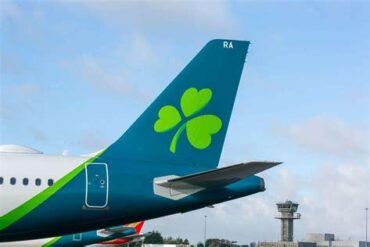
This stock resurgence is fueled by surging travel demand, particularly in Europe. IAG, whose portfolio includes British Airways, Iberia, Vueling, and Aer Lingus, has been among the top beneficiaries of the industry’s recovery. Notably, the company reinstated its dividend in August 2024, marking a pivotal milestone and signaling confidence in its long-term profitability.
Riding the Tailwinds of Post-Pandemic Travel
The company’s financial turnaround is not purely coincidental. IAG reported an interim operating profit of £1.1 billion last year, the first such performance since before the COVID-19 outbreak. The upturn in global leisure and business travel, especially across European and transatlantic routes, has contributed significantly to the group’s impressive earnings.
While the aviation industry was one of the hardest hit sectors during the pandemic, IAG’s multi-brand strategy and strong foothold in both premium and low-cost segments allowed it to pivot efficiently. The success of Iberia and Vueling in Southern Europe, alongside Aer Lingus in Ireland, created a diversified revenue stream that reduced over-dependence on British Airways.
Despite the generally positive environment, IAG has had to navigate through certain macro-political headwinds, including the decline in transatlantic travel linked to the economic aftershocks of Donald Trump’s re-election. However, Gallego reassured investors in a May 2025 statement that this decline had been “largely offset” by higher bookings in premium cabins, particularly in routes connecting European capitals.
Governance Under Scrutiny as Proxy Advisers Push Back
While ISS has taken a clear stand against the share award, it is not the only group likely to scrutinize the remuneration framework. Glass Lewis, another major advisory firm, is expected to release its stance in the coming days. With more than 60% of IAG’s shares held by institutional investors, any widespread dissent from proxy advisory firms could sway the outcome of the 18 June AGM significantly.
The upcoming vote will serve as a litmus test for shareholder sentiment on executive pay at a time when many FTSE 100 firms are facing growing pressure to moderate excessive compensation structures. IAG’s position will also reflect broader market trends around the balance between performance rewards and shareholder value alignment.
Wider Industry Trends and Implications for IAG
The IAG episode is emblematic of a broader reckoning in the global airline industry, where shareholder activism is colliding with rising executive compensation trends. With airlines now operating at near pre-pandemic capacity and profitability levels, the focus has shifted from survival to sustainability — both financial and ethical.
In this context, the Gallego award has raised a pivotal question: Should CEOs receive additional performance-linked equity in an era when company valuations are already booming? Critics argue that such rewards should be more modest, or at least adjusted in tandem with existing equity plans.
Moreover, the issue of pay compression — often cited to justify high CEO compensation — continues to be contentious. While IAG’s board insists on aligning Gallego’s pay with FTSE 100 peers, others question whether benchmarking against the upper echelons of the market reflects a sound corporate governance philosophy.
Potential Outcomes and Market Impact
Should shareholders reject the remuneration policy on June 18, it would mark a significant blow to IAG’s leadership team, particularly at a time when the company is regaining momentum. It could also trigger a revision of IAG’s executive compensation strategy and prompt deeper conversations around shareholder engagement, board accountability, and the role of remuneration committees.
On the other hand, a successful approval of the policy — despite ISS’s opposition — would signal growing shareholder comfort with higher executive rewards in post-pandemic market conditions, potentially influencing similar pay decisions across the airline sector and the broader FTSE 100.
In either scenario, the vote will serve as a benchmark event in the evolving relationship between large corporations and their investor base.
Conclusion: A Defining Moment for IAG’s Corporate Identity
IAG stands at a crossroads. Flush with financial gains and enjoying the fruits of a long-awaited industry revival, the company must now decide whether its leadership strategy aligns with its accountability to shareholders. The upcoming AGM is more than just a formality — it’s a referendum on governance, equity, and the expectations of a rapidly evolving market.
As Gallego and the IAG board prepare to make their case, one thing is certain: the eyes of institutional investors, governance watchdogs, and market analysts will be watching — not just to count the votes, but to measure the credibility and integrity of a company now navigating the tricky balance between reward and responsibility.