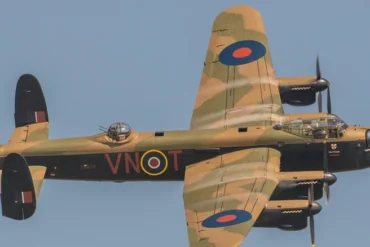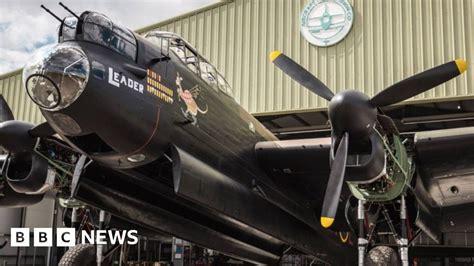
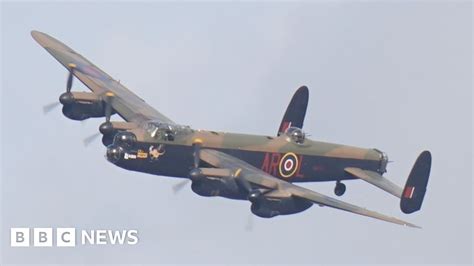
In a spectacle steeped in history and power, the UK’s only airworthy Lancaster Bomber is set to grace the skies above Suffolk this weekend. The event, already igniting anticipation across aviation circles and local communities, will feature the iconic aircraft as it flies over both Felixstowe Carnival and Rougham Control Tower near Bury St Edmunds on Sunday, July 27. The flypast marks a rare and stirring appearance by one of the most celebrated warplanes of the Second World War, a machine that embodies both the ferocity and heroism of Britain’s airborne legacy.
The Avro Lancaster: Britain’s War-Time Heavyweight Returns to the Sky
Built in 1945, the Avro Lancaster PA474 now stands as one of only two surviving airworthy Lancasters in the world — the other based in Canada. This revered bomber is a majestic echo of the past, developed by Avro for the Royal Air Force (RAF) to deliver long-range, heavy payloads across enemy lines. Of the 7,377 units constructed during WWII, just these two remain air-capable, making each public appearance a momentous event.
The Lancaster played a pivotal role in the Allied bombing campaign, renowned for its adaptability, durability, and effectiveness in delivering precision strikes deep into occupied Europe. Most famously, it was used in Operation Chastise — the legendary “Dambusters Raid” — which targeted German hydroelectric dams using innovative bouncing bombs. The aircraft’s silhouette, distinct engine roar, and bomb bay are now symbols of Britain’s resilience during one of the darkest chapters in history.
Rare Flypast: Where and When to Witness the Lancaster Over Suffolk
On Sunday, July 27, aviation enthusiasts and curious onlookers alike will get the rare chance to see the Lancaster in motion. The aircraft is scheduled for a meticulously timed route:
- 3:18 PM – Flypast over Rougham Control Tower, near Bury St Edmunds.
- 3:37 PM – Pass over Felixstowe Carnival, continuing its southeast trajectory along the Suffolk coast.
These two flypasts form part of broader commemorative programming, tied to the Royal Air Force Day at Rougham Control Tower — a free, public event that pays tribute to RAF history and its enduring legacy.
Rougham Control Tower: RAF Day Takes Center Stage
The Rougham Control Tower Aviation Museum, located just a few miles from Bury St Edmunds, is set to host an immersive RAF Day celebration from 10am to 4pm. Entry is completely free, and the event promises a vibrant array of historical exhibitions and community-driven festivities:
- Authentic Second World War re-enactment groups recreating scenes from RAF operations.
- Access to a decommissioned SEPECAT Jaguar cockpit, offering an intimate look at Cold War-era jet technology.
- A soul-stirring performance by the RAF Honington Military Wives Choir, bringing a human, emotional dimension to the occasion.
- A variety of vintage displays, family activities, and catering options celebrating British aviation history.
Visitors will also find themselves immersed in the very ground that once served as RAF Rougham, a wartime base that housed American B-17 Flying Fortresses as part of the 8th Air Force during WWII. Today, the Control Tower Museum stands as a restored testament to those who served, combining authentic artefacts with an active community of military historians.
Lancaster’s Enduring Legacy in the British Public Consciousness
Few aircraft capture the imagination of the British public like the Lancaster. Its name alone evokes grainy newsreels, night raids over Nazi-occupied Europe, and the stoic determination of Bomber Command. Flying the PA474 over British soil is more than a nod to the past — it is an airborne monument to bravery.
While many recognize the role of Spitfires and Hurricanes in the Battle of Britain, the Lancaster’s contribution to victory was no less critical. Capable of carrying up to 14,000 lbs of bombs, including the infamous “Grand Slam” earthquake bombs, the Lancaster defined the offensive strategy in the latter stages of the war.
Post-war, most of the fleet was scrapped, sold, or lost. The few that remained were used for photo reconnaissance, search and rescue, or maritime patrol. PA474, the plane flying over Suffolk, was originally earmarked for Tiger Force, a British unit planned for deployment in the Pacific Theatre, though the war’s end saw those missions cancelled. It spent subsequent years in photographic reconnaissance before being repurposed and restored for ceremonial use.
Engineering a Legend: What Makes the Lancaster Unique
The Avro Lancaster stands as a pinnacle of WWII engineering. With a four-engine configuration powered by Rolls-Royce Merlin engines, the bomber could reach speeds of 287 mph at 15,000 feet and climb to a ceiling of 24,500 feet. Key design features included:
- Twin tail fins for enhanced stability during long bombing runs.
- Retractable landing gear to reduce drag and improve fuel economy.
- Nose, dorsal, and tail gun turrets equipped with .303 Browning machine guns.
- Spacious bomb bay, which ran the length of the fuselage — ideal for innovative ordinance like the bouncing bomb.
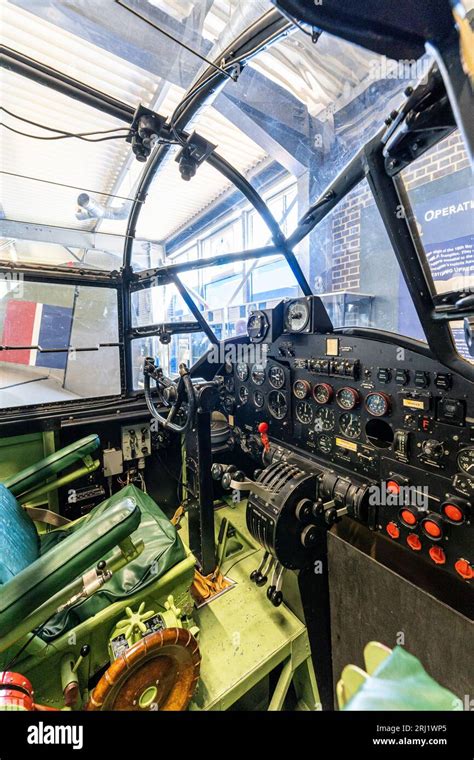
Inside the aircraft, conditions were cramped, unheated, and brutally loud. Crews braved hypoxia, frostbite, and enemy fire. The average life expectancy of a bomber crew in 1943 was just five missions. Seeing one of these aircraft fly today is not merely a mechanical feat — it is a tribute to the crews who endured unimaginable peril.
The Battle for Restoration and Preservation
Maintaining a flying Lancaster is an undertaking of enormous complexity and cost. The Battle of Britain Memorial Flight (BBMF), based at RAF Coningsby, oversees the operation and upkeep of PA474. A team of engineers, technicians, and historians meticulously restore each component to original wartime specification, often relying on reverse-engineering techniques, vintage manuals, and specialist suppliers.
Each flight is a logistical symphony — weather conditions, engine tolerances, mechanical integrity, and even historical fidelity are all balanced before the aircraft takes to the air. Scheduled appearances, such as the flypasts in Suffolk, are rare due to the fragile nature of the aircraft and the stringent airworthiness criteria it must meet.
Recent years have seen several last-minute cancellations of public appearances due to engine faults, highlighting the razor-thin margin for error in operating a near-80-year-old aircraft. That makes the confirmed flights over Rougham and Felixstowe even more precious.
Community Response and Educational Impact
The announcement of the Lancaster’s Suffolk flypast has sparked a surge of local interest, with community groups, veterans, and families planning viewings and meet-ups across the region. For many, it’s an opportunity to share stories, reflect on family histories, or introduce younger generations to a living chapter of their national identity.
Educational organizations and local schools are expected to incorporate the event into their summer learning programmes, emphasizing historical literacy and wartime memory. Museums like the Rougham Control Tower serve as vital local hubs for this educational mission, linking the past to present in tangible, emotive ways.
Final Approach: Why This Event Matters
In a time of accelerating technological change and shifting historical awareness, witnessing the Lancaster fly is a grounding, visceral reminder of Britain’s wartime legacy. It is not simply about aircraft or nostalgia — it’s about honouring the sacrifice, the courage, and the engineering brilliance that defined a generation.
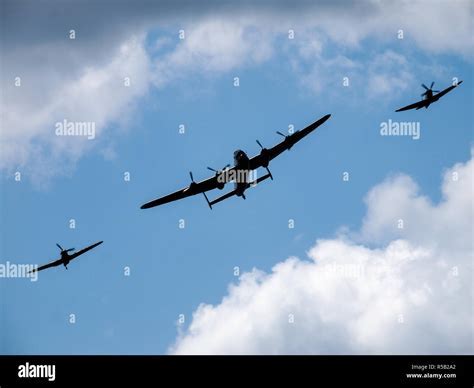
Whether you are a historian, aviation enthusiast, veteran, or first-time observer, this weekend’s flypast over Bury St Edmunds and Felixstowe offers an unmissable moment to reflect, remember, and marvel. The skies of Suffolk will once again carry the unmistakable thunder of the Lancaster — a sound that once echoed across Europe, now returned to inspire a new generation.