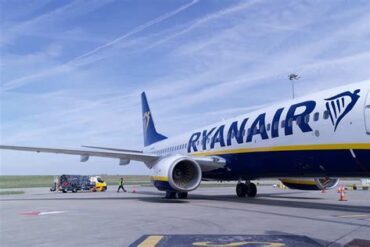
Ryanair, Europe’s largest budget airline, has reported a staggering £710.3 million in profits after tax for the three months ending June 2025. This represents an extraordinary surge from £311.8 million a year earlier, more than doubling its financial performance year-on-year. The profit boom was primarily fuelled by two key factors: a well-timed Easter holiday period and significant fare hikes across its extensive European network.
Easter Timing Amplifies Revenue Surge
The early arrival of Easter in March significantly influenced Ryanair’s impressive financial outcome. Traditionally, the Easter holiday is one of the busiest travel periods in Europe, with families and tourists seeking affordable travel options. For Ryanair, whose business model thrives on high passenger volumes, the timing could not have been better. With schools closing and holidaymakers flooding airports earlier than usual, the company capitalised on the early surge to fill its flights, particularly those booked at the last minute.
According to Ryanair’s quarterly report, revenues increased 20% to reach €4.34 billion (£3.76 billion). This growth was not solely due to increased passenger numbers but also higher-than-anticipated ticket prices for late bookings, a critical margin driver during peak travel seasons. Easter timing contributed to optimising load factors across key routes in Spain, Italy, Portugal, and Eastern Europe.
Fare Increases Propel Average Revenue Per Seat
One of the most significant drivers of Ryanair’s profitability surge was the aggressive increase in average fares. The average fare jumped 21% year-on-year, rising from €42.15 to €51 per seat (£44.18), as reported by the airline. This represents Ryanair’s strategic response to recovering from the previous year’s challenges, where fares were slashed by 7% to attract price-sensitive consumers during economic uncertainty.

While fare hikes contributed handsomely to revenues, Ryanair emphasized that the stronger-than-expected results were also supported by a rebound in late-stage bookings. Many travellers opted to secure flights closer to departure dates, where fares naturally peak due to demand pressure. The company’s ability to manage revenue yield during such crucial periods significantly enhanced profitability.
Passenger Growth Slows Amid Aircraft Delivery Delays
Despite record-breaking financial numbers, Ryanair’s passenger growth trajectory paints a more restrained picture. The airline carried 55.5 million passengers during the quarter, reflecting just a 4% year-on-year growth. This muted expansion contrasts sharply with the spike in financial results and is largely attributed to ongoing aircraft delivery delays from Boeing.
Ryanair has been candid about its frustrations with the American aerospace giant, repeatedly blaming Boeing’s production issues for holding back capacity expansion. The airline’s annual passenger forecast has been downgraded multiple times, with the latest projection estimating a rise of merely 3% to 206 million passengers for the full fiscal year. This conservative figure, especially amid robust summer travel demand, underscores the critical supply-side constraints currently hampering Ryanair’s growth ambitions.
Michael O’Leary’s Cautious Optimism Amid External Risks
Ryanair’s outspoken CEO, Michael O’Leary, conveyed a blend of cautious optimism and strategic realism during his earnings briefing. While expressing confidence in recovering last year’s fare cuts, O’Leary highlighted the myriad of external risks capable of disrupting Ryanair’s profitability trajectory. He stated:
“We do, however, cautiously expect to recover almost all of last year’s 7% full-year fare decline, which should lead to reasonable net profit growth in full year 2025-26. The final 2025-26 outcome remains heavily exposed to adverse external developments, including the risk of tariff wars, macro-economic shocks, conflict escalation in the Middle East and Ukraine and European air traffic control strikes, mismanagement and short staffing.”
The mention of geopolitical tensions and systemic operational disruptions serves as a sober reminder of Ryanair’s vulnerability to macroeconomic and political instability. Moreover, European air traffic control (ATC) strikes and staffing issues have periodically wreaked havoc on the region’s aviation sector, raising concerns over Ryanair’s ability to sustain its current momentum.
Fare Growth to Moderate in Coming Quarters
Ryanair has cautioned stakeholders that the magnitude of fare hikes witnessed in the first quarter will likely not be replicated in the upcoming quarters. Analysts suggest that the early Easter artificially inflated Q1 performance, and the seasonality effect will normalise as the fiscal year progresses. In addition, with consumers becoming increasingly price-sensitive amid fluctuating economic indicators, the airline may find resistance in pushing fares significantly higher.
Nevertheless, Ryanair remains committed to strategic pricing. While not expecting another double-digit fare hike, the company aims to maintain elevated average prices compared to 2024 levels, securing steady revenue streams while ensuring sufficient load factors on core routes.
Boeing Deliveries: A Critical Bottleneck to Expansion
Perhaps the most critical challenge facing Ryanair is the delayed delivery of new Boeing aircraft. These bottlenecks severely restrict the airline’s capacity to expand aggressively during periods of high demand. Ryanair’s reliance on the Boeing 737 MAX fleet has been central to its low-cost operational model, but manufacturing disruptions at Boeing’s facilities have left Ryanair’s growth engine throttled.
In prior financial updates, Ryanair indicated that it was forced to slash its annual passenger forecast multiple times due to unfulfilled aircraft deliveries. This structural issue persists into the current fiscal year, and unless Boeing resolves its supply chain and regulatory hurdles, Ryanair’s medium-term growth strategy could face sustained pressure.
Strategic Outlook: Strong But Guarded
As Ryanair moves deeper into the fiscal year, its financial position remains robust but exposed. The airline’s combination of strategic fare hikes, optimised scheduling during high-demand periods like Easter, and late-booking price premiums has proven highly effective in boosting short-term profitability. However, aircraft delivery constraints, external geopolitical risks, and potential consumer resistance to rising fares loom over its long-term trajectory.
For investors, Ryanair presents a case of a financial powerhouse constrained operationally, where profitability does not necessarily correlate with expansion. The airline’s ability to maintain elevated margins despite slower passenger growth highlights its operational efficiency but also raises questions about the sustainability of this model should macroeconomic headwinds intensify.

In conclusion, Ryanair’s latest financial results are a testament to its strategic agility and market dominance in Europe’s low-cost carrier segment. Yet, caution prevails as external risks and capacity bottlenecks pose significant challenges in the months ahead. As O’Leary steers the airline through turbulent skies, all eyes remain on Boeing’s factories and the unpredictable geopolitics shaping Europe’s aviation landscape.