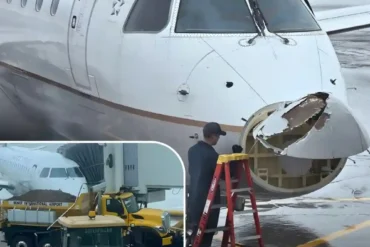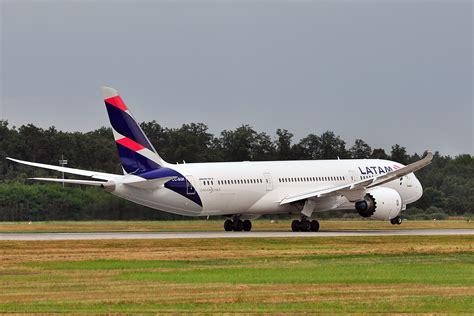
LATAM Airlines is facing an extraordinary maintenance and logistics challenge after one of its Boeing 787-8 Dreamliners suffered severe damage at Easter Island’s Mataveri International Airport, one of the most isolated commercial airports on Earth. The aircraft, registered CC-BBD, was grounded after an airstairs vehicle collided with the jet and tore away one of its passenger cabin doors, leaving the widebody stranded thousands of miles from the airline’s primary maintenance facilities.
The incident occurred on May 29 shortly after the aircraft completed its scheduled service from Santiago, Chile, to Easter Island, also known as Rapa Nui. While no injuries were reported, the accident immediately transformed a routine ground operation into a complex aviation recovery project. The damaged Dreamliner now sits at an airport famous not only for its remote location but also for the unique operational restrictions that make any major repair effort exceptionally difficult.
For LATAM, the challenge extends far beyond replacing a damaged component. A modern Boeing 787 is among the most technologically advanced commercial aircraft in service, and repairing substantial structural damage in such an isolated location requires specialized expertise, equipment, and logistical coordination rarely seen outside major maintenance centers.
The aircraft involved is nearly 13 years old and had maintained a clean operational record since entering service with LAN Airlines, which later became LATAM. According to available reports, the collision occurred when an airstairs truck struck the aircraft’s L2 passenger door, shearing it completely from the fuselage structure.
NEW: LATAM Boeing 787-8 Dreamliner grounded at one of the most remote airports in the world after the L2 door was torn off by an airstairs truck.
The incident occurred on Friday at Mataveri International Airport on Easter Island in Chile, located approximately 3,759 kilometres… pic.twitter.com/IJj2WhuaVw
— Breaking Aviation News & Videos (@aviationbrk) May 31, 2026
The World’s Most Remote Commercial Airport Becomes an Unexpected Repair Site
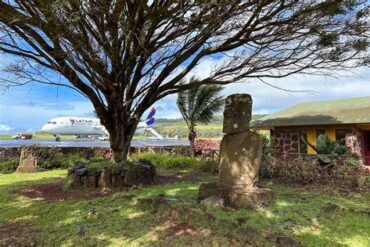
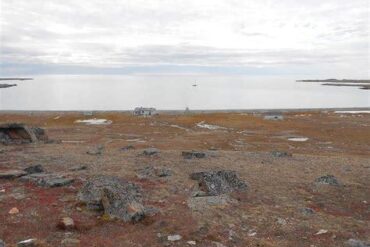
Mataveri International Airport occupies a unique place in global aviation. Located in the southeastern Pacific Ocean, the airport is approximately 1,617 miles from the nearest alternate airfield, making it one of the most isolated airports regularly served by commercial aircraft.
Its remoteness has shaped virtually every aspect of its operations. Aviation authorities maintain strict procedures governing flights to and from the island because aircraft operating in the region have extremely limited diversion options. Once flights pass certain points over the Pacific, alternatives effectively disappear until arrival.
The airport’s single runway stretches 10,885 feet, a dimension that reflects its unusual history. In 1987, NASA supported runway expansion efforts so the facility could potentially serve as an emergency landing site for the Space Shuttle program. That legacy left Easter Island with infrastructure capable of accommodating large aircraft despite its relatively small population and remote geography.
However, runway length alone does not make an airport suitable for extensive aircraft repairs. While Mataveri can welcome a Boeing 787, it lacks many of the specialized facilities normally required to repair one after a significant structural accident.
Why Replacing a Boeing 787 Door Is Far More Complex Than It Sounds
At first glance, replacing an aircraft door might appear straightforward. In reality, a passenger cabin door is a critical structural component integrated into the pressure vessel of the aircraft.
Commercial airliners routinely cruise at altitudes exceeding 35,000 feet, where outside air pressure is too low to support human life. To create a safe cabin environment, the fuselage must function as a sealed pressure vessel, enduring continuous expansion and contraction during every flight cycle.
When a door is ripped from its mounting structure, engineers must determine whether the surrounding fuselage has also sustained hidden damage. Even relatively minor impacts can transfer enormous forces into neighboring structural components.
For LATAM’s maintenance teams, the challenge is magnified by the Boeing 787’s extensive use of carbon-fiber reinforced plastic composites. Unlike traditional aluminum airframes, composite materials can suffer internal structural damage that is not always visible on the surface.
Composite Construction Creates Unique Inspection Challenges
The Dreamliner’s advanced composite design delivers substantial operational benefits, including reduced weight, improved fuel efficiency, and enhanced corrosion resistance. Yet these same materials require highly specialized inspection techniques following an impact event.
When aluminum structures are damaged, visible dents, wrinkles, and deformation often reveal the extent of the problem. Composite materials behave differently. Internal delamination, cracking, or separation of layers can occur beneath an apparently intact exterior surface.
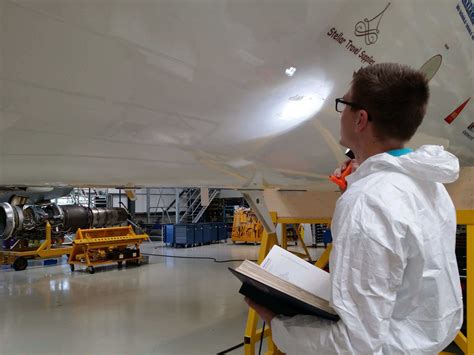
As a result, LATAM will likely deploy nondestructive testing specialists equipped with advanced ultrasonic inspection systems. These teams must carefully examine the damaged area to identify hidden defects before any structural repairs can begin.
Such inspections typically occur inside controlled maintenance environments. Easter Island offers no large hangars capable of housing a Boeing 787, forcing technicians to work outdoors while contending with changing weather conditions, humidity, wind, and airborne dust.
These environmental factors complicate virtually every stage of the repair process, particularly when working with composite materials that often require strict temperature and contamination controls.
Transporting Parts and Equipment Across the Pacific
The physical replacement of the missing door presents another formidable obstacle. Unlike major aviation hubs, Easter Island has no local inventory of Boeing 787 structural components.
Every major replacement part, specialized tool, and support system must be transported from mainland South America. LATAM may need to dedicate cargo capacity specifically to support the recovery effort, potentially using chartered aircraft or reallocating space aboard existing long-haul operations.
Beyond the replacement door itself, technicians will require structural repair materials, inspection equipment, lifting systems, support jacks, fasteners, and numerous specialized tools certified for Boeing 787 maintenance.
The sheer distance involved transforms what might be a routine logistics task elsewhere into a carefully coordinated international operation spanning thousands of miles of open ocean.
Preparing the Aircraft for a High-Risk Ferry Flight
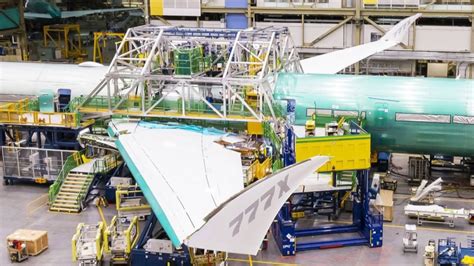
The ultimate objective on Easter Island is not necessarily to complete permanent repairs. Instead, engineers are expected to focus on making the aircraft safe enough for a one-time ferry flight back to a major maintenance base.
Such flights are common when damaged aircraft cannot be fully repaired at their current location. However, obtaining regulatory approval requires extensive engineering analysis and careful risk assessment.
Technicians will likely install temporary structural reinforcements around the damaged section. Specialized repair plates, often referred to as doublers, may be attached to restore aerodynamic smoothness and provide additional structural support during transit.
The aircraft would then operate under significant restrictions. Ferry flights involving structural damage are frequently conducted at lower altitudes and without normal cabin pressurization. Operating below 10,000 feet reduces stress on the fuselage and minimizes pressure-related loads acting on repaired sections.
The Long Journey Back to Mainland Chile
Even after temporary repairs are completed, the flight back to Chile presents its own set of challenges. The route from Easter Island to Santiago crosses vast stretches of ocean with no practical emergency landing options along the way.
Flying at lower altitudes increases aerodynamic drag and fuel consumption, while exposing the aircraft to greater atmospheric turbulence. Every aspect of the mission, from fuel planning to weather forecasting, must be carefully evaluated before departure.
Only a minimal operational crew would be expected onboard. Engineers and flight planners will likely wait for optimal meteorological conditions, including favorable winds and stable weather patterns, before authorizing the journey.
Once back on the mainland, the Dreamliner will undergo comprehensive structural repairs, inspections, and certification testing. Only after satisfying all engineering and regulatory requirements will the aircraft be cleared to return to passenger service. Until then, the damaged Boeing 787 remains an unusual sight on Easter Island—a sophisticated long-haul airliner temporarily stranded at the edge of the Pacific, awaiting one of the most challenging field recovery operations in recent LATAM history.