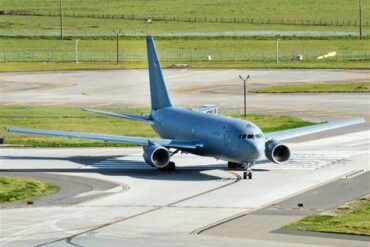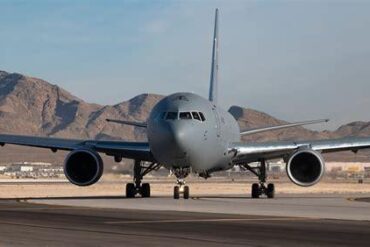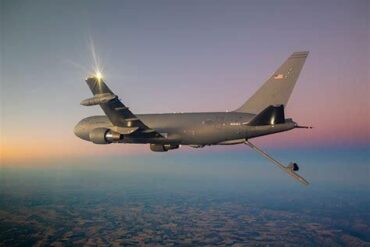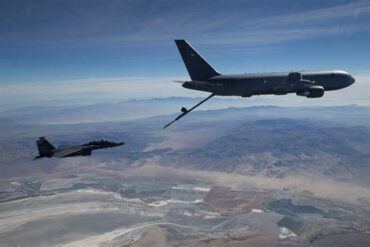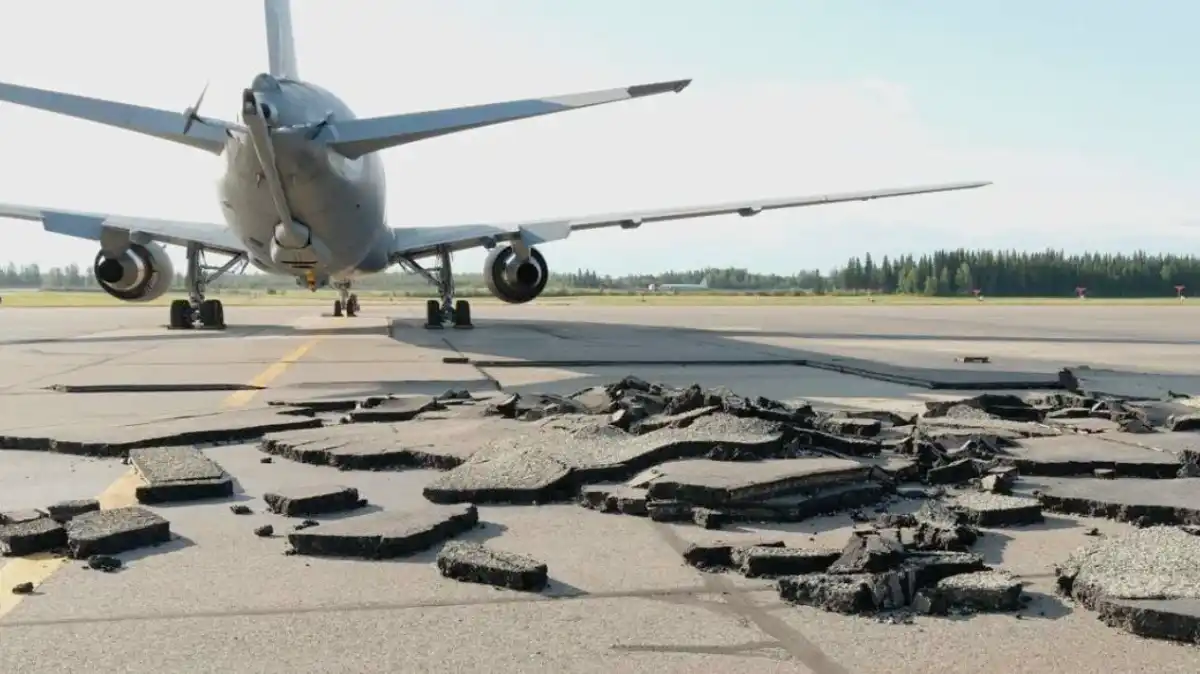
A routine ground operation turned into a costly infrastructure failure when a U.S. military KC-46A Pegasus tanker tore apart a section of asphalt at Fairbanks International Airport in Alaska, leaving behind a 25-foot-wide crater and more than $147,000 in damages. What initially appeared to be a standard engine test quickly escalated into a striking example of how modern jet power can overwhelm surfaces never designed to endure sustained thermal and mechanical stress.
The incident occurred on July 12 of last year, though the official findings were only released recently. The aircraft, operated by the New Hampshire Air National Guard, was undergoing a sequence of high-power engine runs on a designated parking ramp. While the ramp met all required specifications for aircraft parking, it was never engineered to tolerate prolonged exposure to extreme jet exhaust temperatures exceeding 1,000 degrees Fahrenheit.
High-Power Engine Runs Trigger Structural Failure
The KC-46A tanker conducted multiple engine tests, each lasting 20 to 30 minutes, pushing the aircraft’s engines to sustained high thrust levels. By the time the tenth run was executed, the cumulative effect of heat and pressure had reached a breaking point. The asphalt surface behind the right engine began to degrade rapidly, ultimately fracturing and ejecting chunks of material into the air.
This was not a sudden, isolated rupture. Instead, it was the result of thermal fatigue combined with relentless jet blast force, gradually weakening the asphalt’s internal structure until failure became inevitable.
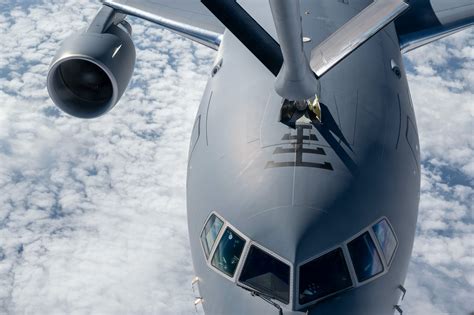
The investigation confirmed that the engine’s exhaust plume averaged approximately 1,170 degrees Fahrenheit, subjecting the pavement to conditions far beyond its design tolerance. Asphalt, while durable under normal operational loads, begins to soften and lose cohesion under prolonged exposure to such extreme heat. When paired with the high-velocity exhaust stream, the surface effectively disintegrated under pressure.
Why Standard Airport Surfaces Aren’t Built for This
Airport ramps are engineered with a very specific purpose: supporting stationary aircraft weight and routine ground movement. They are not constructed to endure repeated, concentrated blasts of jet exhaust at maximum power.
This distinction is critical. While the KC-46A itself functioned exactly as intended, the environment in which the test occurred was fundamentally mismatched for the task. The combination of sustained heat, pressure, and airflow velocity created a destructive scenario that standard ramp infrastructure simply cannot withstand.
Colonel Michael Raynor, who led the investigation, concluded that the root cause was clear: persistent high temperatures coupled with repeated high-power exhaust exposure from the aircraft’s right engine. Importantly, maintenance crews followed established procedures, and no operational misconduct was identified. The failure was not human error—it was a misalignment between operational demands and surface capability.
The Hidden Power of Modern Jet Exhaust
Jet engines like those on the KC-46A are marvels of engineering, capable of generating immense thrust through compressed air and fuel combustion. However, this power comes with significant risks when not properly contained or directed.
The exhaust stream from a high-thrust engine is not just hot—it is violently forceful, capable of displacing heavy objects, eroding surfaces, and creating dangerous conditions within seconds. This is why airports designate specialized engine run-up areas, often reinforced with concrete, blast deflectors, and safety buffers.
These areas are designed to absorb and redirect the energy produced during testing, minimizing the risk to infrastructure and personnel. In contrast, standard parking ramps lack these reinforcements, making them vulnerable under sustained stress conditions like those seen in this incident.
Safety Protocols and the Importance of Distance
The aviation industry has long recognized the dangers associated with jet engine operations. International guidelines define strict engine danger zones, including intake areas capable of pulling in objects—or people—and exhaust zones that can propel debris at high speeds.
These risks are not theoretical. Incidents in recent years have demonstrated the devastating consequences of ignoring engine safety boundaries. From equipment being hurled across tarmacs to fatal accidents involving engine ingestion, the margin for error is virtually nonexistent.

In this context, the Fairbanks incident serves as a stark reminder that infrastructure must be treated with the same level of caution as personnel safety. The destructive potential of jet exhaust extends beyond immediate physical hazards—it can compromise the very surfaces that support aviation operations.
A Costly Lesson in Infrastructure Limitations
The $147,044 repair bill underscores a broader issue facing airports and military operators alike: the growing mismatch between modern aircraft capabilities and legacy infrastructure. As aircraft engines become more powerful and testing procedures more demanding, the need for specialized, reinforced testing environments becomes increasingly urgent.
This event was not merely an isolated mishap—it was a clear signal that operational practices must evolve alongside technological advancements. Without proper adaptation, similar incidents are not just possible—they are inevitable.
Ultimately, the KC-46A did exactly what it was designed to do. The failure occurred beneath it, not within it. And in that distinction lies a critical takeaway: in aviation, the ground matters just as much as the sky.