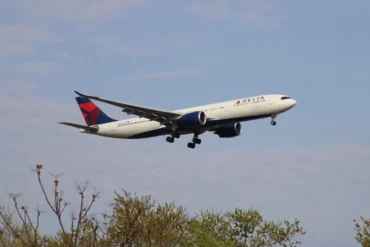
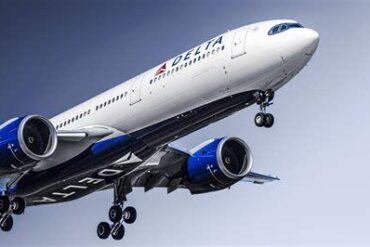
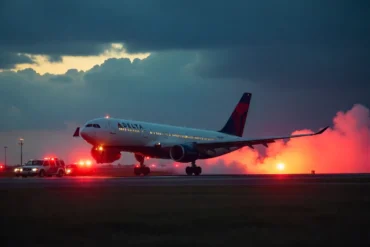
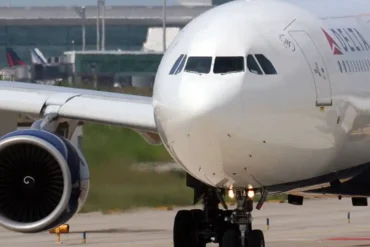
Delta Air Lines flight DL169, operated by an Airbus A330-300, was forced to return to Barcelona El Prat Airport (BCN) on Saturday afternoon following a terrifying mid-air encounter with a violent hailstorm shortly after departure. The widebody jet, bound for New York’s John F. Kennedy International Airport (JFK), had only just begun its transatlantic journey when it ran headlong into the storm, sustaining major structural damage to its nose cone and radome. The impact of the event has raised renewed concerns over weather preparedness and aircraft resilience in an era of intensifying climate volatility.
Delta Flight 169: Mid-Air Crisis Unfolds
The aircraft, a 9-year-old Airbus A330-300, had departed BCN under seemingly routine conditions. But within minutes of reaching an altitude of 20,000 feet, the flight crew encountered a sudden and violent hailstorm that severely compromised the aircraft’s outer surface. Pilots immediately requested a descent to 8,000 feet, initiating an urgent diversion plan. The aircraft entered a holding pattern off the coast of Costa Brava, a maneuver designed to buy time and ensure a safe re-entry into Barcelona airspace.
Eyewitness accounts and passenger-shared photos quickly made rounds on social media, showing extensive hail damage to the aircraft’s radome, including a significant dent and scattered impact craters. Although the flight crew managed a smooth emergency landing, the disturbing visuals sparked concern about structural vulnerabilities during weather extremes.
After the plane landed back at El Prat, passengers disembarked safely using mobile airstairs. Fortunately, there were no reported injuries, but the emotional toll on both crew and passengers was apparent, with many expressing shock at how intense the weather conditions became so quickly.
Structural Damage: Focus on Radome and Fuselage
Delta’s engineering team has grounded the aircraft indefinitely at Barcelona for thorough structural inspections. While initial reports highlighted visual damage to the nose cone, internal systems — including weather radar components housed within the radome — may also have been compromised. Engineers are paying close attention to the:
- Radome integrity, especially given its composite material sensitivity
- Fuselage skin, for signs of impact microfractures
- Pitot tubes and external sensors, which may have been damaged
The decision to ground the aircraft underscores Delta’s strict adherence to safety protocols, ensuring no compromised aircraft returns to flight without full clearance.
Hailstorm Evasion: Complex Weather Challenges in Catalonia
Meteorological conditions off the northeastern Spanish coast are notoriously unpredictable. While modern aircraft are equipped with onboard weather radar, hailstorms — especially rapidly forming convective cells near coastal and mountainous regions — can catch even the most experienced pilots off guard.
Passengers on DL169 reported receiving severe weather alerts on their mobile phones during taxiing, suggesting the presence of a nearby storm cell prior to takeoff. However, no official ground stop was issued at the time, and the flight proceeded under standard departure procedures. This raises important questions about real-time weather coordination between dispatchers, pilots, and airport authorities.
Delta’s Weather-Related Incident History
This incident is not an isolated case for Delta. In recent months, the airline has experienced multiple weather-induced disruptions, reflecting the growing frequency of climate-related operational challenges. Just weeks before the Barcelona emergency landing, Delta grounded nearly 100 aircraft at Atlanta Hartsfield-Jackson International Airport (ATL) after a series of summer hailstorms swept through Georgia.
Despite the scale of that grounding, Delta’s maintenance and operations teams executed overnight inspections, enabling most of the fleet to return to service the following day. The ability to respond quickly underlines Delta’s robust contingency planning — a critical advantage as the aviation industry navigates intensifying weather patterns.
In July 2023, another weather-related emergency unfolded when a Delta Boeing 767 departing Milan Malpensa Airport (MXP) suffered extensive hail damage and was diverted to Rome Fiumicino Airport (FCO). That aircraft sustained engine fan blade damage, cracked cockpit windshields, and wing punctures, necessitating weeks of repair.
Operational Protocols and Industry Safety Standards
Each hailstorm-related event has triggered Delta’s well-established safety and maintenance protocols. Upon encountering adverse weather, affected aircraft are immediately withdrawn from service for comprehensive assessments. These include:
- Visual inspections and borescope evaluations
- Structural ultrasound testing of impacted areas
- Avionics and radar recalibration, especially for nose impacts
Airlines depend on both airborne and ground-based meteorological intelligence to anticipate threats. Yet, microbursts and hailstorms — especially those forming near coasts or in humid summer conditions — are difficult to predict with pinpoint accuracy.
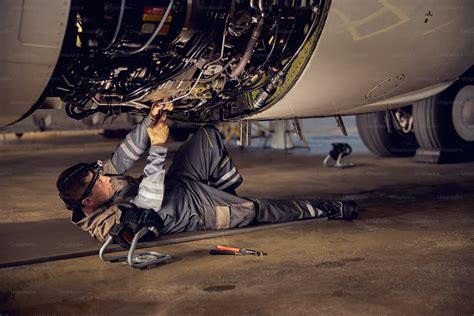
In this context, flight planning and dispatch teams play a crucial role. Coordinated real-time data sharing, satellite updates, and pilot briefings must align seamlessly to mitigate storm exposure. Any lapse in this chain, even a delay of minutes, can place an aircraft in jeopardy — as seen in the DL169 incident.
Aircraft Design and Hail Resistance
Modern aircraft like the Airbus A330 are built to withstand a wide range of environmental stressors. The radome, typically made of lightweight composites such as fiberglass, is designed to allow radar signals to pass through while resisting deformation. However, hailstones traveling at high velocity can cause localized breaches and surface delamination, especially when accompanied by strong updrafts.
The incident in Barcelona also serves as a stark reminder of the limits of aircraft tolerance. While redundancy and system backups exist, direct nose impacts can threaten not just equipment but also aerodynamic performance and safety instrumentation. In worst-case scenarios, they may even require full radome replacement.
Passenger Response and Delta’s Communication
Passengers aboard DL169 expressed mixed feelings after the landing. While most praised the calm professionalism of the flight crew, others were critical of the decision to proceed with takeoff despite visible storm clouds nearby.
Delta responded with a public statement affirming their commitment to safety, noting that pilots followed all standard procedures. The airline has offered rebooking options and compensation to affected passengers. Internal investigations are underway to determine whether the weather threat was adequately assessed prior to departure.
The A330 involved in the incident remains undergoing inspection at BCN, with no return-to-service timeline announced. As investigations proceed, industry experts suggest that the event may influence future departure protocols during high-risk weather windows, particularly in storm-prone regions like the Mediterranean basin.
Broader Aviation Industry Implications
The DL169 emergency landing is more than an isolated technical scare — it’s a signal of the changing operational landscape facing global aviation. Climate change is expected to increase the frequency and severity of convective weather events, including hailstorms, microbursts, and turbulence.
Airlines are investing in next-generation weather radar, AI-driven flight planning tools, and enhanced meteorological modeling. Yet, as this incident demonstrates, even the best technology can be caught off guard when weather patterns shift rapidly.
The aviation industry must now reassess its thresholds for acceptable weather conditions during departure. Questions must be asked:
- Should aircraft be grounded more aggressively during uncertain weather?
- Are current predictive models accurate enough?
- Can satellite data be delivered in real time with actionable precision?
The answers to these questions will shape future operational standards. For now, the successful return of Delta flight DL169 serves as a testament to pilot skill, crew coordination, and aircraft durability — but also a warning that the skies above Europe, and the world, are becoming more unpredictable.
Conclusion: Safety, Vigilance, and Adaptation
As Delta investigates the root causes and responses around DL169’s hailstorm encounter, it joins a broader industry push toward proactive weather avoidance strategies. The grounding of the aircraft, extensive inspections, and public communication efforts show a mature safety culture, but also emphasize that aviation’s traditional weather playbooks may no longer suffice.
The skies over Barcelona bore witness to a rare but deeply instructive event. And as air travel continues to expand into increasingly volatile environments, the lessons from this stormy flight may prove critical for ensuring future passenger safety.