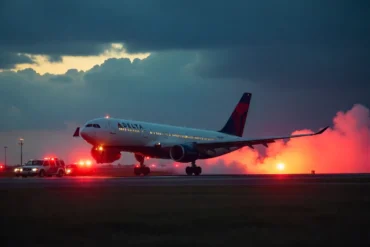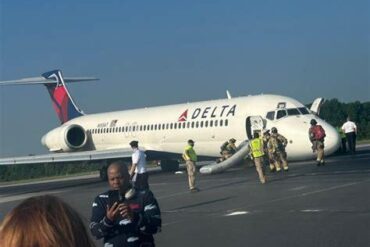
The tranquility of a routine transatlantic flight was shattered when a Delta Air Lines Airbus A330-300, registration N818NW, traveling from New York JFK to Milan Malpensa, experienced a sudden engine fire mid-flight, forcing the aircraft to divert to Paris Charles de Gaulle Airport (CDG) for an emergency landing. Passengers described the terrifying moment as a loud, explosion-like bang emanating from one side of the aircraft, accompanied by visible flashes from the engine and a sudden loss of cabin electrical power. Eyewitness videos later circulating on social media captured the initial chaos, showing what appeared to be flames flickering from the affected engine as the crew initiated emergency protocols.
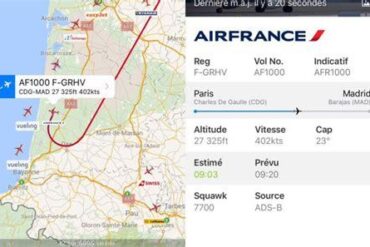
The incident unfolded over European airspace, where the flight crew quickly declared an emergency and activated the squawk 7700 code, the universal transponder signal for a critical aviation emergency. Within minutes, the aircraft altered its course and began descending toward Paris, where airport fire and rescue units were mobilized on the runway. Passengers onboard the 18-year-old widebody aircraft reported feeling vibrations following the initial bang, while the sudden blackout in the cabin triggered widespread panic. Cabin lights, in-flight entertainment screens, and passenger charging systems went offline, leaving travelers in partial darkness.
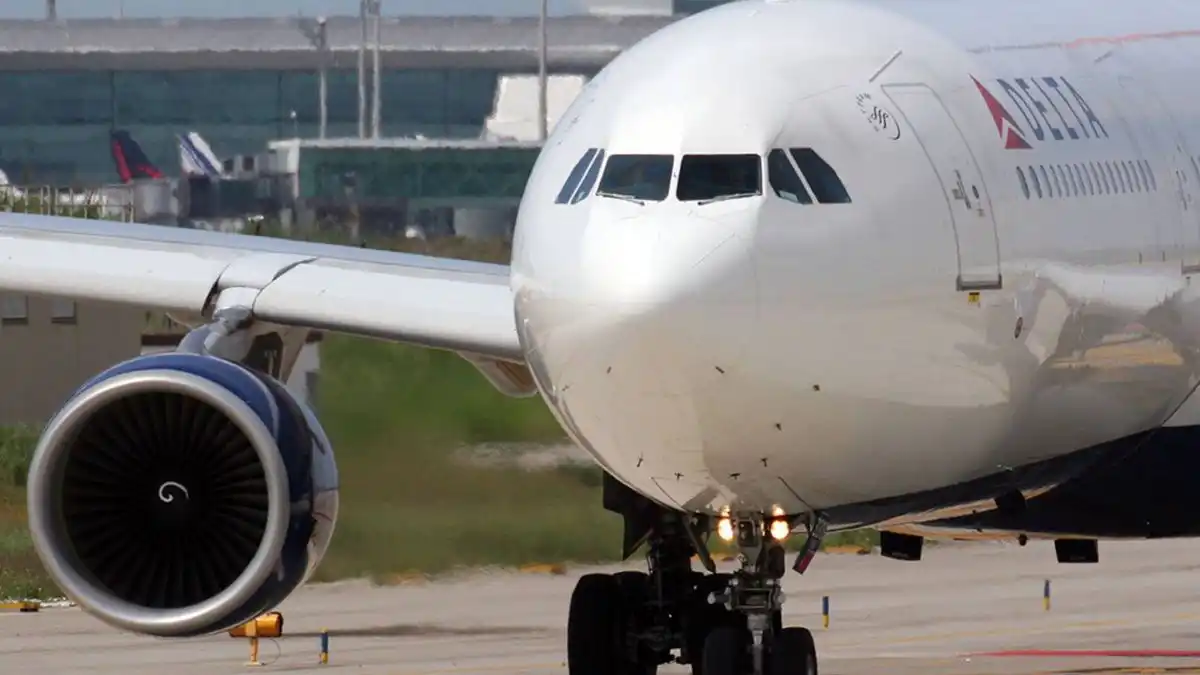
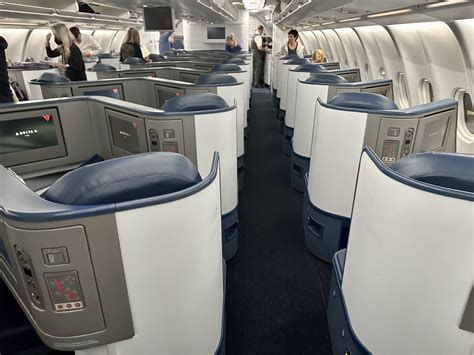
The A330’s electrical system is designed with multiple redundancies, including engine-driven generators, an auxiliary power unit (APU), batteries, and the Ram Air Turbine (RAT), which deploys automatically in the event of total power loss. In this incident, the engine-related generator likely disconnected from the aircraft’s electrical network following a severe malfunction—possibly a compressor stall or surge. The aircraft’s power management system responded by shedding non-essential loads to maintain critical flight systems, including cockpit instruments, navigation equipment, communication lines, and hydraulic controls. While this prioritized flight safety, it left cabin systems temporarily offline, creating an unsettling experience for passengers.
Eyewitness accounts emphasized the combination of visual and auditory cues that intensified passenger fear. Several passengers compared the loud bang to an explosion, and social media footage appeared to show sparks or flames from the left engine as the aircraft stabilized for its emergency descent. Crew members calmly reassured passengers, relying on standard emergency procedures practiced in full-motion simulators, which included engine failure drills, electrical load management, and diversion protocols. The training ensured that despite the visible signs of distress, the aircraft remained fully controllable.
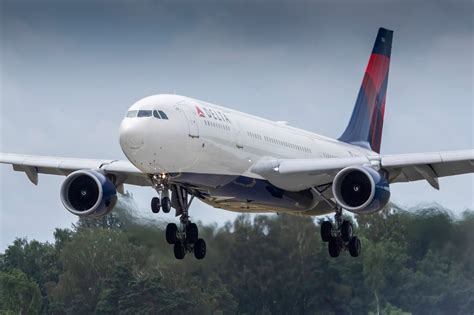
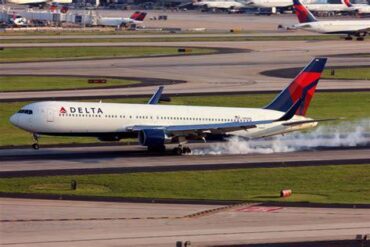
As the Airbus A330 approached Charles de Gaulle Airport, the flight crew coordinated with air traffic control to secure a safe landing. CDG’s long runways, sophisticated firefighting capabilities, and experience handling widebody aircraft emergencies provided an ideal environment for the diversion. The aircraft touched down safely, with emergency vehicles lining the runway as a precautionary measure. Remarkably, no injuries were reported among the passengers or crew, underscoring the effectiveness of the layered safety measures inherent in modern commercial aviation.
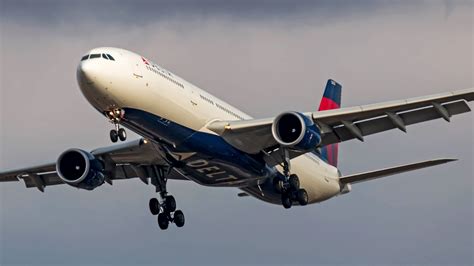
The Delta A330-300 involved in the incident is part of a fleet commonly used for long-haul international routes due to its widebody, twin-aisle configuration, and operational range between 4,000 and 7,250 nautical miles. Introduced in January 1994, the A330-300 has maintained a strong presence in airline fleets worldwide, known for its reliability, fuel efficiency, and adaptability across short- and long-haul operations. Operators like Delta Air Lines, Qantas, Aer Lingus, and Air Caraïbes continue to rely on the aircraft for its versatility and proven safety record.
This event highlights the resilience of commercial aviation’s safety architecture. From advanced aircraft design incorporating multiple backup power sources to highly trained flight crews and coordinated airport emergency responses, the industry has developed a multi-layered system to manage rare but critical incidents. Flight crews must quickly evaluate alternate airports, considering factors such as distance, runway specifications, weather, emergency response readiness, and maintenance support. In this case, Paris CDG was an optimal choice, providing the infrastructure necessary for a widebody aircraft emergency landing.
While the loss of cabin power understandably triggered alarm, the redundancy systems functioned as intended, ensuring critical systems remained operational. Passengers experienced a temporary blackout and disruption to non-essential services, but the aircraft’s operational integrity remained intact throughout the descent and landing. The RAT, auxiliary power unit, and power management protocols collectively ensured that hydraulic systems, flight controls, and communication channels remained fully functional, enabling the crew to manage the situation effectively.
Aviation experts point out that such incidents, while rare, serve as important reminders of both human and technological preparedness. Delta’s swift action, combined with the aircraft’s engineering safeguards, demonstrates a successful integration of training, procedure, and equipment design. The transparent reporting of the event, including passenger testimonials and video documentation, provides valuable insights into the dynamics of in-flight emergencies and reinforces public confidence in aviation safety standards.
The Delta A330 emergency landing incident also sparks broader discussions regarding engine maintenance, monitoring systems, and ongoing safety upgrades across airline fleets. While no injuries occurred, the situation could have escalated rapidly without the coordinated response of the flight crew and ground support teams. Aviation authorities and airlines routinely analyze such occurrences to refine protocols, enhance system reliability, and further reduce risk, ensuring that both crew and passenger safety remain the highest priority in air travel.
Ultimately, this episode underscores the robustness of modern aviation safety, demonstrating how aircraft engineering, crew expertise, and airport preparedness converge to avert disasters. Passengers’ harrowing experiences, though understandably frightening, were mitigated by the systematic application of emergency procedures and aircraft redundancy systems, illustrating that even in the face of sudden engine failure and cabin blackout, commercial aviation remains remarkably resilient and capable of safeguarding lives.