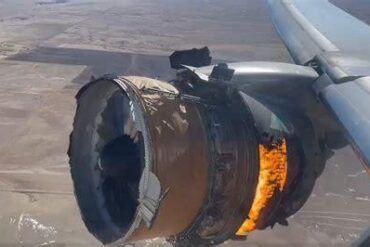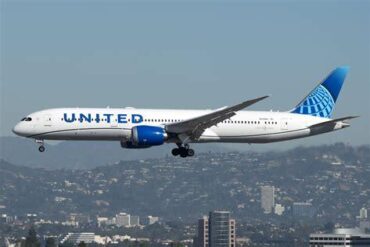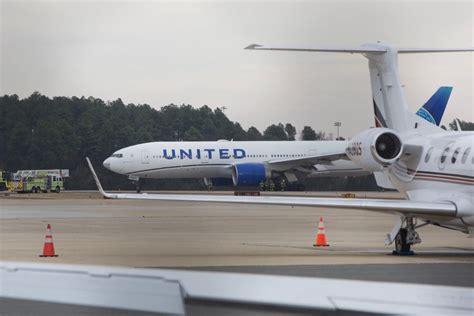
Onboard a transatlantic flight bound for Germany, passengers aboard a United Airlines Boeing 777 experienced a frightening ordeal after an apparent engine fire forced the aircraft to make an emergency return to Houston shortly after departure. The incident unfolded on June 19 when United Flight UA102, operating from Houston George Bush Intercontinental Airport (IAH) to Munich Airport (MUC), safely landed back at its departure airport after the crew reported an engine-related emergency.
Flight UA102 departed Houston shortly after 6:30 PM local time for what was scheduled to be a journey of more than nine hours to southern Germany. According to passenger accounts and air traffic communications, abnormal events began almost immediately after takeoff as loud banging noises echoed throughout the cabin.
Witnesses onboard described hearing repeated explosive sounds from the aircraft’s right-hand side, prompting concern among passengers as the Boeing 777 climbed away from Houston. Reports indicate that the flight crew quickly halted the aircraft’s climb and maintained an altitude of approximately 3,000 feet while assessing the situation and coordinating a return with air traffic controllers.
Passengers later recounted seeing visible flames emanating from the affected engine. Former NFL quarterback Robert Griffin III, who was traveling on the flight, said he observed fire coming from the engine and heard approximately “15 straight loud bangs” shortly after departure.
The flight crew subsequently declared an emergency and informed controllers that the aircraft had effectively lost one of its engines. Despite the seriousness of the event, the twin-engine widebody remained fully controllable, allowing pilots to execute standard emergency procedures while preparing for an immediate landing.
At approximately 7:10 PM local time, only around 40 minutes after departure, the Boeing 777 touched down safely at Houston George Bush Intercontinental Airport. All 280 individuals onboard, including 267 passengers and 13 crew members, deplaned normally. No injuries were reported.
In a statement issued following the incident, United Airlines confirmed that the aircraft had experienced an engine issue during departure from Houston.
“United flight 102 from Houston to Munich returned to George Bush Intercontinental Airport to address an engine issue. The flight landed safely and customers deplaned normally,” the airline said.
Aircraft Involved Was A 27-Year-Old Former Continental Boeing 777
The aircraft involved in the emergency return was Boeing 777-200ER registration N78009, a former Continental Airlines airframe that joined United Airlines following the merger between the two carriers in 2010.
Fleet data shows that the aircraft is approximately 27 years old and has accumulated more than 127,000 flight hours alongside roughly 13,000 flight cycles throughout its operational life. The aircraft remains one of the older widebody jets currently operating within United’s long-haul fleet.
N78009 belongs to a subfleet of former Continental Boeing 777-200ER aircraft powered by General Electric GE90 engines, differing from many of United’s other Boeing 777-200 aircraft that utilize Pratt & Whitney PW4000 powerplants.
The aircraft is configured in a three-class layout featuring 50 business class seats, 24 premium economy seats, and 202 economy seats. Given its certified seating capacity, the flight was operating near full occupancy at the time of the incident.
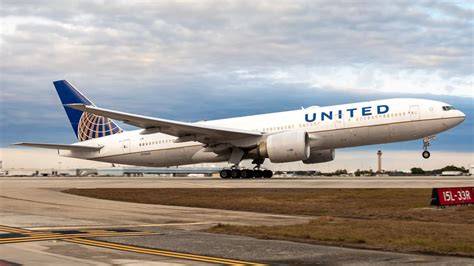
United currently operates more than 70 Boeing 777-200 variants, with some aircraft in the fleet exceeding 30 years of age. The airline has also selected portions of its former Continental 777 fleet as the first widebody aircraft to receive Starlink high-speed satellite internet connectivity.
Why Modern Engine Fires Rarely Lead To Catastrophic Outcomes
Although an engine fire in flight is unquestionably a serious emergency, modern commercial aircraft are specifically engineered to withstand such events and provide flight crews with multiple layers of protection.
Commercial jet engines incorporate sophisticated fire-detection systems capable of instantly alerting pilots whenever abnormal temperatures or fire indications are detected. Once a fire warning is received, crews follow detailed emergency checklists designed to isolate and extinguish the threat.
Standard procedures generally require pilots to shut down the affected engine, cut off fuel supplies, and activate dedicated onboard fire-extinguishing systems. These suppression systems discharge extinguishing agents directly into the engine nacelle to eliminate any active fire.
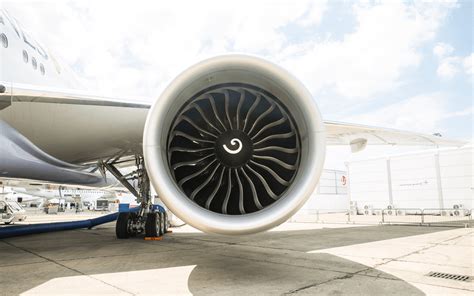
The Boeing 777, like all modern twin-engine airliners, is certified to continue flying safely on a single engine. International Extended-range Twin-engine Operational Performance Standards (ETOPS) regulations require aircraft to demonstrate the ability to sustain prolonged operations following the loss of one engine.
Nevertheless, any confirmed engine fire or significant engine malfunction almost always results in an immediate diversion to the nearest suitable airport. Airline crews prioritize landing as soon as practical to ensure passenger safety and allow maintenance teams to inspect the aircraft thoroughly.
As of publication, the aircraft involved in the Houston incident remains out of service pending further technical inspections. United Airlines has not disclosed when the Boeing 777-200ER will return to commercial operations, while investigators and maintenance personnel continue examining the circumstances surrounding the engine malfunction.
The successful outcome once again underscores the effectiveness of modern aircraft design, rigorous pilot training, and established emergency procedures that enable crews to safely manage even highly dramatic in-flight events.