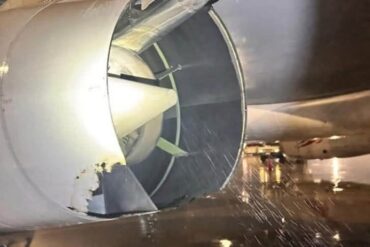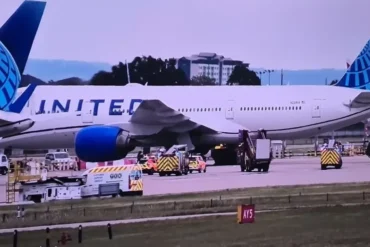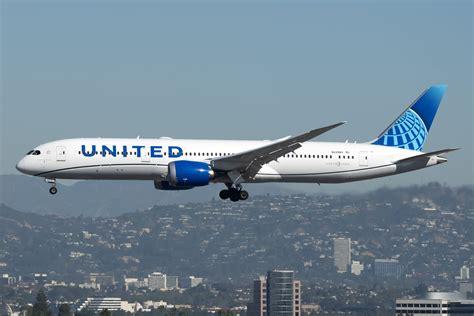
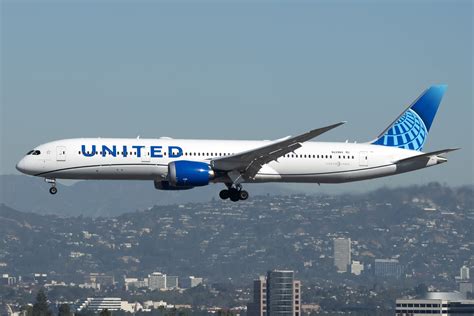
A United Airlines Boeing 787-9 Dreamliner bound for Newark Liberty International Airport was forced to return to Los Angeles International Airport (LAX) on Monday morning after the crew reported a potential issue with the aircraft’s left engine. The flight, operating as United Airlines Flight 2127, had departed shortly after 10:00 a.m. local time before turning back in what aviation professionals classify as a standard precautionary emergency return.
The widebody aircraft, carrying 256 passengers and 12 crewmembers, climbed out normally from LAX en route to Newark (EWR). Shortly after departure, however, flight crew indications suggested a problem with the left engine. In accordance with established safety procedures, the pilots made the decision to discontinue the transcontinental flight and return to their departure airport, where full emergency services were immediately available.
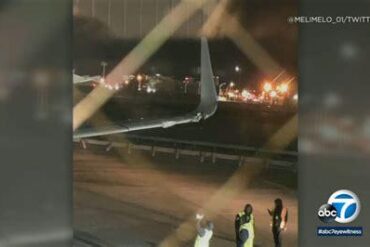
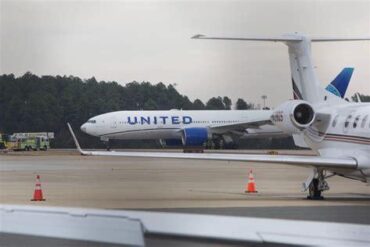
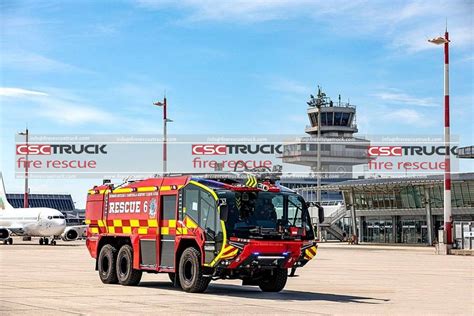
The aircraft landed safely at approximately 11:20 a.m., less than 90 minutes after its initial departure. Upon arrival, airport firefighting units met the aircraft on a taxiway following reports of a possible engine fire. Emergency response protocols were activated as a precaution, ensuring that any potential hazard could be addressed without delay.
The Sequence of Events: From Departure to Safe Return
United Flight 2127’s turnaround illustrates the layered safety architecture embedded within modern commercial aviation. The Boeing 787-9, a long-range twin-engine jet widely used for transcontinental and international routes, is equipped with sophisticated engine monitoring systems capable of detecting anomalies in real time. When cockpit indications signal irregular performance or fire warnings, pilots are trained to treat the matter with immediate seriousness.
Shortly after takeoff from LAX, cockpit alerts prompted the crew to evaluate the left engine’s status. In such scenarios, flight crews follow a detailed checklist, which may include reducing engine thrust, shutting down the affected engine if necessary, and coordinating with air traffic control. Returning to the departure airport is often the safest option, particularly when fuel levels remain manageable and maintenance resources are readily available.
The aircraft’s safe landing at LAX demonstrates the effectiveness of these procedures. Fire crews positioned alongside the taxiway as a precaution, reflecting aviation’s principle that redundancy and preparedness are non-negotiable. While reports indicated a possible engine fire, there were no injuries, and the situation was contained without escalation.
Passenger Experience: Evacuation and Immediate Aftermath
After the aircraft came to a stop, passengers deplaned using a combination of emergency slides and airstairs. Deploying evacuation slides, even in controlled circumstances, can be a jarring experience. It is loud, abrupt, and emotionally intense. For travelers expecting a routine five-hour journey to Newark, the return to the same airport less than two hours later inevitably created stress and confusion.
Passengers were transported by bus back to the terminal, where United Airlines began the process of reaccommodation. Families were temporarily separated during the disembarkation process, and some travelers were initially unable to retrieve carry-on items left onboard. Such operational realities are common during emergency procedures, where safety overrides convenience.
Missed connections, delayed meetings, and rearranged itineraries quickly became secondary consequences of the incident. Even those without onward flights faced potential baggage delays and extended waits as the aircraft was secured for inspection. United confirmed that no injuries were reported, and rebooking efforts began promptly to minimize downstream disruption.
Operational Impact at Los Angeles International Airport
The incident briefly disrupted inbound arrivals at LAX. When an aircraft reports a possible engine fire, air traffic controllers may temporarily halt or reroute traffic to ensure a clear operational environment for emergency services. These short-term pauses can ripple across a busy hub like Los Angeles, particularly during mid-morning departure and arrival banks.
LAX, one of the busiest airports in the United States, handles complex traffic flows that depend on precision timing. Even a brief ground stop can affect gate assignments, crew rotations, and aircraft positioning. While disruptions were temporary, they underscore how tightly interconnected modern airline networks have become.
Implications for United Airlines and the Boeing 787 Fleet
For United Airlines, the return of Flight 2127 represents a contained operational event rather than a systemic issue. The airline operates a substantial fleet of Boeing 787 aircraft, using them extensively for both domestic long-haul and international services. A single aircraft returning to base for inspection is statistically routine in global aviation operations.
The aircraft involved will likely undergo comprehensive maintenance inspections, focusing particularly on the left engine and associated systems. Technicians will review flight data, examine engine components, and coordinate with the manufacturer if necessary. The Federal Aviation Administration (FAA) has initiated a review, a standard step in events involving potential in-flight engine anomalies.
Financially, the impact remains limited. Rebooking 256 passengers, issuing meal or hotel vouchers where applicable, and managing crew scheduling adjustments introduce incremental costs. However, in the broader scale of airline operations, such diversions are anticipated contingencies rather than extraordinary crises.
Aviation Safety in Context
Commercial aviation remains one of the safest forms of transportation globally, precisely because of how incidents like this are handled. The decision to return to LAX reflects a conservative safety culture that prioritizes caution over schedule adherence. Modern jet engines are engineered with multiple containment systems designed to prevent uncontained failures, and aircraft are certified to continue flying safely even on a single engine if required.
The Boeing 787-9 Dreamliner, introduced in the early 2010s, incorporates advanced composite materials, redundant electrical systems, and continuous performance monitoring. When an anomaly appears, pilots and ground teams act within a tightly regulated framework that has been refined over decades of industry learning.
United Flight 2127’s safe return serves as a case study in that system functioning exactly as intended. A potential hazard was identified, mitigated, and resolved without injury. For passengers, the morning was undoubtedly stressful. For aviation safety professionals, it was evidence that precaution, preparation, and disciplined response remain the cornerstones of modern air travel.