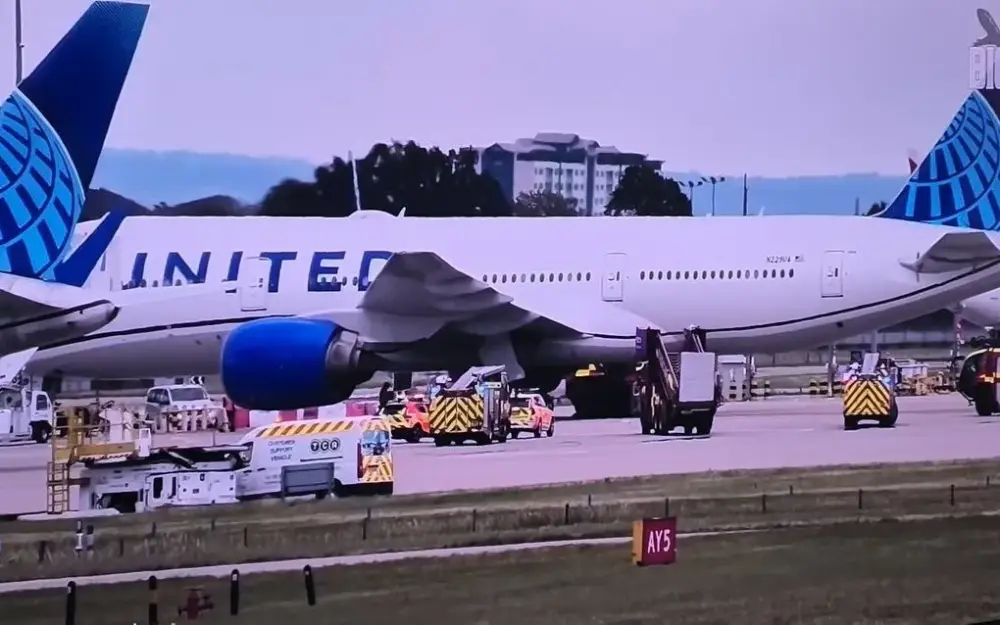
On July 30, 2025, a serious in-flight emergency forced United Airlines Flight UA949, a Boeing 777-200ER, to make an emergency landing at London Heathrow Airport shortly after takeoff. The flight, scheduled to travel from London to San Francisco, encountered an alarming incident when smoke began filling the cabin just minutes after departure, prompting an urgent return to the airport.
Emergency Unfolds at 15,000 Feet
According to flight data, UA949 took off at 12:23 pm local time from Heathrow’s Terminal 2 and climbed to approximately 15,000 feet before the flight crew reported smoke inside the cabin. Immediately, the crew declared a 7700 emergency squawk, a universal code for in-flight distress, and began preparations to return to Heathrow.
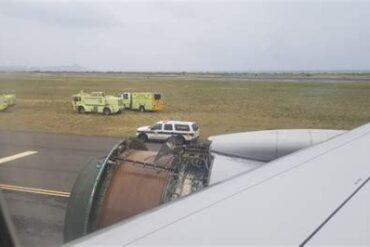
Witnesses reported that the smoke originated from the galley area, though the exact cause remains under investigation. Upon approach, the aircraft was met by emergency services, including three fire engines and police units, who positioned themselves strategically to manage the situation as soon as the plane touched down.
Safe Landing and Passenger Evacuation
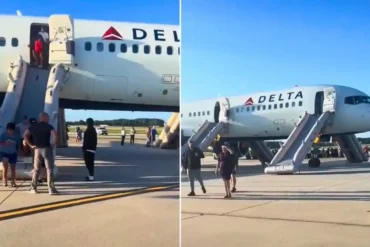
The emergency landing at Heathrow was executed smoothly, with the aircraft escorted by first responders to a designated area. Passengers were safely deplaned, and no injuries were reported. United Airlines later issued a statement confirming the presence of fumes in the galley but emphasized that the safety of the passengers and crew was never compromised.
A spokesperson for the airline stated: “Our crew acted swiftly and in full compliance with emergency procedures. We are working to rebook customers on alternate flights to San Francisco.”
A Troubling Pattern for the Same Aircraft
This was not the first emergency involving this specific Boeing 777 aircraft. On July 23, just one week earlier, the same plane encountered a technical malfunction on its approach to San Francisco International Airport, reportedly related to engine performance. Though the earlier incident did not involve smoke in the cabin, the recurrence of emergencies in such a short time span has raised serious concerns about the reliability of this aircraft.
Passengers Describe a Tense Situation
Several passengers shared their experiences, describing the moments of uncertainty when the cabin filled with smoke. Some recounted smelling an unusual odor and hearing the captain’s calm but urgent announcement of an unscheduled return to Heathrow.
“The crew remained incredibly professional,” one passenger said. “Even though we could smell the smoke, they reassured us at every step.” The swift emergency response by Heathrow authorities, including the deployment of fire engines and police, added a layer of reassurance for those on board.
Flight Safety Concerns for Boeing 777
The incident has renewed focus on the long-term safety of older Boeing 777 models, especially those that have been in service for more than two decades. Aviation experts point out that routine maintenance, thorough inspections, and system upgrades are critical for ensuring the continued reliability of these wide-body jets.
“While the Boeing 777 has a strong safety record, incidents like these remind us that aging aircraft require enhanced maintenance protocols,” said an aviation analyst. “Operators must balance cost-efficiency with uncompromising safety standards.”
The Role of Heathrow’s Emergency Services
The coordination between United Airlines and Heathrow’s emergency teams played a vital role in mitigating potential risks. Firefighters, ground crew, and police were on standby as soon as the 7700 code was declared, ensuring immediate response upon touchdown. Such preparedness is part of Heathrow’s comprehensive emergency management strategy, designed for swift handling of high-risk aviation incidents.
Broader Implications for Airline Operations
With two emergencies involving the same aircraft within one week, United Airlines faces increased scrutiny from regulatory bodies, including the Federal Aviation Administration (FAA) and the UK Civil Aviation Authority (CAA). These agencies are likely to conduct in-depth assessments of the aircraft and examine whether maintenance practices or systemic issues contributed to the recurring failures.
This incident also raises operational and reputational challenges for United Airlines, as frequent fliers may grow concerned about the carrier’s safety record, particularly on long-haul transatlantic routes.
Looking Ahead: Lessons for the Industry
As investigations continue, industry experts stress the need for:
- Rigorous Maintenance: Ensuring that aging fleets undergo consistent overhauls and system updates.
- Enhanced Monitoring: Using advanced diagnostic tools to detect and address issues before they escalate.
- Transparent Communication: Keeping passengers informed and reassured in the event of emergencies.
These lessons extend beyond United Airlines, serving as a wake-up call for all global carriers operating older wide-body aircraft.
Conclusion
The emergency landing of United Airlines Flight UA949 underscores the importance of vigilance in aviation safety. While the quick actions of the crew and emergency teams prevented injuries and ensured a safe outcome, the repeated mechanical issues with the same Boeing 777 highlight the need for deeper investigations and stricter oversight. As air travel rebounds and fleets operate under high demand, airlines must prioritize proactive maintenance and safety investments to uphold passenger confidence and prevent future incidents.
This incident serves as a stark reminder that flight safety is an ongoing commitment, requiring collaboration between airlines, regulators, and aircraft manufacturers to ensure that every journey—no matter how routine—remains secure.