An American Airlines flight destined for New York’s JFK Airport was forced into an emergency return just hours into its trans-Pacific journey after a serious onboard medical emergency unfolded, prompting swift mid-air action by the crew. Flight AA168, operated by a Boeing 787-9 Dreamliner, departed Tokyo Haneda Airport late on Tuesday, June 24, 2025, only to reverse course over the Pacific and return to Japan—highlighting once again the delicate balance of safety and unpredictability that governs long-haul air travel.
Mid-Ocean Emergency: The Timeline of AA168’s Critical Reversal
Flight AA168 was initially scheduled for departure at 17:55 JST, but delays pushed takeoff to 19:55 JST. Approximately four hours into the flight, as the aircraft cruised at high altitude over the expansive Pacific Ocean, the cockpit crew declared a medical emergency and informed air traffic control of their intent to return to Tokyo. The urgency of the request set into motion a rapid-response operation at Tokyo Haneda, where emergency medical personnel and logistical support were immediately activated.
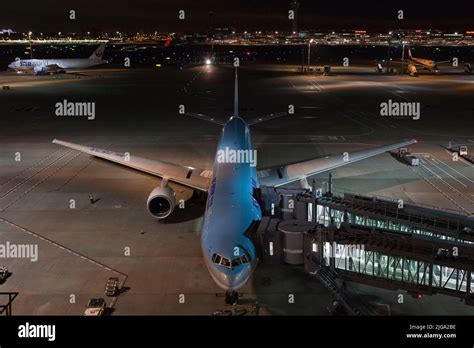
The Dreamliner, bearing registration N831AA, safely landed on runway 34L and taxied to stand 107, where medical responders were waiting. The flight, which had passed the critical halfway point of its journey to New York, was turned around under intense pressure to ensure passenger safety and provide necessary care.
Behind the Decision: What Forces an Emergency Return
Although airlines regularly train for in-flight health scenarios, the severity of this medical case left no margin for delay. Cabin crew procedures were activated, and medical kits onboard were deployed as the passenger in distress was attended to mid-air. The flight’s medical urgency outweighed the logistics of continuing across the ocean toward the U.S.—a route that offers few emergency diversion options once past a certain point.
American Airlines has not disclosed specific details about the medical nature of the emergency, citing passenger privacy laws. However, sources close to the matter confirm that onboard conditions demanded urgent intervention, prompting the decision to execute a full U-turn despite the operational and economic costs.
Operational Repercussions for American Airlines and Tokyo Haneda
Such an emergency doesn’t merely affect a single aircraft or its passengers. The decision to return had cascading impacts across the American Airlines network. Ground crews had to reallocate resources at Tokyo Haneda, while operations teams scrambled to manage rebooking and alternate aircraft scheduling. At JFK, inbound gate preparations were undone, and connecting itineraries were disrupted.
For American Airlines, this incident posed a challenge not just of coordination, but of reputation. The airline’s emergency protocols, pilot decision-making, and customer service were thrust into the spotlight. Yet early indications show that standard operating procedures were executed flawlessly, with minimal delay in the return and swift medical access provided upon landing.
Rising Trend in In-Flight Medical Diversions
The case of Flight AA168 is not isolated. So far in 2025, the aviation industry has witnessed a 15% year-over-year increase in medically induced flight diversions, with at least 17 recorded cases globally. The rising frequency is attributed to a mix of factors:
- Aging passenger demographics on long-haul routes
- Expanded international travel post-pandemic
- Lengthier nonstop flight durations, often over oceanic or polar regions
Medical crises onboard pose a unique threat because of the limited availability of immediate treatment, the lack of proximity to emergency facilities, and the time delay in reaching ground support. The aviation industry is under pressure to adapt accordingly.
Industry-Wide Implications: A Call for Enhanced In-Flight Preparedness
Following the incident, aviation analysts anticipate several key shifts in airline protocol:
- Investment in real-time telemedicine systems that connect flight crews to doctors on the ground
- Refinement of pre-boarding medical screening processes for high-risk passengers
- Improved training modules for cabin crew with a renewed emphasis on medical triage and rapid response
As air travel continues to rebound and summer traffic peaks globally, airlines are racing to reinforce their emergency-readiness infrastructures. AA168 has become a reference point in internal reviews for major carriers seeking to improve long-haul reliability without compromising passenger well-being.
Emotional Toll on Passengers: A Reminder of Aviation’s Human Core
The technical success of the emergency return cannot overshadow the emotional turbulence endured by passengers. Travelers onboard AA168 experienced not just delay and inconvenience, but the psychological distress of an airborne crisis. Anxiety, concern for the ailing passenger, and uncertainty about rebookings all added to the ordeal.
Social media platforms such as X (formerly Twitter) and aviation forums recorded a surge in firsthand accounts from passengers describing the tense moments during the flight’s reversal. Some praised the professionalism of the crew, while others described the panic and confusion as information trickled through the cabin.
The Larger Tourism Impact: Disruptions Beyond the Cabin
American Airlines Flight AA168 was not merely transporting vacationers. Onboard were likely corporate executives, students, diplomats, and cargo destined for East Coast U.S. ports. A diversion of this magnitude affects more than seatbacks and tray tables—it sends ripples through the tourism and commerce ecosystems.
For instance, the Japan National Tourism Organization (JNTO) is reportedly monitoring such incidents to assess aviation reliability trends, given Tokyo’s role as a key transit point for routes bound for Southeast Asia, Oceania, and North America. A single flight disruption can derail hotel check-ins, connecting flights, tour schedules, and cruise ship itineraries.
Likewise, American logistics and customs agencies must resynchronize with cargo manifests and ground crew schedules when delays occur. Thus, one medical emergency can trigger multi-sector delays spanning continents.
Future-Proofing the Skies: Long-Haul Safety Innovations
To mitigate future risks, airlines are turning to advanced passenger analytics and AI-driven health risk assessments. Technologies under development include:
- Smart wearable data integration for real-time passenger vitals
- Onboard diagnostic tools with compact medical imaging capabilities
- Predictive health alert systems trained on past incident data
These technologies, when combined with more robust emergency training scenarios, are expected to reduce the number of catastrophic mid-flight diversions. Experts also suggest that alternative routing strategies, offering faster access to intermediate diversion airports, be reviewed for ultra-long-haul flights.
Final Word: A Test of Systems and Humanity
The emergency return of American Airlines Flight AA168 is more than a news headline—it’s a snapshot of the complex, interwoven systems that support modern global travel. From the pilots’ decisive action, to the swift ground response, to the emotional resilience of passengers, the incident serves as a real-world case study in aviation’s highest stakes.
American Airlines’ calm management of the situation is a testament to its operational rigor, but the lessons it carries are universal. In an industry where every second counts and every mile matters, readiness remains the cornerstone of trust. As investigations wrap and passengers are rebooked, the skies await their next challenge—and the industry stands more prepared because of it.