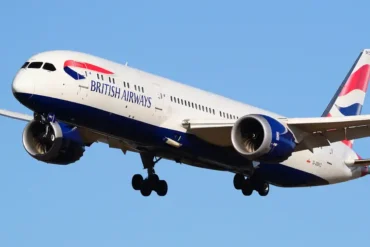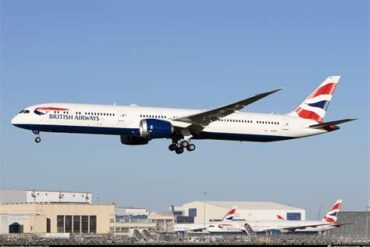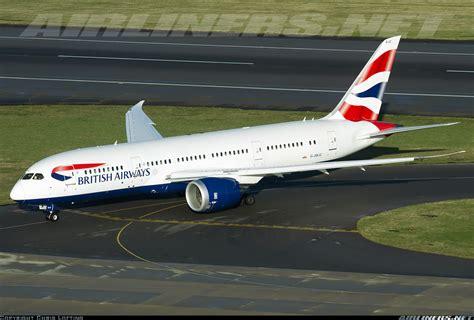
On June 15, 2025, the aviation world witnessed an unexpected development as a British Airways Boeing 787-8 Dreamliner, operating as Flight BA35 bound for Chennai, executed a mid-air turnaround over the English Channel and returned to London Heathrow, the UK’s busiest airport. The incident has sparked intense interest across the aviation sector, as experts and passengers alike seek to understand what led to this unscheduled return and what it signifies for airline operations and safety protocols.
The Flight’s Unforeseen Reversal
Flight BA35 departed London Heathrow at 1:16 PM local time, carrying passengers eager to reach the bustling Indian city of Chennai. The aircraft, an 11-year-old Boeing 787-8 Dreamliner registered as G-ZBJG, was equipped with modern avionics and diagnostic systems designed to monitor every aspect of its performance. Shortly into its journey, while over the Strait of Dover, the aircraft’s systems flagged a technical irregularity. The pilots, adhering to stringent safety protocols, initiated a holding pattern, circling above the Channel as they consulted with ground control and evaluated the situation.
After multiple loops, the decision was made: the safest course of action was to return to Heathrow, where comprehensive technical support and maintenance facilities awaited. The Dreamliner landed without incident, and all passengers disembarked normally. Importantly, no emergency was declared, no injuries occurred, and the turnaround was conducted with professional precision that underscored the crew’s training and preparedness.
Inside the Decision to Turn Back
The return of Flight BA35 was not a response to immediate danger but rather a precautionary measure. In modern aviation, the margin for error is kept deliberately slim. Aircraft like the 787-8 are designed to detect and report anomalies at their earliest stages, long before they pose any real threat. In this instance, the onboard alert prompted a controlled return rather than risk proceeding on a long-haul route over potentially less equipped airspaces.
This type of decision reflects best practices in airline safety. It demonstrates that the systems designed to protect passengers and crew worked exactly as intended. The absence of panic onboard, the calm professionalism of the pilots, and the smooth coordination with ground operations all contributed to an outcome that, while inconvenient for travelers, was a clear victory for safety-first aviation.
Passenger Experience and British Airways’ Response
For the passengers of BA35, the unexpected return could have been a source of frustration. Yet reports indicate that British Airways managed the situation with transparency and care. Ground staff met the flight promptly, guiding passengers through the rebooking process and offering assistance with accommodations where necessary.
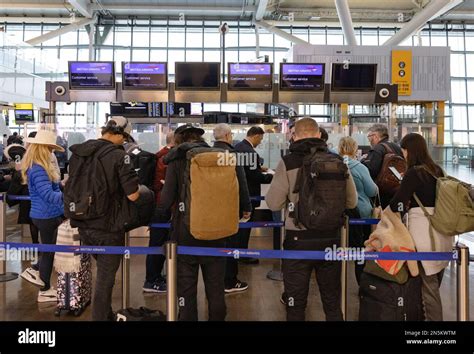
Travelers were kept informed throughout, with regular updates from both flight crew and airport personnel. Such communication played a crucial role in maintaining calm and goodwill, even amid disruption. British Airways’ commitment to passenger welfare in moments like these helps preserve trust—a vital asset in the competitive global aviation market.
Operational Impact and Logistical Challenges
The ripple effects of the turnaround extended beyond the immediate flight. The removal of a Boeing 787-8 Dreamliner from British Airways’ active fleet posed logistical challenges, requiring rapid adjustments to scheduling, crew assignments, and aircraft deployment. Chennai, a key destination in the airline’s South Asian network, holds strategic significance not just for passenger traffic but for cargo operations as well.
Delays in cargo delivery and passenger connections inevitably followed, necessitating swift coordination across departments to mitigate disruptions. Despite these challenges, British Airways demonstrated operational resilience, leveraging its extensive resources to manage the situation with minimal further impact on its network.
What This Incident Reveals About Aviation Safety
In the wider context of aviation safety, the return of BA35 serves as a potent reminder of how modern protocols are designed to act before risk escalates. The advanced diagnostics aboard aircraft like the 787-8 are not just technical marvels—they are safeguards that give pilots the information they need to make conservative, safety-driven decisions.
Such events, though rare, are anticipated and practiced for during pilot training. They showcase how aviation has evolved from reactive to proactive safety management, where caution is not just encouraged but embedded in operational DNA.
The Role of Real-Time Communication in Airline Reputation
In today’s hyper-connected world, incidents like the return of Flight BA35 play out not just in air traffic control towers and airline operations centers, but also across social media feeds and news platforms. British Airways’ handling of communications—swift, factual, and passenger-focused—was key in shaping public perception.
By providing timely updates and clear explanations, the airline maintained its reputation for responsibility and transparency. Such efforts are crucial in an age where passenger confidence can be influenced as much by tweets and posts as by official statements.
Chennai’s Strategic Importance for British Airways
The spotlight this incident casts on Chennai highlights the city’s growing prominence in British Airways’ global network. Chennai serves as a vital link between the UK and one of India’s most dynamic economic hubs. The city’s robust tech sector, manufacturing base, and large expatriate community in the UK make the route essential for both business and leisure travel.
British Airways has invested heavily in strengthening its services to South Asia, and ensuring reliability on the London-Chennai corridor remains a top priority. The airline’s rapid response to the BA35 disruption reflects this commitment.
Looking Ahead: Lessons and Legacy of BA35’s Turnaround
The June 15 event will likely be remembered not for what went wrong, but for what went right. British Airways’ handling of BA35’s turnaround exemplifies the balance modern airlines must strike: prioritizing safety, protecting passenger welfare, and maintaining operational integrity even in the face of the unexpected.
As investigations into the technical anomaly continue, the aviation community will watch closely for insights that can further enhance safety practices. Meanwhile, passengers can take reassurance from knowing that in the skies above the English Channel, caution prevailed—and that, ultimately, is the goal of every flight.