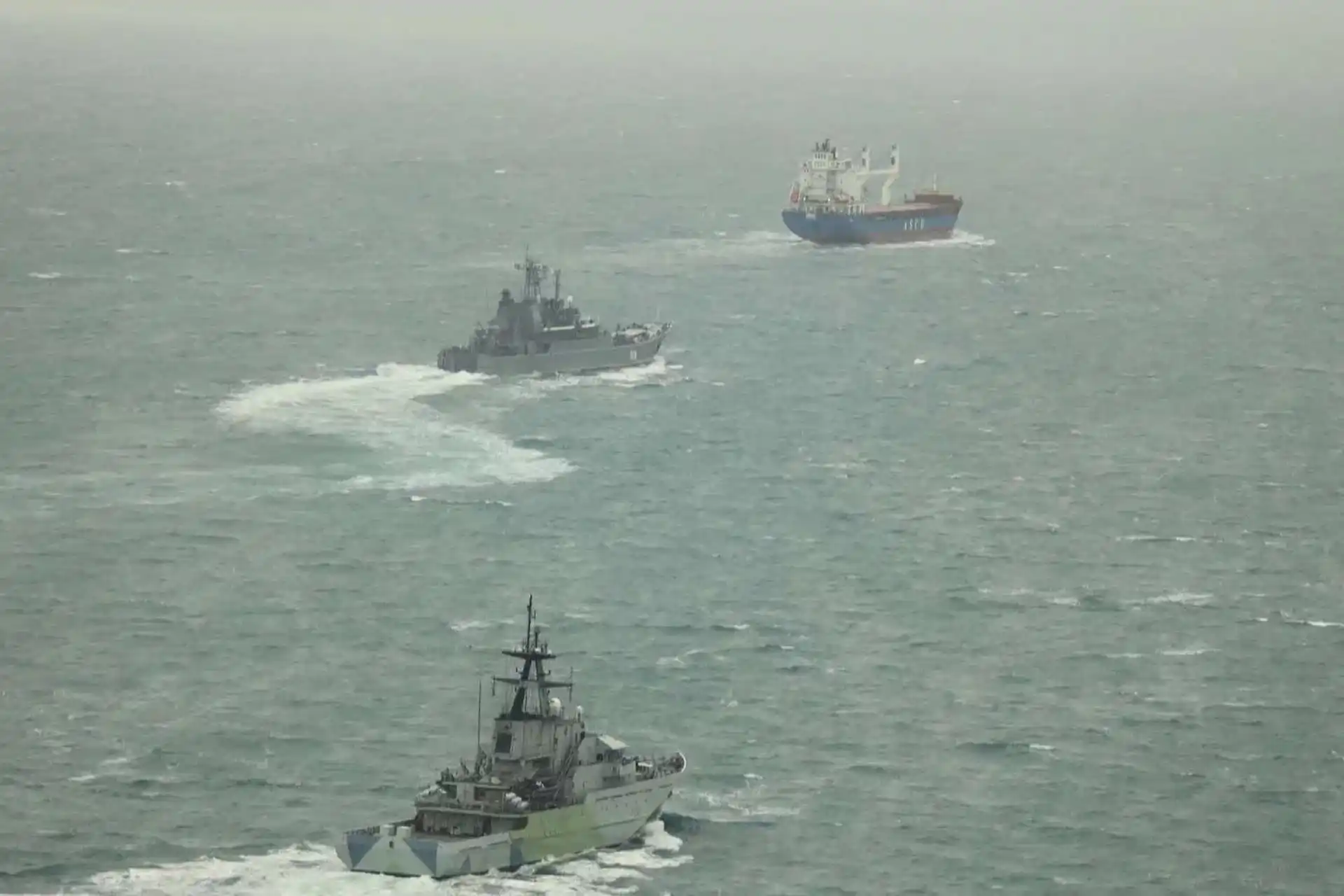
The narrow waters of the English Channel have long served as one of the world’s most intensely monitored maritime corridors, a strategic artery where military movements rarely pass unnoticed. In early March 2026, the United Kingdom’s Royal Navy once again demonstrated how closely NATO nations observe activity in this vital route, deploying patrol vessels and aviation assets to track a Russian naval and logistics convoy transiting between the Atlantic and the Mediterranean.
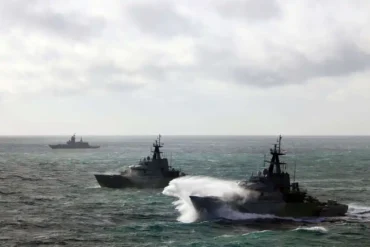
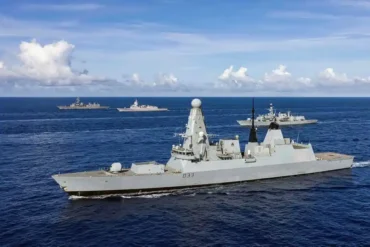
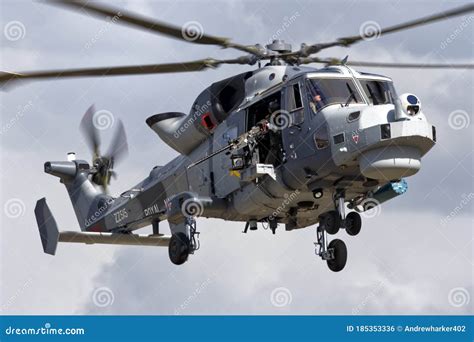
The operation involved HMS Tyne, a River-class offshore patrol vessel stationed in Portsmouth, supported by a Wildcat HMA2 helicopter from 815 Naval Air Squadron and the Gibraltar-based patrol craft HMS Cutlass. Their task was not confrontation but observation—carefully shadowing two Russian Ropucha-class landing ships alongside a pair of large cargo vessels as they sailed through one of Europe’s most commercially congested waterways.
These monitoring missions may appear routine on the surface, yet they reveal a deeper strategic contest unfolding at sea. By tracking Russian military shipping across NATO-controlled maritime chokepoints, the Royal Navy and its allies maintain a continuous picture of Moscow’s logistical lifelines, ensuring that even non-hostile naval transits remain fully documented and understood.
Russian Amphibious Ships Cross a Strategic Maritime Corridor
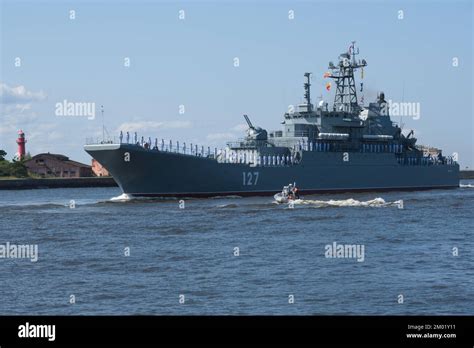
At the center of the Royal Navy’s surveillance operation were two Project 775 Ropucha-class landing ships, the Aleksandr Otrakovsky and Aleksandr Shabalin. These vessels, designed during the Soviet era but still widely used by the Russian Navy, combine troop transport capabilities with the ability to deliver heavy military equipment directly onto shore.
The Ropucha class represents a pragmatic approach to amphibious warfare. Measuring approximately 112.5 meters in length and displacing around 4,080 tons at full load, these ships are capable of traveling thousands of nautical miles without resupply. Twin diesel engines push them to speeds near 18 knots, while an operational endurance of roughly 30 days at sea allows deployments across vast maritime theaters.
Their real value lies in logistics rather than firepower. A single Ropucha-class ship can transport roughly:
- 10 main battle tanks
- Up to 340 troops
- Around 500 tons of military cargo
Both bow and stern ramps allow rapid roll-on/roll-off loading, meaning armored vehicles, engineering equipment, or ammunition pallets can be quickly moved between ship and shore.
While not intended to fight major naval battles, the vessels do carry defensive armament. Twin 57 mm artillery mounts, short-range air-defense systems, and 122 mm Grad-M rocket launchers provide limited self-protection and the ability to support amphibious landings with short bursts of coastal bombardment.
In modern conflicts, such ships serve as floating supply trucks for naval forces—capable of reinforcing distant bases or sustaining expeditionary deployments without relying on civilian shipping.
Military Logistics Vessels in the Convoy
Alongside the amphibious ships traveled two large cargo vessels: Sparta IV and MV Sabetta. Though less visually dramatic than warships, these freighters often represent the true backbone of long-distance military logistics.
Sparta IV is operated by Oboronlogistika, a Russian state-linked logistics company that openly provides maritime transport services supporting government and military requirements. The vessel has a deadweight of approximately 8,625 tons, making it capable of carrying large volumes of equipment, containers, and specialized cargo.
A key feature of Sparta IV is its onboard heavy-lift cranes, each rated at up to 55 tons. These allow the ship to handle oversized loads such as armored vehicles, radar systems, construction equipment, or containerized ammunition without relying on sophisticated port infrastructure.
The second cargo ship, MV Sabetta, is significantly larger. Measuring about 143 meters in length and boasting a deadweight capacity of roughly 17,300 tons, it can carry massive quantities of sustainment supplies. While unarmed, vessels like Sabetta often operate alongside naval escorts when transporting cargo linked to military operations.
The convoy structure itself illustrates a practical military approach. Merchant vessels provide bulk transport, while naval landing ships offer protection, command capability, and operational flexibility should the cargo need to be delivered into ports where security conditions are uncertain.
The “Syrian Express” and Russia’s Mediterranean Lifeline
The most widely accepted explanation for this maritime movement is tied to Russia’s long-running logistics network connecting northern bases with the Mediterranean port of Tartus in Syria.
For more than a decade, analysts have used the phrase “Syrian Express” to describe the steady flow of Russian military shipping transporting weapons, vehicles, and supplies to the region. Tartus remains Russia’s only permanent naval support facility in the Mediterranean, providing repair, refueling, and replenishment services for deployed vessels.
Even as the geopolitical landscape in Syria continues to evolve, the port still holds enormous strategic value. From Tartus, Russian forces can support operations or influence events across a vast region that includes:
- The Eastern Mediterranean
- North Africa, particularly Libya
- Maritime routes leading toward the Red Sea
- Supply lines extending into Africa Corps deployments
Tracking movements like the March 2026 convoy helps analysts map how Russia maintains long-distance logistics under sanctions and wartime pressure. Although the precise cargo aboard the ships remains undisclosed, the types of vessels involved strongly indicate military sustainment operations rather than ordinary commercial trade.
Royal Navy Monitoring Operation
The British response relied on a combination of endurance, surveillance technology, and aviation support rather than heavily armed warships.
HMS Tyne, the lead monitoring vessel, belongs to the River-class offshore patrol vessel (OPV) family. These ships are designed primarily for maritime security missions such as patrol, fisheries protection, counter-smuggling, and surveillance of national waters.
Although they lack the heavy missile systems of destroyers or frigates, River-class ships possess advantages perfectly suited to monitoring transiting naval groups. Their operational endurance allows them to remain on station for extended periods, while modern sensors and communications systems enable them to track contacts and relay information across NATO networks.
Adding a crucial aerial perspective was the Wildcat HMA2 helicopter. Operating from Royal Navy vessels or coastal bases, the Wildcat carries advanced radar, electro-optical sensors, and communications equipment that extend surveillance far beyond the horizon.
In combat configurations the helicopter can carry:
- Martlet lightweight missiles
- Sea Venom anti-ship missiles
- M3M heavy machine guns
- Sting Ray torpedoes
During monitoring missions, however, its greatest value lies in rapid identification and imagery collection. From the air, crews can photograph deck cargo, observe ship markings, and confirm vessel identities in dense shipping lanes.
Meanwhile, HMS Cutlass, a fast patrol craft based in Gibraltar, supported monitoring activities near the entrance to the Mediterranean. Capable of speeds around 40 knots, the vessel specializes in rapid interception and visual identification of passing ships using optical sensors and the OpenSea360 mission system.
Why the English Channel Matters to NATO
The English Channel and the Dover Strait represent one of the most strategically sensitive waterways in Europe. Every day hundreds of merchant vessels pass through the corridor, linking the Atlantic Ocean with the North Sea and Baltic maritime routes.
For NATO planners, maintaining awareness of military activity in this area is essential. Even routine naval transits provide intelligence insights into deployment patterns, supply routes, and operational tempo.
Allowing foreign military convoys to cross the Channel without observation would create dangerous blind spots in maritime domain awareness. Surveillance missions also help deter so-called gray-zone activities, including electronic surveillance, underwater reconnaissance, or potential threats to seabed infrastructure.
British officials have increasingly warned about risks to undersea cables and energy pipelines that connect Europe’s digital and energy systems. Monitoring foreign naval movements is therefore not merely symbolic; it forms part of a wider effort to safeguard critical infrastructure beneath the sea.
According to statements by UK Defence Secretary John Healey, Russian naval activity near British waters has increased by roughly 30 percent over the past two years. This rise has prompted expanded patrol operations, intelligence sharing with NATO allies, and greater attention to maritime security across northern Europe.
Persistent Surveillance as a Strategic Signal
The March 2026 shadowing mission highlights how modern naval competition often unfolds far from dramatic battle scenes. Instead of open confrontation, rival powers engage in constant observation, documentation, and signaling.
From Moscow’s perspective, using amphibious ships and logistics freighters allows the continuation of strategic mobility even under economic sanctions and geopolitical pressure. Older vessels such as the Ropucha class remain valuable precisely because they can transport heavy equipment across long distances without depending on civilian charter fleets.
For the United Kingdom and NATO, the answer is persistent surveillance. Patrol vessels, maritime aircraft, satellites, and allied naval forces together create a network that tracks military shipping across successive chokepoints—from the Barents Sea to Gibraltar and the Mediterranean.
In that broader context, the presence of HMS Tyne, HMS Cutlass, and a single Wildcat helicopter carries strategic weight beyond their modest size. Integrated into a multinational surveillance architecture, they help ensure that every significant naval movement through European waters is seen, recorded, and understood.
Quiet operations like this rarely make dramatic headlines, yet they represent the steady pulse of modern maritime security—where awareness, patience, and visibility are often the most powerful tools in maintaining stability across the world’s busiest seas.