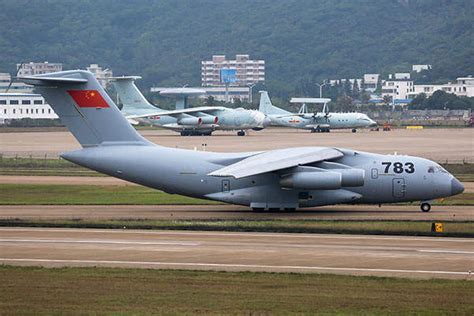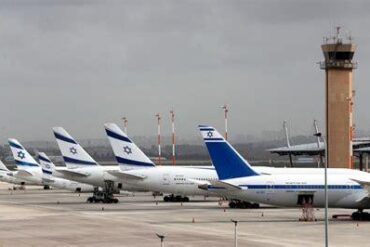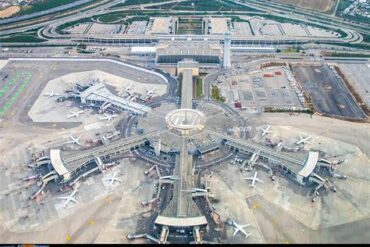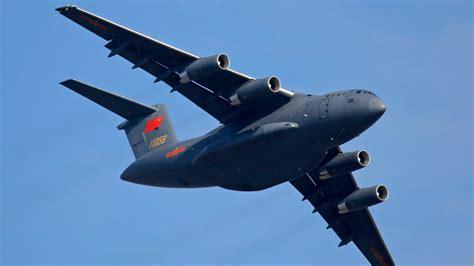
In an unprecedented move, Russian and Chinese military cargo planes have been flying weapons, missiles, and supplies into Iran, signaling a shift in geopolitical dynamics in the Middle East. This airlift of critical military aid is taking place amid escalating tensions between Israel and Iran, with implications for the wider conflict, particularly concerning Israel’s air defenses and the support of the United States for its ally.
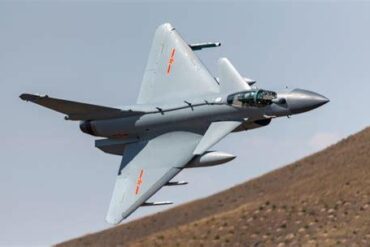
The first reported flight by a Chinese military cargo plane to Iran occurred in June 2025. A Chinese Airbus A330-243F cargo aircraft departed from Guangzhou Baiyun International Airport and flew southwest over eastern Turkmenistan before turning off its transponder as it neared Iranian airspace. This event marks the first known instance of a Chinese military cargo plane landing in Iran, delivering what is believed to be Chinese military support, including advanced air defense systems and other weapons to bolster Tehran’s defense capabilities.
Growing Support for Iran: The Russian and Chinese Strategy
Russia and China have both positioned themselves as key players in Iran’s defense amid the ongoing regional conflict. The joint military airlift of weapons and supplies to Iran follows a pattern of strategic partnerships aimed at countering the influence of the United States and Israel in the region. Both Russia and China view the Israeli military’s operations, particularly its strikes against Iran, as part of a broader U.S. strategy to destabilize Iran.
The Russian and Chinese air support is seen as a direct response to Israel’s attacks, which have been part of a larger strategy to curb Iran’s ability to supply weapons to Russia for the ongoing conflict in Ukraine. For years, Israel has served as a proxy for U.S. interests in the Middle East, especially in its efforts to disrupt Iranian weapon supply chains. However, with mounting pressure and increased missile strikes from Iran, the balance of power appears to be shifting.
Iran’s Missile Capability and Strategic Response
Recent reports from both Israeli and Iranian sources suggest that Iran’s missile capabilities are evolving at an alarming rate. Iranian missile strikes on Israel have intensified, with the number of successful hits rising significantly over recent days. In one particularly tense moment, Iranian forces fired up to 150 missiles per day, with 75 of those penetrating Israel’s advanced air defense systems.
These strikes have challenged Israel’s Iron Dome and Arrow defense systems, causing Israeli officials to reassess their strategies. Despite the Israeli air force’s attempts to suppress Iranian missile production and delivery, Tehran has demonstrated an ability to regroup and continue launching attacks, suggesting that Israel may have underestimated Iran’s resilience and military capabilities.
The failure of Israel’s air defense systems to intercept all incoming missiles is particularly concerning. Analysts are now warning that Israel could soon face a scenario where its airbases are no longer operational, drastically impacting its military readiness and the ability to respond to ongoing threats.
The Role of Pakistan and the Escalation of Support to Iran
As the conflict between Israel and Iran intensifies, another surprising development has emerged: Pakistan’s involvement in supporting Iran’s military efforts. On June 16, 2025, it was reported that Pakistan had sent a large supply of missiles to Iran, including 720 anti-aircraft missiles. This move was in direct response to Israeli threats aimed at Pakistan, warning the country to halt its arms shipments to Iran.
Rather than backing down, Pakistan tripled its support for Iran, further complicating the already tense relations between Israel and neighboring countries. This new dynamic has added another layer of complexity to the situation, with Pakistan’s involvement likely to provoke further retaliation from Israel, and potentially the U.S. and NATO forces as well.
The Strategic Interests of China and Russia in the Middle East
Both China and Russia have a vested interest in supporting Iran, not only due to military and economic ties but also because of their broader geopolitical objectives. For Russia, supporting Iran is a way to counterbalance U.S. influence in the region, particularly in the context of the Ukraine conflict. By aiding Iran, Russia can secure a reliable ally in the Middle East while simultaneously hampering U.S. efforts to supply Israel with advanced weapons and technology.
China, too, has a significant stake in the outcome of the conflict. As a rising global power, Beijing has sought to expand its influence in the Middle East, where it has substantial investments in infrastructure and energy. Supporting Iran aligns with China’s broader strategic goals of diminishing U.S. dominance in global affairs and asserting its role as a key player in shaping the future of the Middle East.
The Future of the Conflict: Implications for Global Security
The ongoing conflict between Israel and Iran, compounded by the support of Russia and China, raises serious concerns about the stability of the Middle East and the potential for broader regional conflicts. The delivery of advanced military systems by both Russian and Chinese forces to Iran is likely to lead to an arms race in the region, with both sides vying for superiority in air defense and missile capabilities.
Moreover, the involvement of Pakistan and other regional actors is likely to complicate any efforts toward a peaceful resolution. As tensions continue to rise, the possibility of a larger-scale conflict, including direct confrontations between Israel, Iran, and their respective allies, becomes increasingly likely.
The international community is watching closely, with many fearing that the current trajectory could lead to an unprecedented escalation of violence in the Middle East. As military aid continues to flow into Iran, and as missile strikes intensify, the situation remains volatile and unpredictable.
The broader implications of these developments extend beyond the Middle East. The geopolitical interests of major powers such as the United States, Russia, China, and Pakistan are all at stake, and the situation could have lasting effects on global security. The outcome of this conflict, which is quickly escalating into what some analysts are calling World War 3, will undoubtedly reshape the political landscape in the Middle East and beyond.