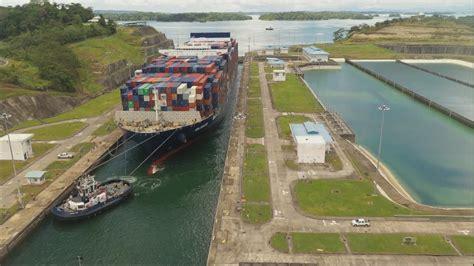
The United States military has launched a high-profile series of joint drills with Panamanian forces near the Panama Canal, signaling a strategic power play in the face of intensifying U.S.-China tensions over control and influence in the region. With helicopters touching down at the historic Panama-Pacific Airport—formerly the U.S. Howard base—the drills underscore Washington’s renewed focus on a maritime artery that handles nearly 5% of global trade and an estimated 40% of U.S. container traffic.
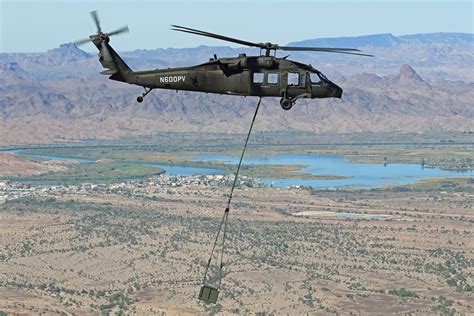
Strategic Deployment: U.S. Army Helicopters Touch Down in Panama
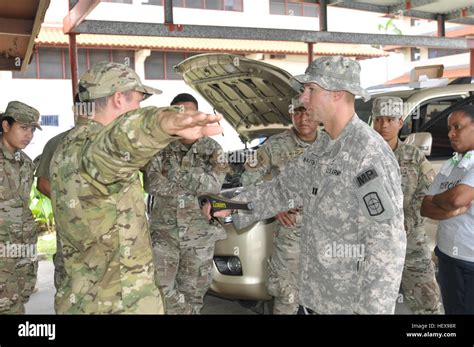
On Sunday, two UH-60 Black Hawks and a CH-47 Chinook helicopter from the U.S. Army arrived in Panama, initiating the exercises designed to reinforce security protocols around one of the world’s most critical maritime chokepoints. The landing zone—Panama-Pacific Airport—is steeped in symbolism, a location that once served as the nerve center of American military might in the region.
The drills, organized in collaboration with Panama’s National Aeronaval Service (SENAN), aim to enhance regional response capabilities against any perceived threats. According to Michael Palacios, subcommissioner of SENAN, the exercises will help bolster defense readiness not only for Panama but also for other countries across the region.
“This is a forward-looking initiative,” Palacios stated, “designed to prepare our forces for a new era of global conflict—one increasingly driven by cyber and hybrid warfare, where control of key trade routes is a strategic objective.”
Background Tensions: The Shadow of China and Trump’s Canal Rhetoric
The drills come on the heels of escalating rhetoric from U.S. President Donald Trump, who has openly accused China of gaining excessive influence over the Panama Canal. In recent statements, Trump has implied that the United States may seek to ‘reclaim’ control over the canal, igniting both domestic protests within Panama and diplomatic tensions abroad.
Trump’s insistence that the canal would “not exist” without American engineering and military support during the early 20th century has drawn sharp criticism from Panamanian President Jose Raul Mulino, who reaffirmed that the canal is regulated by the autonomous Panama Canal Authority and operates in the interests of global maritime commerce—not geopolitical gamesmanship.
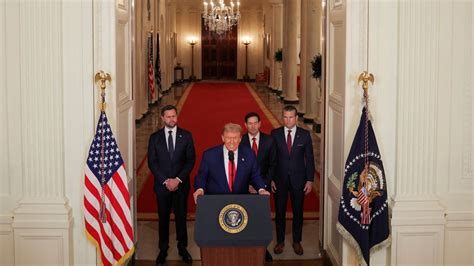
Mulino, during a weekly press conference, pushed back strongly: “Let them fight their problems in Washington or Beijing, but not in Panama’s backyard.” His comments reflected growing unease in Panama over being used as a pawn in a geopolitical struggle that pits two superpowers against one another.
Geopolitical Undercurrents: The Huawei Tower Controversy
Adding to the mounting friction, the U.S. embassy in Panama City recently announced an $8 million communications infrastructure project aimed at replacing Chinese Huawei equipment with “secure U.S. technology.” Though the project dates back nearly a decade, its sudden prominence has triggered accusations of American interference and long-term agenda-setting.
Panama’s Security Minister Frank Abrego clarified that the towers—originally installed in 2017 using Panamanian funds—had long been part of the country’s national infrastructure plan. The United States only later offered funding on the condition that the existing equipment be modified due to “military-grade security concerns.”
This sparked accusations that the United States was using its financial leverage to reshape Panama’s telecommunications network under the guise of national security, all while turning a blind eye to Panamanian autonomy. For many Panamanians, the issue mirrors a colonial playbook once used to justify American military presence in the Canal Zone.
Canal Sovereignty Revisited: A Sensitive National Wound
For Panama, sovereignty over the canal remains an emotionally and politically charged issue. The United States relinquished control of the Panama Canal on December 31, 1999, closing an era where American military bases dotted the isthmus, and where the U.S. Navy and Air Force exerted unparalleled control over regional logistics and security.
The memory of American dominance remains vivid. That’s why the bilateral agreement permitting the U.S. military to conduct training exercises on Panamanian soil—even without establishing permanent bases—sparked street protests and triggered fierce parliamentary debates.
Despite official statements from SENAN assuring that the maneuvers would respect “national sovereignty,” the images of U.S. helicopters once again hovering over the canal reignited national anxiety about a potential rollback of hard-won independence.
Regional Strategy: Why the Canal Matters More Than Ever
Beyond the canal’s symbolic importance, the strategic reality of 21st-century logistics cannot be ignored. The Panama Canal handles roughly 12,000–14,000 ships annually, including energy tankers, container ships, and increasingly, military support vessels. Any disruption or redirection of this flow would have a cascading effect on global supply chains.
In an era where the Indo-Pacific has become the principal theater of great power competition, the canal represents an irreplaceable alternative maritime corridor linking East and West. Chinese investment in Latin America—through its Belt and Road Initiative and port financing—has raised red flags in Washington, prompting an increase in military and diplomatic engagement across Central America.
With new U.S. military aid packages and training programs being directed toward Latin American nations, the Panama Canal is no longer just a trade route—it is a geopolitical chessboard.
A Longstanding Pattern of Military Cooperation
Though the recent drills have drawn heightened media attention due to Trump’s comments and China’s expanding regional role, they are not entirely new. According to SENAN, the joint military exercise has now been held for 23 consecutive years, with the current iteration representing an evolution in operational scope, rather than a sudden strategic pivot.
However, the optics of 2025 are dramatically different. The presence of advanced U.S. military helicopters, the invocation of nationalistic rhetoric by both governments, and the broader context of U.S.-China tech and naval rivalry have transformed what might otherwise be routine drills into a flashpoint for global observers.
What Comes Next: A Balancing Act for Panama
Caught between two superpowers, Panama must now walk a tightrope of diplomacy, national interest, and regional stability. President Mulino’s careful resistance to overt alignment with Washington—despite shared economic and security goals—illustrates a nuanced foreign policy aimed at preserving Panamanian agency.
Meanwhile, Washington’s recent actions suggest a renewed Monroe Doctrine-style approach, framing Latin America as a zone of exclusive U.S. influence. This doctrine—long dismissed as outdated—may be experiencing a revival, albeit rebranded under the auspices of tech security, democracy promotion, and trade route protection.
With the joint drills concluding Friday, the final takeaway may not lie in the number of helicopters deployed or hours of training logged. Rather, the true impact is measured in the diplomatic recalibrations now underway across the hemisphere.
Conclusion: Canal Becomes Theater in 21st-Century Power Rivalry
The recent U.S.-Panama military exercises at the canal are not merely defense maneuvers—they are symbolic and strategic assertions of influence. As China continues its rise and the United States reasserts its presence, small but pivotal nations like Panama find themselves thrust into the spotlight of 21st-century great power rivalry.
Whether the Panama Canal remains a neutral trade route or becomes a militarized chokepoint depends as much on Washington and Beijing’s next moves as it does on Panama’s internal resolve to stay above the fray. But one thing is certain—the isthmus once again finds itself at the epicenter of global power politics, and the world is watching.