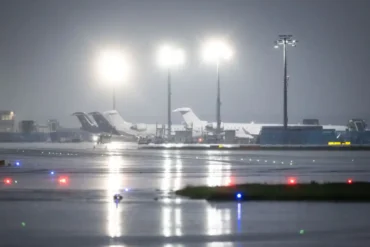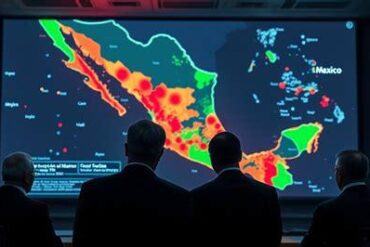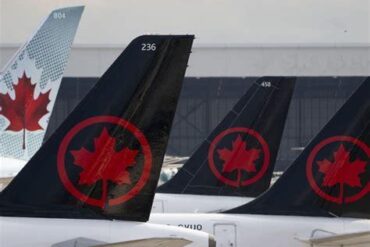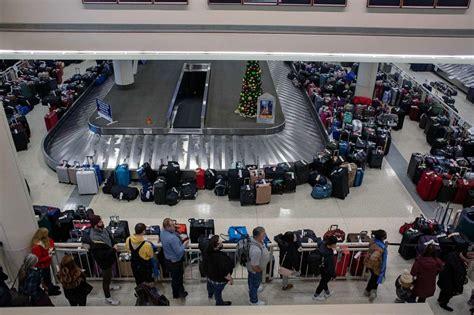
Severe weather has plunged major U.S. airports into chaos, leaving thousands of travelers from Brazil, Canada, Mexico, Colombia, and Panama stranded amid a wave of flight cancellations and delays. Airports including JFK (New York), LAX (Los Angeles), DFW (Dallas-Fort Worth), and ORD (Chicago O’Hare) have seen unprecedented disruptions as Air Canada, United Airlines, Southwest, Delta, Avianca, and LATAM struggle to maintain operations under dangerous meteorological conditions.
US Weather Chaos Causes Widespread Travel Paralysis
A potent storm system swept across the United States starting late Friday and intensified into Sunday, bringing with it violent thunderstorms, blinding rainfall, and gusty winds strong enough to compromise safe aircraft operations. This volatile weather has wreaked havoc at key international gateways, grounding aircraft due to crosswinds, lightning threats, and reduced visibility. Flight operations were paralyzed as ground holds were initiated and departure clearances withdrawn at short notice, stretching already overburdened airlines beyond operational tolerance.
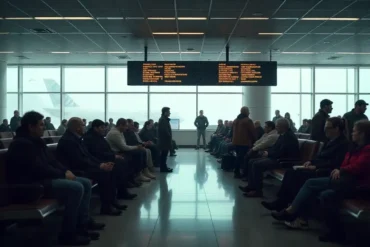
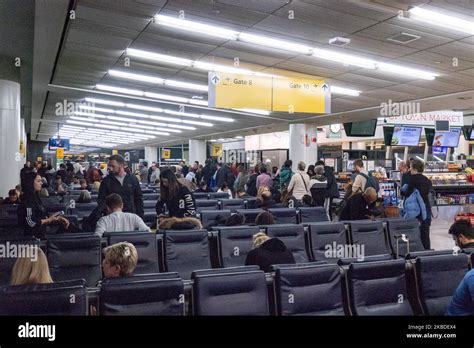
Thousands of international passengers—especially from Latin American and Canadian markets—found themselves caught in a gridlock of delays, missed connections, and terminal overcrowding. Some travelers have endured hours-long waits on tarmacs or in gate areas, while others are marooned in airport hotels or sleeping on terminal floors with no clear departure timeline.
American Airlines and Delta Suffer Heaviest Blows
American Airlines, operating from its fortress hub at Dallas-Fort Worth International Airport (DFW), has emerged as the most severely affected. The airline logged a staggering 280 cancellations and 470 delays, totaling 750 disrupted flights in just a 48-hour period. The dual blow of grounded aircraft and overwhelmed customer service lines left passengers scrambling to rebook on limited available flights.
Delta Air Lines, another U.S. heavyweight, recorded 236 cancelled flights and 246 delays, severely straining its hub operations in Atlanta, Minneapolis, and New York. Many Delta flyers were rerouted to secondary cities or faced days-long delays in securing alternate travel.
United and Southwest Navigate Delays, Avoid Cancellations
United Airlines, while managing to avoid outright cancellations, still posted 104 delayed flights, particularly affecting hubs in Chicago (ORD) and Newark (EWR). While United’s operational resilience spared it deeper disruption, passengers still endured long gate-side waits and repeated schedule changes.
Southwest Airlines, true to its low-cost high-volume model, encountered 131 delayed flights without cancellations. Despite continuing operations, the delays proved significant at core bases like Dallas Love Field and Denver International Airport, where severe lightning and wind shear triggered rolling delays throughout the weekend.
Foreign Carriers Report Minimal Impact but Face Knock-On Effects
Foreign airlines operating in and out of affected hubs—such as Air Canada, Avianca, and LATAM—reported much lower disruption levels.
Air Canada logged just 2 cancellations and 12 delays, mostly linked to U.S.-bound connections. Still, travelers from Toronto, Vancouver, and Montreal reported frustration with long immigration lines and delayed interline transfers once inside U.S. territory.
Avianca Airlines, serving Colombian routes, and LATAM Airlines, covering much of South America, each reported only 1 delayed flight, reflecting their more limited exposure to weather-impacted hubs.
The Human Toll: Confusion, Chaos, and Frustration
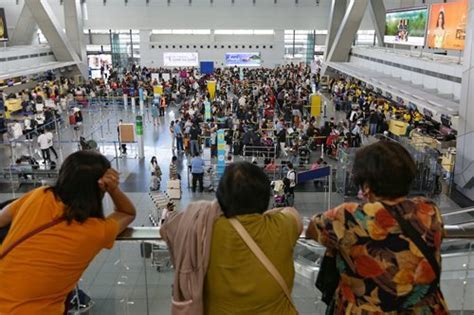
The human side of the disruption paints a grim picture. At JFK, ORD, and LAX, passengers from Latin America and Canada described scenes of packed terminals, understaffed help desks, and limited food and accommodation options. Travelers with limited English proficiency were especially hard-hit, struggling to access timely rebooking support or get real-time updates from airline apps and websites.
Reports from Dallas-Fort Worth included entire families sleeping in baggage claim areas or lining up for hours at makeshift customer service counters. Many travelers, especially those transiting from Brazil and Panama, missed onward domestic connections and had to reschedule at their own expense.
FAA and ATC Response to Safety Risks
The Federal Aviation Administration (FAA) issued multiple weather advisories throughout the weekend, advising airports to reduce traffic flow during peak storm hours. These directives slowed down gate departures, takeoffs, and inbound sequencing, exacerbating airport congestion.
Air traffic controllers faced enormous pressure to reroute traffic around storm cells, manage tarmac delays, and respond to ever-shifting runway availability. The ripple effect of ground delays often created backlogs across multiple airports, extending the impact even to cities not directly in the storm’s path.
International Passengers Caught in Transit Gridlock
Passengers traveling from São Paulo, Toronto, Bogotá, Panama City, and Mexico City were among the hardest hit. With many flights transiting through affected U.S. hubs, passengers found themselves unable to complete connections or enter the U.S. due to canceled final legs of their journeys.
Visa-holding passengers reported being turned away from rebooking counters due to complex rerouting limitations, and many without U.S. entry permits were denied hotel accommodations outside secure areas, further worsening their ordeal.
At Los Angeles International Airport (LAX), inbound travelers from Mexico were seen attempting to rebook via app-based ticket agents, while Colombian nationals inbound through Miami had flights rerouted through Charlotte, which itself was dealing with runway closures and ground delays.
Airline Recovery Strategies Underway
As the weather system begins to shift northeastward, airlines have ramped up recovery flight schedules. Extra crews have been called in, and select aircraft have been repositioned from unaffected regions to absorb backlog demand. However, seating remains scarce, and rebooking windows are stretching up to 72 hours for popular routes.
Some airlines are issuing travel waivers, allowing free rebooking or cancellations for affected customers. American Airlines and Delta have also increased compensation for disrupted passengers, offering meal vouchers, hotel accommodations, and bonus miles for voluntarily rerouted travelers.
Ongoing Traveler Guidance and Outlook
With storms forecasted to continue affecting New England and Midwestern air corridors, further delays and cancellations are likely. Travelers from South America and Canada connecting through hubs like Boston Logan and Chicago Midway should prepare for potential rescheduling.
Passengers are urged to:
- Continuously check airline apps and airport boards for real-time updates.
- Consider flying through less congested airports.
- Remain flexible with itineraries and travel windows.

Broader Implications for Summer Travel
This episode exposes the fragile balance in U.S. airport operations under extreme weather. The mix of outdated air traffic infrastructure, limited interline agreements, and record-breaking passenger volumes has created a perfect storm of delays with few short-term solutions.
As climate-related weather events increase in frequency, airports and airlines will face mounting pressure to invest in resilience, from improved radar tracking to enhanced traveler communication platforms. For international travelers, especially from Latin America and Canada, the key will be advanced planning, direct routing, and keeping a backup plan ready at all times.
In the short term, the aviation system is racing to return to normalcy, but the effects of this weekend’s disruption will be felt for days to come. Airline crews remain stretched, aircraft rotations are still off-balance, and travelers continue to experience extended itineraries across the continent.
The skies may be clearing, but for many stranded passengers, the journey home has only just begun.