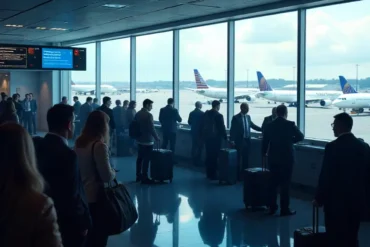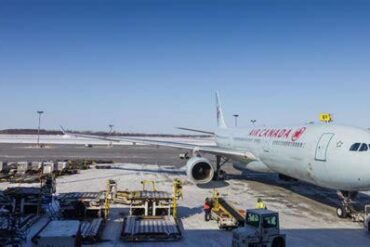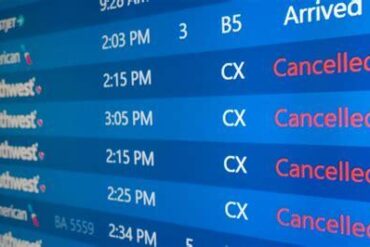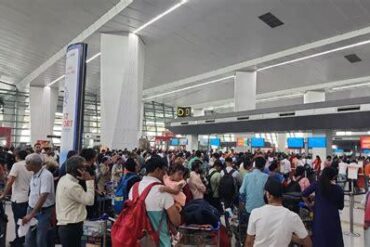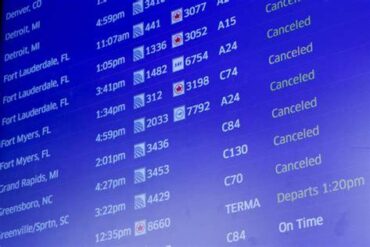
Canadians and international travelers alike were hit by widespread air travel disruptions on Sunday, July 27, 2025, as a combination of adverse weather conditions, operational inefficiencies, and staffing shortages led to dozens of flight cancellations and hundreds of delays across three of the country’s busiest hubs — Toronto Pearson International (YYZ), Montreal-Trudeau International (YUL), and Vancouver International Airport (YVR). Airlines such as Air Canada, WestJet, Jazz, Porter Airlines, and Air Canada Rouge bore the brunt of the impact, with thousands of passengers left scrambling to rebook, reschedule, or reconsider their travel plans altogether.
Toronto Pearson: Canada’s Busiest Airport Faces the Worst Impact
Toronto Pearson International Airport (YYZ), the country’s busiest aviation gateway, experienced the most severe disruptions, reporting 188 flight delays and 14 cancellations in a single day. Of all the airlines operating at Pearson, Jazz Airlines experienced the greatest number of cancellations — 8 in total, coupled with 34 delays.
Air Canada, the flag carrier of Canada, was also significantly affected, recording 48 delays and 1 cancellation. WestJet, another major domestic player, suffered 27 delays and 2 cancellations, further compounding the congestion in the terminal and mounting frustration among travelers.
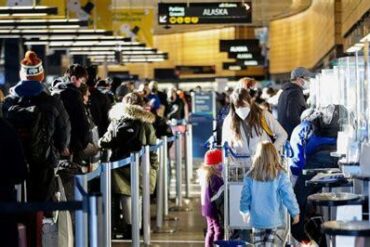
Air Transat, which typically operates transatlantic and sun destination flights, logged 15 delays, while Air Canada Rouge, Air Canada’s low-cost subsidiary, faced 16 delays and 1 cancellation. As terminal announcements stacked up with flight changes and rebooking instructions, passengers found themselves stuck in long lines, caught between uncertainty and limited options for alternative connections.
Montreal-Trudeau: Delays Ripple Through Eastern Canada
At Montreal-Trudeau International Airport (YUL), 92 flights were delayed, and 7 were canceled, according to airport authorities. Though the numbers were lower than Toronto, the disruptions were nonetheless significant. Jazz Airlines once again topped the cancellation list, recording 3 cancellations alongside 13 delays.
Air Canada Rouge was also notably affected with 13 delays and 2 cancellations, while Porter Airlines reported 11 delays, primarily on short-haul and regional routes. Air Transat, with its seasonal focus, encountered 9 delays, further pressuring terminal operations and gate availability.
The relatively lower number of outright cancellations compared to Toronto did little to lessen the aggravation, as mounting delays forced travelers to miss connections, important meetings, and even family events. Lines at check-in counters and help desks stretched long into the evening, with airline staff overwhelmed by the scale of the crisis.
Vancouver International: Delays Dominate Despite Fewer Cancellations
While Vancouver International Airport (YVR) recorded fewer cancellations, it still saw 78 delays and 3 cancellations on the same chaotic day. WestJet dealt with 8 delays and 1 cancellation, while Jazz Airlines matched those numbers with 8 delays and 1 cancellation.
Air Canada experienced 21 delays at Vancouver, which caused a ripple effect on westbound and international flights. Porter Airlines, relatively new to Vancouver’s market after recent expansion efforts, reported 3 delays, reflecting the broader logistical challenges that affected even the most optimized of schedules.
Though operations in Vancouver were not as severely hampered as in Toronto or Montreal, the cumulative strain across the entire air network had a knock-on effect, resulting in gate reassignments, tarmac delays, and crew rotation disruptions.
Airline Disruption Totals: A Snapshot of the Chaos
The following is a detailed breakdown of how each major Canadian airline was affected across the three primary hubs:
- Air Canada: 48 delays at Toronto, 9 at Montreal, 21 at Vancouver
- WestJet: 27 delays at Toronto, 5 at Vancouver
- Jazz Airlines: 34 delays, 8 cancellations at Toronto; 13 delays, 3 cancellations at Montreal; 8 delays, 1 cancellation at Vancouver
- Porter Airlines: 11 delays at Montreal, 3 at Vancouver
- Air Canada Rouge: 16 delays, 1 cancellation at Toronto
- Air Transat: 15 delays at Toronto, 9 at Montreal
Weather and Staffing: The Root Causes Behind the Collapse
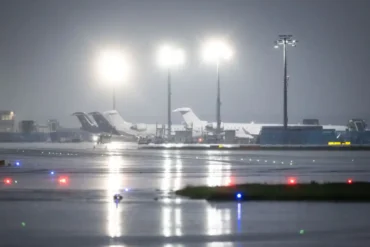
A blend of severe weather patterns and operational limitations emerged as the root causes of this national travel crisis. On Sunday, a system of thunderstorms, low visibility, and heavy rainfall engulfed parts of Ontario, Quebec, and British Columbia, wreaking havoc on takeoff and landing schedules.
In tandem with meteorological turmoil, staffing shortages — especially among air traffic controllers, baggage handlers, and gate crew personnel — further complicated the situation. At some airports, even minor delays turned into cascading disruptions as schedules buckled under the lack of available personnel to turn planes around swiftly or manage boarding gates efficiently.
According to airport officials, the industry continues to feel the long-tail effects of pandemic-era layoffs, with recruitment pipelines and training programs still struggling to meet post-COVID travel demand. Many unionized workers have also raised concerns over fatigue, understaffing, and compensation disputes, all of which contribute to a fragile infrastructure prone to sudden collapse.
Stranded and Frustrated: Passenger Experience Amid the Chaos
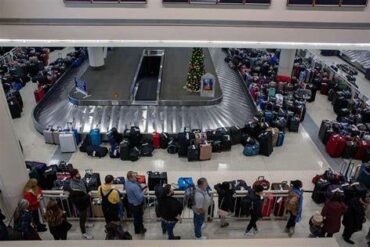
For travelers, the situation quickly spiraled from inconvenient to disastrous. Reports from Toronto and Montreal highlighted passengers sleeping in terminals, missing international connections, and facing indefinite rebooking delays. Business travelers, vacationers, and students alike voiced frustration on social media as rebooking lines stretched for hours and customer service channels became overloaded.
Despite airlines such as Air Canada, WestJet, and Jazz offering rebooking options, limited seat availability due to high-season traffic meant that many passengers were left with few to no options for same-day or even next-day departures. Families traveling with children, seniors with medical needs, and individuals with connecting international flights faced the brunt of the confusion and disarray.
Know Your Rights: What Canadian Passengers Can Do
In response to mounting consumer outrage, advocacy groups reminded passengers of their rights under the Air Passenger Protection Regulations (APPR) enacted by the Canadian Transportation Agency. Under these rules, travelers affected by cancellations, significant delays, or denied boarding may be entitled to:
- Compensation up to CAD $1,000 depending on the nature and duration of the delay
- Meal vouchers, hotel accommodations, or transportation if stranded overnight
- Reimbursement of out-of-pocket expenses incurred due to disruptions (with receipts)
Passengers are advised to retain all documentation, including boarding passes, receipts, and written communication with airlines. For those denied compensation, formal complaints can be filed with the CTA, though the current backlog of cases may lead to delayed resolutions.
Airlines Scramble for Recovery as Weather Clears
With weather systems gradually moving eastward and forecasts indicating clearer skies ahead, airlines are now working around the clock to normalize operations. Additional crew members have been called in, and airport authorities have issued alerts to prioritize efficient gate management, expedited baggage processing, and communication transparency to prevent further escalation.
However, experts warn that residual delays could continue for at least another 24–48 hours as aircraft and crews are repositioned and backlogs cleared. This means travelers should expect ongoing ripple effects throughout the early part of the week.
A Wake-Up Call for Canada’s Aviation Sector
This latest episode is a sobering reminder of the fragility of Canada’s aviation infrastructure, especially when external factors like weather intersect with internal inefficiencies. While storms are inevitable, the scale of the disruption points to systemic vulnerabilities that require urgent attention.
Calls are growing for more investment in air traffic control modernization, better workforce planning, and more robust contingency protocols to handle high-volume periods. As Canada’s airports prepare for continued summer traffic, industry leaders must act decisively to ensure that such a breakdown doesn’t recur.
For now, passengers are urged to stay informed, remain patient, and plan for flexibility as the country’s aviation sector recovers from one of its most chaotic weekends of the year.