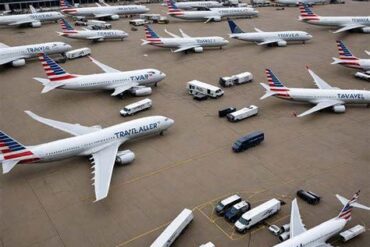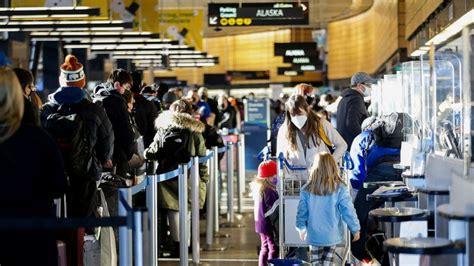
As of July 26, 2025, air travel across the United States has plunged into widespread disarray, with airports in New York, Las Vegas, Chicago, Miami, San Diego, and Seattle facing massive flight cancellations and severe delays. The disruption, stemming largely from intense weather systems and compounding operational failures, has sparked a chain reaction of logistical turmoil, stranding thousands of passengers and grounding flights nationwide.
Severe Weather Hammers U.S. Aviation Infrastructure
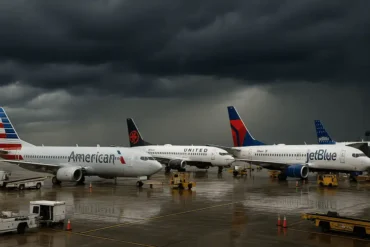
The chaos began as powerful storms swept through major transit hubs, including Houston, Denver International, and several Florida airports. These regions were pounded by thunderstorms, high winds, lightning, and low visibility, conditions which sharply reduced takeoff and landing operations. Air traffic controllers, in coordination with the Federal Aviation Administration (FAA), were forced to scale back air traffic flow, particularly during high-volume travel windows, resulting in cascading disruptions across interconnected routes.
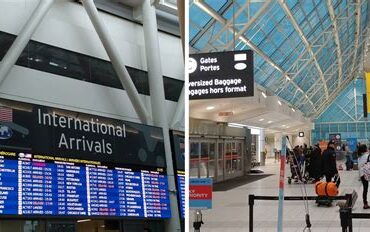
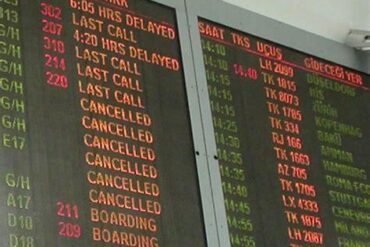
Flights in and out of LaGuardia (New York), McCarran (Las Vegas), O’Hare (Chicago), Miami International, San Diego International, and Seattle-Tacoma experienced hour-long delays and wave after wave of cancellations, making these cities focal points of the national air travel crisis. By mid-afternoon, many departure boards across these airports were saturated with “CANCELED” notices, with United Airlines alone canceling dozens of flights to and from major domestic and international destinations.
Operational Failures Compound the Crisis
Beyond weather-related challenges, systemic operational issues significantly magnified the crisis. Several carriers reported temporary IT outages, most notably at gate systems and flight tracking interfaces, which temporarily froze the processing of both departures and arrivals. Communication breakdowns between ground crews and flight operations further delayed aircraft turnaround, exacerbating congestion on runways and taxiways.
To make matters worse, staffing shortages—a lingering issue post-pandemic—left airlines and airports woefully unprepared for the spike in rescheduling demands. Passenger service agents were overwhelmed as thousands attempted to rebook or reroute, while baggage handling backlogs created logistical nightmares at baggage claims across affected hubs.
United Airlines Leads in Cancellations
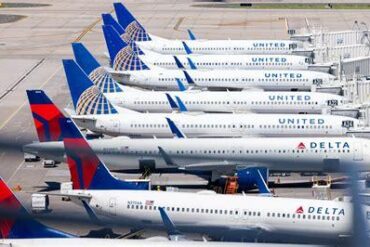
United Airlines bore the brunt of cancellations, particularly at Denver, Houston, Chicago O’Hare, and San Francisco. On July 26, a sample of real-time data revealed dozens of United-operated flights canceled within a narrow time window, including:
- UA2189: New York LaGuardia – Canceled
- UA1179: San Diego – Canceled
- UA1927: Miami – Canceled
- UA2379: Seattle – Canceled
- UA2608: Las Vegas – Canceled
- UA2486: San Diego – Canceled
Spirit Airlines and Alaska Airlines also reported extensive service disruptions, especially on east-west coast transits. Arrivals from secondary cities like Mobile, Birmingham, Austin, New Orleans, and Quito were equally affected, reflecting how deeply the disruption cut into regional and international connections.
Travel Ripple Effects and Passenger Struggles
The chain reaction extended far beyond the immediately impacted cities. Connecting flights were delayed or canceled as aircraft and crews became unavailable. Passengers in cities untouched by storms found their travel plans upended simply due to aircraft being stuck elsewhere. For travelers en route to San Salvador, Portland, Corpus Christi, or Aspen, the disruption meant either prolonged terminal stays or complete rebooking.
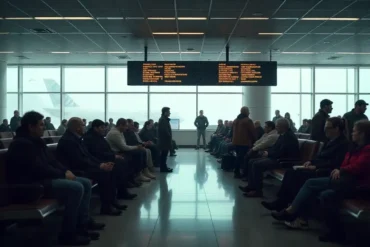
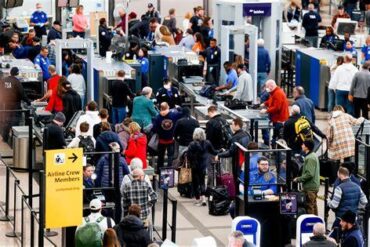
Families, business travelers, and tourists alike were left scrambling. Hotel lobbies near major airports filled rapidly, and ride-sharing apps saw surging demand. Inside terminals, lines snaked out from airline customer service counters, with wait times exceeding three hours at some gates.
FAA and Airline Responses
In response to the growing chaos, the FAA issued multiple flow control directives and coordinated with regional weather services to reroute or delay flights for safety. The agency emphasized that while many airports resumed limited operations, airspace capacity remained constrained due to ground saturation and turbulence risks.
Major airlines, including United, Delta, Southwest, and Alaska, issued alerts to passengers urging them to check flight status continuously, while providing flexible rebooking policies. Most waived change fees and offered travel credits for severely impacted itineraries.
However, despite these measures, passenger frustration reached a boiling point. Many took to social media to express outrage over poor communication, lack of updates, and what some described as a “system-wide collapse” of customer support.
Long-Term Implications for U.S. Air Travel
This crisis underscores deep-rooted vulnerabilities in the U.S. aviation ecosystem. The convergence of weather volatility, outdated operational infrastructure, and staffing challenges has laid bare the fragility of a system that often operates at peak capacity.
Experts point to the increasing frequency of such mass disruptions as a clear warning sign. Climate unpredictability is rising, but airport and airline readiness remains reactive, not proactive. Critics argue that federal investment in air traffic control modernization, terminal upgrades, and automated rebooking systems has lagged far behind passenger growth and climate realities.
Travel analysts also caution that without addressing the root causes—from chronic understaffing to inter-airline scheduling inefficiencies—these events will only become more frequent. Airlines, they argue, must also reinforce IT resilience, ensuring flight planning and rebooking systems don’t collapse under stress.
What Passengers Can Expect in the Coming Days
While the most intense part of the storm system is expected to clear within 24 to 48 hours, flight delays and cancellations may persist for several more days as airlines work through the backlog. The recovery process is particularly slow due to the cascading nature of aircraft positioning, which requires flights to “reset” across various airports.
Passengers with upcoming flights through any of the affected airports—especially New York, Las Vegas, Miami, and Chicago—are strongly advised to monitor updates via airline apps, websites, and FAA alerts. Extra time should be allotted for airport arrival, security checks, and baggage retrieval, as long queues and bottlenecks are expected to continue.
Moreover, travelers should remain flexible, open to alternate routes, later flights, or even multi-leg journeys if necessary. Several airlines are currently offering travel waivers, allowing changes without penalties for routes passing through severely impacted hubs.
A Wake-Up Call for U.S. Aviation Authorities
This disruption is more than a passing weather event. It has exposed systemic inefficiencies that demand immediate attention. The FAA, alongside Department of Transportation leaders, must address:
- Infrastructure investment shortfalls
- Airport staffing pipelines
- Airline IT modernization
- Weather monitoring integration with scheduling systems
Until those areas are bolstered, travelers will remain at the mercy of mounting disruptions.
In the meantime, passengers caught in the current gridlock face a difficult reality: uncertainty is the new norm in American air travel. As the weather clears, the full scale of the logistical challenge left behind by July 26’s disruptions will become more evident. Whether this marks a turning point for the industry, or just another warning unheeded, remains to be seen.