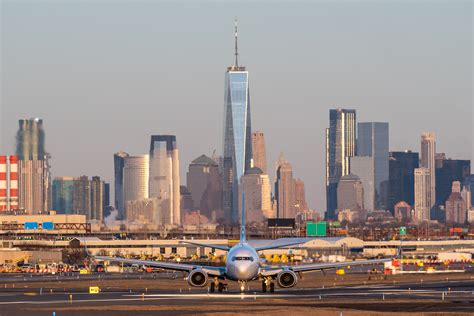
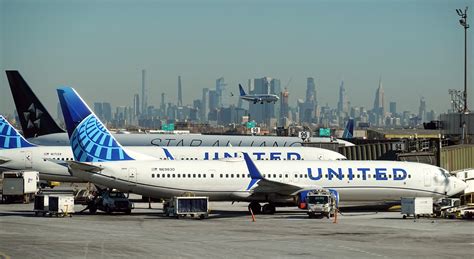
The situation at Newark Liberty International Airport has escalated into a full-blown crisis as United Airlines announced the cancellation of 35 flights per day from its schedule, citing infrastructure breakdowns and workforce shortages. This operational retreat comes after a turbulent week marred by persistent delays and sudden cancellations, with travelers left scrambling, the Federal Aviation Administration (FAA) under fire, and the airline industry grappling with systemic vulnerabilities.
Newark Airport Grounded by Technology Failure and Staffing Deficit
The catalyst for this operational unraveling traces back to a critical failure of air traffic control systems that paralyzed movement at Newark, one of the busiest hubs in the northeastern United States. According to United Airlines CEO Scott Kirby, long-standing issues within the FAA infrastructure “boiled over” after key telecommunications systems failed, leading to 20% of air traffic controllers walking off the job in protest and frustration.
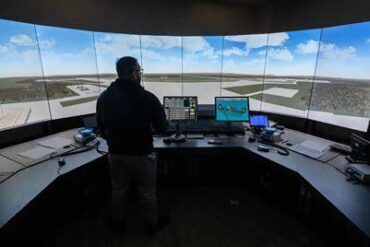
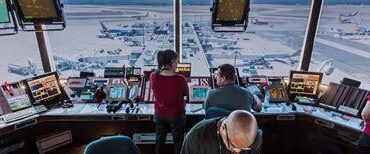
The FAA has attributed the delays to a toxic convergence of equipment malfunctions, runway construction, and short staffing in the Philadelphia-based TRACON center responsible for managing Newark’s airspace. These technical failures affected the primary system allowing air traffic controllers to view aircraft positioning, with one outage rendering screens blank for nearly two minutes—a seemingly short disruption that had cascading effects across hundreds of flights.
Air Traffic Control Turbulence: A Legacy of Underinvestment
This breakdown has exposed what many industry observers have long feared: a brittle, underfunded, and overburdened air traffic control system stretched to the brink. U.S. Transportation Secretary Sean Duffy minced no words, stating, “They’re frustrated. They’re angry about having to use this old equipment. And they should be.”
Duffy acknowledged the antiquated systems that controllers are forced to rely on and announced intentions to launch a sweeping modernization plan. The envisioned overhaul includes the deployment of fiber optic lines, next-generation radar systems, digital radios, and ground sensors—a blueprint that promises a “gold-plated” system meant to rival the world’s most advanced aviation infrastructures.
However, such promises have been met with skepticism from within the controller community. A popular comment circulating in professional circles suggested the current budget allocation is merely 5% of what such an initiative would realistically require. Critics have warned that unless training pipelines, working conditions, and retention incentives are also addressed, new equipment alone will not solve the crisis.
From TRACON to Tragedy: Consequences of Off-Site Relocation
Another major contributor to the Newark situation lies in a controversial FAA decision made in 2023 to relocate the TRACON (Terminal Radar Approach Control) facility overseeing Newark operations from its original site to Philadelphia. This move triggered an exodus of experienced controllers unwilling to transfer, exacerbating an already acute staffing crisis.
Radar-based approach control is typically managed off-site, but the relocation fractured the operational cohesion Newark had previously relied upon. Insiders revealed that controller morale plummeted after the move, with mounting workloads and suboptimal coordination leading to delays that are now measured in the hundreds each day.
Flight Cancellations Surge as Travelers Grapple with Uncertainty
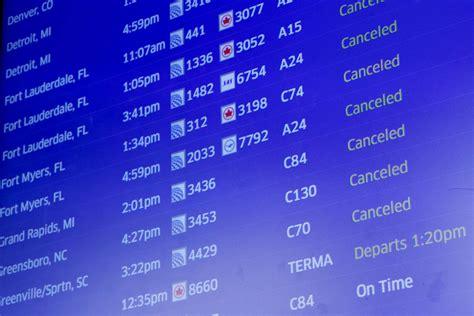
The fallout from these systemic issues has been immediate and brutal. According to FlightAware, Newark has experienced over 800 delays and more than 150 flight cancellations since early last week. By Friday, United Airlines had seen delays stretch beyond three hours, with some passengers facing up to five-hour waits on the tarmac.
One family traveling to Rome missed their connecting flight and had to wait until the next day, while others expressed confusion and helplessness. Travelers like Henry Adamson and Elmer Beltran recounted how multiple rolling delays kept changing without warning, turning what should have been routine flights into logistical nightmares.
In one case, Janet Mullins, whose flight from Myrtle Beach was delayed by three hours, missed her international connection to Ireland. She was left with a \$200 no-show fee and an unexpected overnight hotel stay—additional costs that many travelers can ill afford. Increasingly, passengers are reconsidering their use of Newark Airport altogether. “And I’m from New Jersey,” Mullins noted. “And I hate Newark Airport.”
FAA’s Promises Clash with Traveler Reality
The FAA insists that airspace remains safe and that measures are being taken to minimize disruption, but to affected travelers, these assurances ring hollow. As the agency attempts to address both technical upgrades and staffing gaps, the runway construction at Newark is not expected to be completed until mid-June, suggesting that delays may continue for weeks.
Meanwhile, Secretary Duffy’s grand promises about rebuilding a “state-of-the-art” air traffic control system are being received with increasing doubt. Controllers themselves have expressed concern that these reforms are more rhetoric than reality, especially without comprehensive reforms to training pipelines, where capacity constraints and high failure rates are limiting throughput.
A System Under Siege: The Human Cost of FAA Mismanagement
The situation has laid bare not only FAA mismanagement but also the immense human toll of infrastructural neglect. Unlike mechanical failures or weather delays, this disruption is a symptom of a deeply rooted bureaucratic dysfunction. And its victims are not just aircraft and schedules—they are people: vacationers, business travelers, families, and working professionals whose lives are thrown into disarray.
Traveler Jo Overly, trying to make a connecting flight to Florence via Lisbon, shared her anxiety: “We only have an hour and a half in Lisbon… if it’s a big delay, we’re going to be in trouble.” Her companion, Teresa Kirk, joked that they might just “sit at the bar for a few hours”—a coping mechanism that many now turn to as the only recourse.
United Airlines Takes Defensive Action Amid Broader Breakdown
Faced with an unsustainable operational environment, United Airlines’ decision to cancel 35 daily flights reflects a broader industry recalibration. By proactively reducing volume, United hopes to minimize passenger disruption and avoid on-tarmac delays that further strain gate resources and crew availability.
This isn’t just a customer service decision—it’s a maneuver for operational survival. CEO Scott Kirby was unequivocal in his internal communication: “Newark Airport cannot handle the number of planes that are scheduled to operate there in the weeks and months ahead.” The writing on the wall is clear: without major reform, delays will persist, and service reliability will plummet.
Looking Forward: What Must Change to Prevent Future Meltdowns
To move forward, stakeholders must accept that the FAA’s infrastructure is no longer fit for modern aviation needs. Air traffic control in the United States—once a global standard—is now suffering from:
- Obsolete radar and communication systems
- Inadequate controller training capacity
- Poor retention due to stress and burnout
- Bureaucratic inflexibility within FAA operations
- Critical decision-making that ignores frontline input
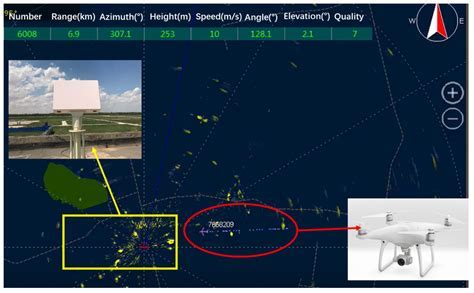
Even the FAA’s modernization blueprint, as it stands, cannot address the urgent need for redundancy in systems, localized TRACON control, and fast-tracked controller pipelines. Until those issues are resolved, we must brace for recurring chaos.
Conclusion: Newark’s Turmoil is a National Wake-Up Call
The meltdown at Newark is not an isolated incident—it is a bellwether of deeper fragilities in America’s air traffic infrastructure. From underpaid controllers and failing equipment to poorly planned relocations and canceled flights, the story unfolding at Newark is one of a system in distress.
For travelers, this means recalibrating expectations, building in buffers for delays, and perhaps reconsidering which airports they fly through. For the FAA and United Airlines, the pressure is on—not just to mitigate immediate fallout, but to restore faith in the safety, reliability, and dignity of air travel.
Because in the world’s richest country, three-hour delays due to two-minute outages should not be the norm.