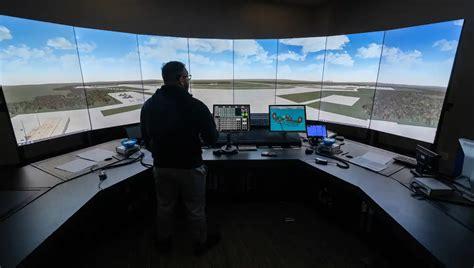
The US Department of Transportation has formally launched a sweeping investigation into the Federal Aviation Administration’s air traffic control training pipeline, responding to alarmingly high failure rates that are worsening an already fragile national aviation system. The inquiry, led by the DOT Inspector General, targets structural weaknesses inside the FAA’s training academy, where more than 30% of ATC trainees failed to complete the program in 2024, a figure that now sits at the center of mounting safety and operational concerns.
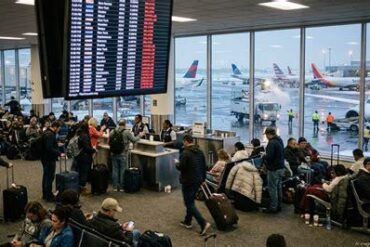
The investigation arrives at a moment when air traffic control staffing has slipped from a long-term challenge into a full-scale crisis. Despite Congress approving funding for 2,500 new controller hires in early 2025, the FAA remains thousands of controllers short nationwide. The gap is no longer theoretical. It is showing up in delayed flights, ground stops, constrained airport capacity, and increasingly thin margins for error in some of the most complex airspace on the planet.
At the heart of the problem lies a paradox. The FAA has no shortage of interest. Over the past several years, more than 200,000 applications have poured in from aspiring controllers. Yet only a small fraction make it through the screening process, and an even smaller number survive the intense training regimen. Of the roughly 10,000 applicants reviewed in the latest cycle, only about 600 were accepted. Then came the disruption: the 43-day federal government shutdown, which triggered an exodus of 400 to 500 trainees who simply could not afford to stay.
An Audit Focused on Training Capacity and Instructor Shortages
The Inspector General’s audit is not limited to raw pass–fail statistics. It is a deep dive into how the FAA trains controllers, how instructors are deployed, and whether the system itself is bottlenecked by outdated assumptions. According to preliminary statements, investigators are evaluating instructor availability, facility capacity, curriculum relevance, and the consistency of trainee outcomes across cohorts.
The FAA has set an ambitious target to hire nearly 9,000 new controllers by 2028, but retirements, washouts, and attrition continue to outpace progress. The Inspector General has already flagged a shortage of qualified instructors, a problem that compounds itself: experienced controllers are needed to teach, yet the system cannot spare them from operational duties without worsening staffing gaps elsewhere.
This structural imbalance has raised uncomfortable questions about whether the training academy is being asked to solve a crisis it was never designed to absorb. Compressing timelines, expanding class sizes, and accelerating hiring may look effective on paper, but aviation safety has never rewarded shortcuts.
Safety Lessons After the Reagan National Mid-Air Collision
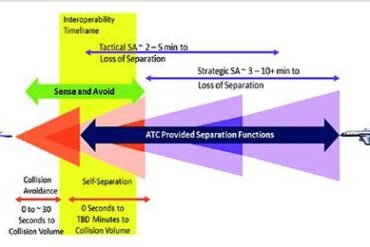
The stakes sharpened dramatically after the January 2025 mid-air collision near Ronald Reagan Washington National Airport (DCA). The crash, which killed 67 people, became a grim case study in what happens when staffing shortages collide with complex airspace. Investigators found that a single controller was managing both fixed-wing and helicopter traffic simultaneously, a workload normally split between two professionals.
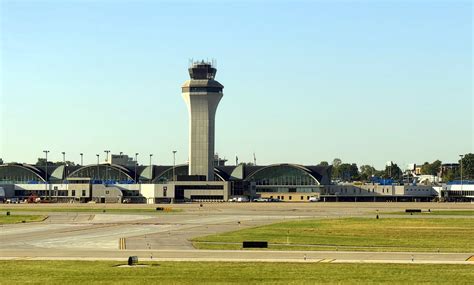
The National Transportation Safety Board concluded in January 2026 that the accident was likely preventable, attributing it to systemic failures rather than isolated human error. More than 85 near-misses had been reported in the preceding three years, a warning signal that went largely unanswered. For the DOT Inspector General, the lesson was clear: training output, oversight rigor, and staffing resilience are inseparable.
Operational Choke Points Expose the System’s Limits
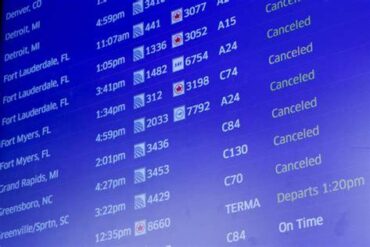
Controller shortages have since manifested across the country in visible and disruptive ways. In October 2025, the FAA issued more than 20 staffing alerts in a single day, triggering ground stops at major hubs including Los Angeles International Airport. At Newark Liberty International Airport, arrival capacity was slashed by more than half, sending ripple effects throughout the national network.
These are not isolated incidents. They are symptoms of a system operating without slack. The Inspector General is now examining whether the FAA’s attempt to cut four months from the hiring process compromised the rigor of screening and training for roles where precision is non-negotiable. The central question is blunt: has speed been allowed to outrun safety?
Burnout Inside the Control Tower
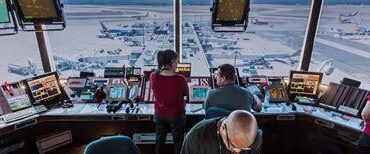
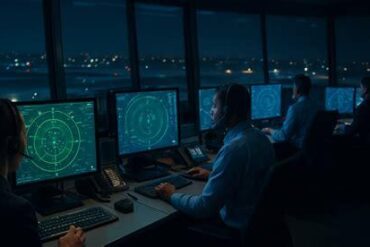
Beyond training failures, the investigation also intersects with the human cost borne by controllers still on the job. At high-volume facilities in New York, Dallas, and Atlanta, mandatory six-day workweeks and 10-hour shifts have become routine. Fatigue is no longer an abstract risk. The NTSB has repeatedly identified overtime dependency as a primary contributor to human error in safety-critical environments.
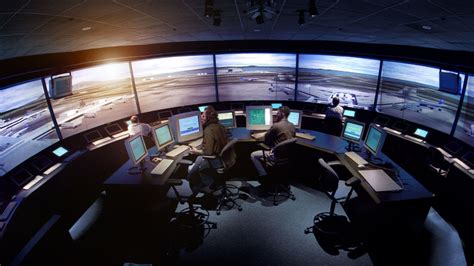
Funding instability has only deepened the strain. Repeated lapses in late 2025 and early 2026 forced controllers to work without pay during the longest government shutdown in US history, leading to spikes in sick calls and further thinning already fragile staffing levels. A controversial $10,000 attendance-based bonus program introduced by the DOT delivered mixed results, improving punctuality for some while eroding morale for others.
A System Under Scrutiny, With No Margin for Failure
The DOT Inspector General’s investigation is ultimately about alignment. Training throughput must match operational demand without diluting standards. Recruitment must be aggressive without being reckless. And workforce support must recognize that air traffic control is a cognitive endurance sport, not an assembly line.
As the audit unfolds, its findings are expected to shape policy decisions that will echo for decades. The national airspace system does not fail loudly all at once. It frays slowly, thread by thread, until one day the margin disappears. The current investigation is an attempt to catch that moment before it arrives.