The latest directive issued by the Federal Aviation Administration and the Department of Transportation marks a decisive shift in how U.S. airspace handles one of its most complex challenges: mixed helicopter and fixed-wing traffic near major airports. Announced on March 18, 2026, the mandate removes a long-standing reliance on pilot visual separation in specific crossing scenarios, replacing it with mandatory radar-based spacing controlled by air traffic controllers.
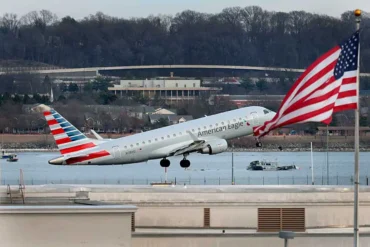
This change follows mounting pressure after the fatal collision near Reagan National Airport in early 2025, alongside a series of alarming near-misses at Hollywood Burbank Airport and San Antonio International Airport. While regulators frame the new rule as a targeted safety correction, operators across the aviation ecosystem see something more disruptive: a fundamental recalibration of airspace efficiency and controller workload.
A Precise but Restrictive Shift in ATC Authority
At the core of the directive lies FAA GENOT JO 7110.801, a seemingly narrow amendment with broad operational consequences. The rule explicitly prohibits controllers from using visual separation when helicopters or powered-lift aircraft cross the paths of arriving or departing airplanes within Class B, Class C, or TRSA airspace.
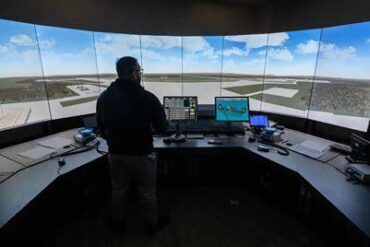
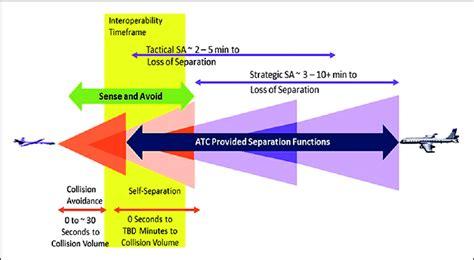
In practical terms, this eliminates the familiar “see and avoid” instruction in high-density environments. Controllers must now actively enforce separation using radar-based standards, ensuring minimum lateral or vertical distances are maintained at all times.
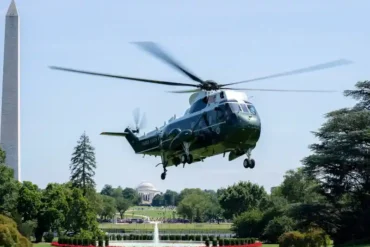
This shift is not merely procedural—it fundamentally changes the rhythm of airport operations. Helicopters, which often operate with flexibility and speed, will now be subject to structured spacing constraints similar to commercial airliners, reducing the fluidity that previously defined mixed-traffic environments.
The Safety Imperative Driving the Mandate
The rationale behind the mandate is rooted in hard lessons learned. The collision at Reagan National exposed vulnerabilities in scenarios where visual separation was assumed to be sufficient but ultimately failed under pressure. Near-miss incidents at Burbank and San Antonio reinforced a growing consensus: complex crossing traffic demands deterministic control, not discretionary judgment.
From a safety engineering perspective, the shift toward radar-based separation introduces predictability and standardization, two pillars of modern aviation risk mitigation. Controllers gain clearer authority, and aircraft are no longer dependent on pilot situational awareness alone in congested airspace.
Yet, the timing and execution of the rule have sparked debate. Critics argue that while the safety logic is sound, the rollout appears operationally incomplete, leaving key questions unanswered about how individual airports will adapt procedures to accommodate the change.
Controversy Over Implementation and Transparency
The controversy surrounding the mandate is not about whether safety should improve—it is about how the improvement is being enforced. The FAA’s official notice modifies only a single paragraph in the controller handbook, but the implications ripple across more than 150 airports nationwide.
The Department of Transportation has emphasized that controllers must maintain defined separation distances, yet it has not publicly detailed airport-specific adaptations or revised traffic flows. This absence of granular guidance creates uncertainty for airlines, helicopter operators, and controllers alike.
In reality, implementation will depend heavily on existing radar capabilities, local procedures, and traffic density. Some airports may adapt seamlessly, while others could face significant bottlenecks, particularly during peak hours when helicopter operations intersect with commercial arrival banks.
Industry voices have been quick to highlight the risk of increased controller workload without proportional support systems, raising concerns that a rule designed to enhance safety could inadvertently introduce new operational stress points.
Operational Impact Across Major U.S. Airports
For the busiest hubs, the implications are immediate and tangible. Airports where helicopters routinely traverse approach and departure corridors—often for medical, law enforcement, or corporate transport—will experience reduced flexibility and tighter sequencing requirements.
Airlines may encounter:
- Longer spacing between arrivals and departures
- Increased vectoring or holding patterns
- Reduced runway throughput during mixed-traffic periods
Helicopter operators, on the other hand, will need to adapt to less direct routing and potential delays, particularly when crossing active runway flows.
The scale of the directive—impacting over 150 airports—means that even marginal inefficiencies can compound into system-wide delays, especially during high-demand travel windows.
Passenger Experience: Subtle Delays, Stronger Safety Margins
For passengers, the changes will be noticeable but not overwhelming. The most likely effects include slightly longer taxi times, minor airborne delays, and occasional sequencing adjustments at major hubs. These disruptions are expected to be intermittent rather than systemic.

The trade-off is clear: a modest reduction in operational efficiency in exchange for a significantly enhanced safety buffer in high-risk scenarios. For most travelers, this is a compromise worth making, particularly given the catastrophic potential of mid-air conflicts in congested airspace.
Notably, the directive also acknowledges the need to prioritize critical helicopter missions. Medical evacuations and law enforcement flights may still receive expedited handling, occasionally causing temporary disruptions to scheduled airline operations.
A Defining Moment for Airspace Management
This mandate represents more than a procedural tweak—it signals a broader evolution in how aviation authorities balance efficiency against safety in increasingly complex airspace environments. By removing reliance on visual separation in critical scenarios, regulators are effectively standardizing risk management across the busiest segments of U.S. aviation.
However, the long-term success of the rule will depend on how effectively it is implemented at the local level. Without clear, airport-specific guidance and adequate support for controllers, the industry risks trading one set of challenges for another.
What remains undeniable is the direction of travel: greater control, tighter margins, and a reduced tolerance for ambiguity in safety-critical operations. In a system as intricate as modern aviation, that shift is both necessary—and unavoidably disruptive.