Norway has confirmed a significant shift in its air defense strategy by working to integrate Ukrainian-made missiles and effectors into the NASAMS air defense system, a move driven by escalating missile shortages and the sustained intensity of modern aerial warfare. The initiative reflects a growing recognition among NATO-aligned states that traditional reliance on a narrow set of high-cost interceptors is no longer sustainable in conflicts defined by mass drone and missile attacks.
Announced in Kyiv in January 2026, the plan highlights a deeper industrial and military partnership between Oslo and Kyiv, going beyond arms transfers toward shared production and systems integration. At its core, the effort seeks to preserve the operational integrity of NASAMS while expanding the range of interceptors it can deploy, allowing air defenses to respond more flexibly to evolving threats.
The strategic importance of this decision lies not only in technology, but in economics and endurance. Air defense has become a war of attrition, where production capacity, cost per interceptor, and speed of replenishment now rival raw performance as decisive factors. Norway’s proposal directly addresses this new reality.
Strategic Rationale Behind Norway’s Integration Initiative
Speaking during high-level meetings in Kyiv, Norwegian Foreign Minister Espen Barth Eide emphasized that the main vulnerability in today’s air defense networks is not detection or command-and-control, but missile availability. Modern systems can track and engage threats effectively, yet they depend on interceptors that are expensive, slow to replace, and produced in limited quantities.
Ukraine’s battlefield experience has exposed this imbalance with exceptional clarity. Facing an average of more than two dozen Russian missiles and drones per day, Ukrainian air defenses must engage hundreds of targets monthly. Even highly effective systems risk being overwhelmed if interceptor stocks run low. Norway’s approach aims to solve this by integrating weapons that can be manufactured faster and at lower cost, without forcing changes to NASAMS radars, launchers, or fire-control software.
This is not a short-term workaround, but a structural adaptation. By widening the pool of compatible interceptors, NASAMS becomes less dependent on a single supply chain and more resilient in prolonged, high-intensity conflicts.
NASAMS Architecture and Why Compatibility Matters
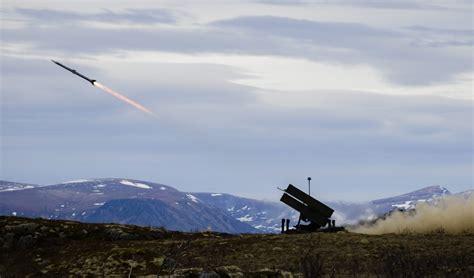
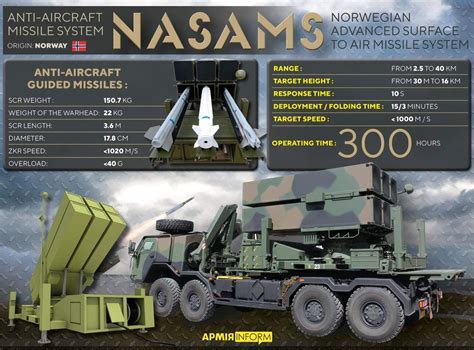
NASAMS, short for Norwegian Advanced Surface-to-Air Missile System, was designed from the outset as a modular, networked air defense solution. Developed by Kongsberg Defence & Aerospace in cooperation with Raytheon, the system links sensors, command posts, and launchers through a distributed architecture that allows components to operate across multiple sites.
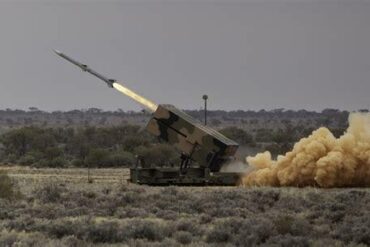
At the tactical level, a NASAMS platoon typically includes three launchers carrying 18 ready-to-fire missiles, supported by a three-dimensional radar and a centralized fire-control console. These elements can be geographically dispersed, improving survivability while maintaining coordinated engagement capability. This flexibility is precisely what enables Norway’s current initiative.
Rather than redesigning NASAMS, Norwegian planners are focusing on whether Ukrainian interceptors can be guided, cued, and fired through the existing system. If compatibility is achieved, the result is a broader interceptor ecosystem without sacrificing reliability or speed of response.
Ukrainian Missiles and Effectors Under Consideration
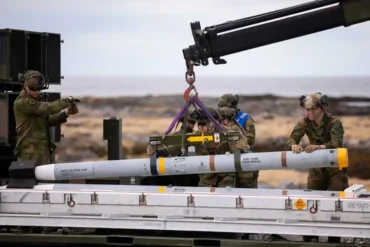
While no single Ukrainian weapon has been officially selected, several candidates are under evaluation. These include short-range interceptors derived from the R-73, medium-range adaptations of the R-27 missile using infrared or radar homing, and the UP-277, which has an air-launched range approaching 80 kilometers. Ground-launched variants would offer reduced range, but still provide meaningful coverage against cruise missiles and aircraft.
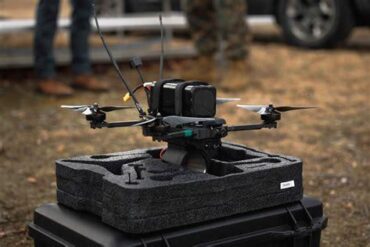
Equally significant is the consideration of Ukrainian interceptor drones as NASAMS-compatible effectors. These systems are particularly well suited to countering low-cost threats such as Shahed-type loitering munitions, where using a high-end interceptor would be economically inefficient. By matching cheaper threats with cheaper defenses, NASAMS can preserve premium missiles for high-priority targets.
The emphasis is not on headline performance figures, but on system-level efficiency. If Ukrainian effectors can be integrated seamlessly into NASAMS command loops, they become part of a layered defense strategy that balances cost, availability, and effectiveness.
Joint Production and Industrial Cooperation
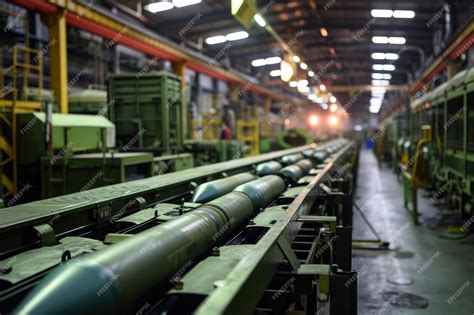
Norway’s initiative is inseparable from broader plans for joint production with Ukrainian defense manufacturers. President Volodymyr Zelenskyy signaled as early as August 2025 that cooperation with Norway could extend to localized production of NASAMS systems or components inside Ukraine.
Such an arrangement would transform Ukraine from a consumer of air defense missiles into a co-producer, strengthening supply resilience while reducing logistical delays. For Norway, it offers access to Ukraine’s rapidly evolving defense industry, which has demonstrated an ability to innovate under combat pressure and scale production quickly.
Foreign Minister Eide described the effort as a partnership rather than a supplier-client relationship. This framing underscores a strategic shift in European defense cooperation, where frontline experience and industrial capacity are increasingly shared to meet collective security demands.
Operational Pressures Driving the Decision
The scale of the air threat confronting Ukraine has reshaped how air defense effectiveness is measured. Independent assessments estimate that Russian forces have launched over 700 aerial threats per month, including cruise missiles, ballistic systems, and attack drones. Even with interception rates exceeding expectations, the sheer volume places relentless strain on missile inventories.
NASAMS itself has demonstrated strong performance, with more than 900 confirmed interceptions of missiles and drones during a single month in early 2025. However, the system’s rapid engagement capability means that a full battery can expend its available missiles in seconds during saturation attacks. Reload speed and stock depth therefore become critical operational variables.
Norway’s plan acknowledges this reality by prioritizing sustained defense over episodic excellence. Cheaper, more abundant interceptors ensure that NASAMS remains effective not just in isolated engagements, but across months of continuous combat.
Implications for NATO and Future Air Defense Doctrine
Beyond Ukraine, the integration of Ukrainian missiles into NASAMS carries wider implications for NATO and allied air defense planning. Many European states operate NASAMS or are considering its acquisition. Demonstrating that the system can incorporate non-traditional, domestically produced interceptors could reshape procurement strategies across the alliance.
This approach aligns with a broader doctrinal shift toward distributed, layered air defense, where different interceptors are assigned based on threat type and cost efficiency. High-end missiles remain essential for complex targets, but they are no longer the sole answer to mass attacks.
By expanding NASAMS’ interceptor compatibility, Norway is effectively future-proofing the system against the economic and industrial constraints of modern warfare. It also positions NASAMS as a platform that can evolve alongside partner nations’ technological capabilities.
A Sustainable Path for Long-Term Air Defense
Norway’s decision to integrate Ukrainian missiles into NASAMS reflects a pragmatic understanding of how wars are now fought and sustained. Air defense is no longer defined solely by radar range or interceptor speed, but by how long a system can keep fighting under constant pressure.
Through technical integration, industrial cooperation, and a focus on affordability, Norway and Ukraine are jointly redefining what effective air defense looks like in the twenty-first century. The result is a system better suited to prolonged conflict, adaptable to diverse threats, and less vulnerable to supply disruptions.
As missile shortages continue to challenge even the most advanced militaries, this model of flexible integration and shared production may well become the standard rather than the exception.