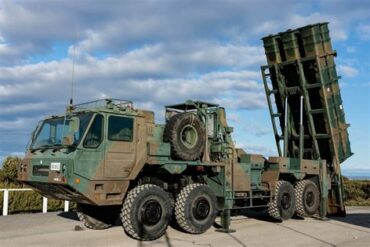
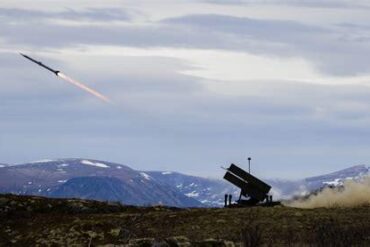
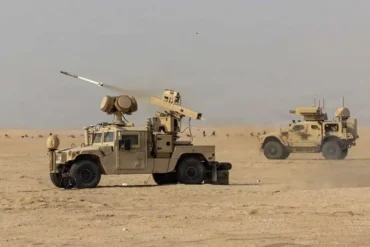
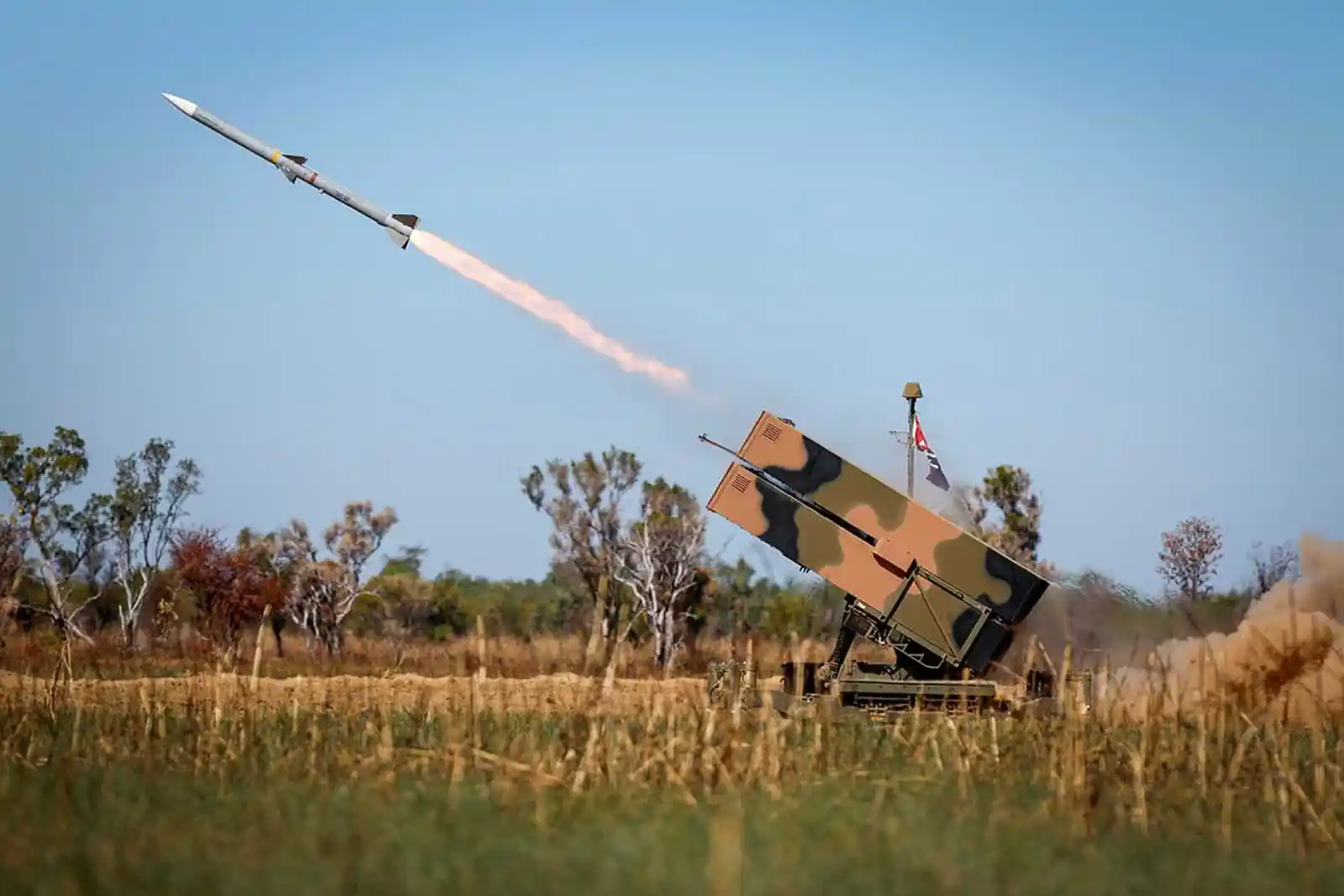
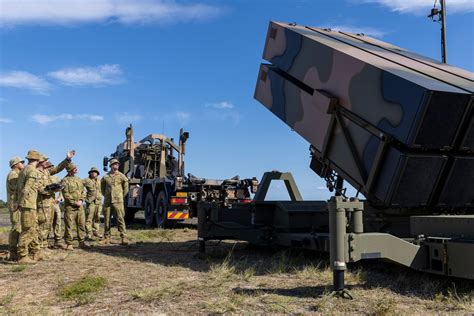
Australia has crossed a new threshold in its evolving defense posture with the first-ever live firing of the National Advanced Surface-to-Air Missile System (NASAMS) during Exercise Talisman Sabre 2025. Conducted between July 13 and August 4, this historic engagement marked the first operational use of NASAMS by the Australian Defence Force (ADF). The live-fire test validated not only the tactical deployment concepts but also the technical performance of this cutting-edge system under realistic operational conditions.
Australia’s Strategic Leap in Ground-Based Air Defense
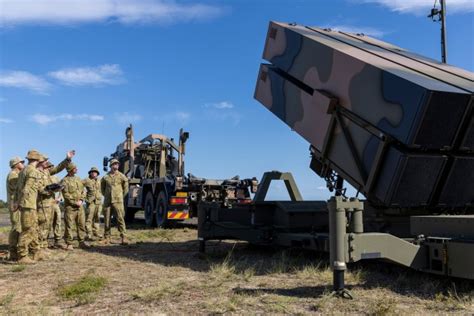
The NASAMS integration is a monumental stride in Project LAND 19 Phase 7B, a program designed to deliver a deployable, mobile, and highly networked Short-Range Ground-Based Air Defense (SRGBAD) capability. Managed by Raytheon Australia in partnership with Kongsberg Defense & Aerospace of Norway, the initiative was greenlit in 2023 and has since advanced with precision. The system is now fully operational within the 16th Regiment, Royal Australian Artillery, stationed in Woodside, South Australia.
NASAMS brings a transformative layer of protection to Australia’s defense network. Comprising two operational batteries, the system offers coverage against a wide array of aerial threats, including:
- Fixed-wing aircraft
- Rotary-wing platforms
- Cruise missiles
- Unmanned Aerial Systems (UAS)
- Loitering munitions
- Precision-guided munitions
With its modular design and sophisticated sensors, NASAMS delivers 360-degree coverage, ensuring Australia’s forward-operating and domestic assets remain shielded in dynamic threat environments.
NASAMS: Advanced Capabilities Redefining Defense Readiness
At the heart of NASAMS is its primary interceptor missile, the AIM-120 Advanced Medium-Range Air-to-Air Missile (AMRAAM). This missile provides an effective engagement range of 25 to 30 kilometers, with altitude coverage reaching 15,000 meters, depending on the variant and threat type. When outfitted with the AMRAAM-ER, the system stretches its range beyond 40 kilometers, offering significantly enhanced standoff protection.
What makes NASAMS particularly formidable is its sensor fusion and distributed architecture. Equipped with:
- Active Electronically Scanned Array (AESA) radar, such as the CEAFAR tactical radar
- Electro-optical tracking systems
- Passive detection capabilities
These components converge under the command of a centralized Fire Distribution Center (FDC). The FDC enables real-time data fusion, multi-sensor tracking, and automated engagement decisions, allowing for rapid target acquisition and strike execution. Its distributed nature also means launchers can be deployed over vast distances, boosting survivability and flexibility during combat.
Talisman Sabre 2025: NASAMS Makes Combat Debut
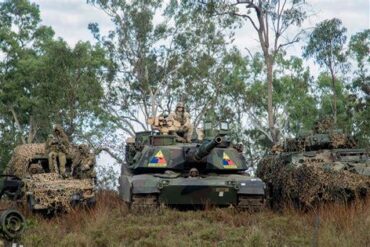
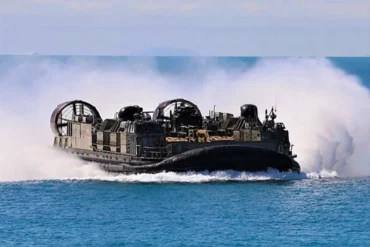
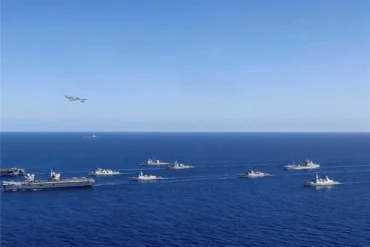
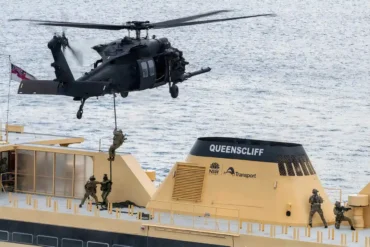
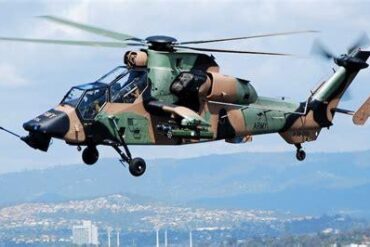
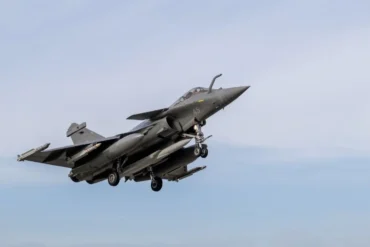
The Talisman Sabre 2025 exercise, co-led by Australia and the United States, is the largest military drill in the Southern Hemisphere and has become a proving ground for high-end joint operations. This year, more than 35,000 troops from 19 nations are participating across Queensland, Western Australia, Northern Territory, and New South Wales—with a new forward extension into Papua New Guinea for the first time.
Participating nations include:
- United States
- Canada
- France
- Germany
- India
- Indonesia
- Japan
- Norway
- Republic of Korea
- United Kingdom, among others
This expansive theater allowed Australia to test NASAMS under real-world joint combat conditions, integrating it into a multinational operational framework. The successful live fire event confirmed the system’s readiness for coalition interoperability and multi-domain warfighting.
Operational Deployment: Precision, Agility, and Lethality
The NASAMS system’s strength lies in its ability to engage multiple simultaneous airborne targets with pinpoint accuracy. During Talisman Sabre, the system proved capable of executing complex scenarios, including:
- Rapid threat detection and tracking
- Simultaneous target engagements
- Remote launch coordination across varied terrain
Using integrated radar feeds and passive detection layers, NASAMS executed near-instantaneous command relay between the FDC and launcher nodes, confirming its tactical agility. This decentralized operation mode is key to surviving in high-threat, contested environments, especially when facing peer or near-peer adversaries employing swarm tactics or stealth technology.
Defense Readiness in the Indo-Pacific Theater
Australia’s decision to field NASAMS in Talisman Sabre is not merely a training showcase—it is a strategic signal in the broader context of Indo-Pacific security dynamics. As regional tensions increase, particularly in South China Sea flashpoints and near Taiwan Strait operations, the ability to rapidly deploy and interlink advanced air defense systems like NASAMS gives Australia a deterrent posture and operational credibility.
This capability ensures protection of key assets such as:
- Forward-operating bases
- Command and control centers
- Airlift hubs and naval facilities
- Multinational task force deployments
Through this lens, NASAMS becomes more than just a missile launcher—it is a force multiplier that supports Australia’s strategic autonomy, while reinforcing alliances through shared capability frameworks.
Engineering Excellence and Industry Partnership
One of the unsung successes of NASAMS’ debut is the tight collaboration between Australian industry and international partners. Raytheon Australia has overseen system delivery, integration, and workforce training, while Kongsberg Defense & Aerospace provides technical architecture and missile technology.
Australia has also localized components of the system to boost sovereign manufacturing and logistics self-reliance. This includes:
- Vehicle-mounted launchers designed for harsh Australian conditions
- Mobile tactical operations centers tailored for expeditionary use
- Interfacing with national C4ISR (Command, Control, Communications, Computers, Intelligence, Surveillance, and Reconnaissance) systems
This emphasis on industry collaboration and localized adaptation ensures that NASAMS will remain scalable, upgradable, and interoperable well into future operational demands.
A Future-Oriented Force Posture
As geopolitical flashpoints emerge and airborne threats evolve, Australia’s proactive investment in NASAMS positions it at the forefront of 21st-century ground-based air defense. The system not only complements long-range assets such as Aegis-equipped destroyers and F-35A Lightning IIs, but also fills a critical gap in short-to-medium-range defense—especially against emerging threats like hypersonic glide vehicles and AI-driven drone swarms.
The lessons gleaned from this Talisman Sabre exercise will inform:
- Doctrinal updates to multi-domain operations
- Cross-training protocols with allied forces
- Expansion of Australia’s air defense inventory
- Refinement of real-time data-sharing networks across coalitions
In the broader context, NASAMS also dovetails with Australia’s focus on enhancing its Defence Strategic Review (DSR) objectives, which include strengthening regional deterrence, interoperability, and technological resilience.
Conclusion: A Historic First with Strategic Implications
The live-fire launch of NASAMS during Talisman Sabre 2025 stands as a watershed moment in Australia’s defense modernization. It demonstrates not only the technical maturity and effectiveness of NASAMS, but also the strategic resolve of the Australian Defence Force to defend its airspace and contribute meaningfully to multinational operations in the Indo-Pacific.
As regional security architectures continue to shift, this deployment reflects a clear commitment to maintaining operational superiority, interoperability with allies, and preparedness for the future battlefield. The NASAMS system, now officially combat-tested by Australia, will undoubtedly play a pivotal role in shaping the country’s defense narrative for years to come.