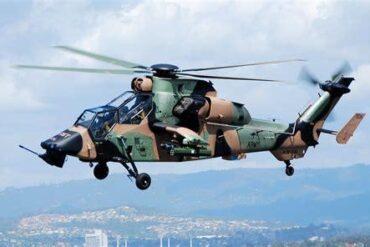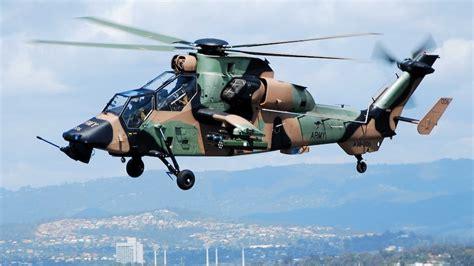
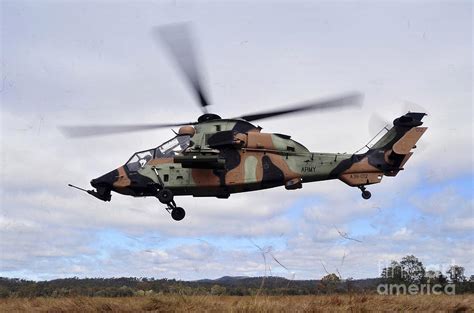
An Australian Army Tiger Armed Reconnaissance Helicopter was damaged during a hard landing near Timber Creek, a remote region approximately 300 kilometers south-west of Katherine in the Northern Territory, as part of the multinational Exercise Talisman Sabre. The incident occurred on Wednesday evening, raising immediate concerns amid ongoing operations involving 30,000 military personnel from 19 nations.
Despite the severity of the landing, both aircrew on board the helicopter escaped injury and exited the aircraft safely, according to a Defence spokesperson. The aircraft was engaged in training maneuvers near the Bradshaw Field Training Area, a key operational zone for Australia’s joint military exercises with allied forces.
Talisman Sabre 2025: Australia’s Largest Joint Military Exercise
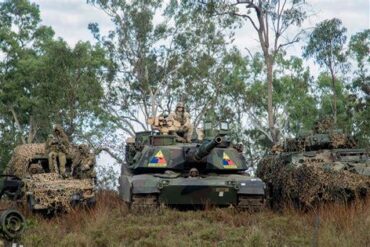
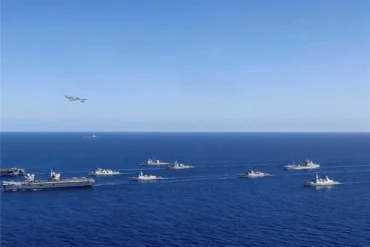
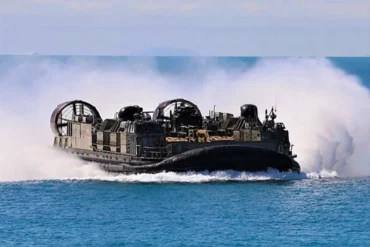
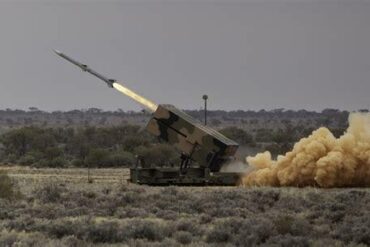
Exercise Talisman Sabre is the largest combined military training operation between the Australian Defence Force (ADF) and the United States military, held biennially since 2005. The 2025 iteration features high-intensity air, land, and sea combat simulations, live-fire operations, and complex battle scenarios across Australia’s northern and eastern seaboards.
This year’s drills include contributions from New Zealand, Singapore, Japan, South Korea, and several NATO members. The Bradshaw Field Training Area, with its vast and rugged terrain, serves as a vital proving ground for helicopter maneuvers, airborne troop deployments, and rapid response drills.
The Australian Army’s use of the Tiger Armed Reconnaissance Helicopter (ARH) plays a pivotal role in reconnaissance, precision targeting, and close air support, often operating in tandem with ground forces and armored units.
Incident Sparks Immediate Aviation Review
Following the hard landing, the 1st Aviation Regiment—which operates the Tiger helicopters—paused all unit flying operations pending further investigation. This temporary halt reflects heightened safety protocols, especially after a tragic 2023 crash involving the MRH-90 Taipan.
The Defence Flight Safety Bureau has deployed an independent investigation team to assess the incident’s root causes, structural damage, and any potential mechanical failures. Early indications suggest the aircrew performed emergency protocols correctly, minimizing further risk.
A Defence statement also thanked the Northern Territory Emergency Services and United States military personnel for their prompt assistance in the aftermath of the event.
Historical Parallels: Lessons from Past Tragedies
The incident draws uncomfortable comparisons to the 2023 Talisman Sabre tragedy, where an ADF MRH-90 Taipan helicopter crashed into the ocean near Lindeman Island, Queensland, claiming the lives of four Army aircrew members. The subsequent investigation found that evasive maneuvers by the pilot likely prevented additional casualties but raised questions about aircraft airworthiness and suitability for frontline service.
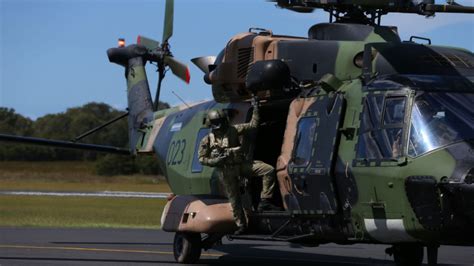
That accident led to the permanent grounding of the Australian Army’s MRH-90 Taipan fleet and accelerated plans to transition toward a mixed Black Hawk–Chinook fleet under the Battlefield Aviation Program.
Tiger Helicopter: Role and Controversy
The Eurocopter Tiger ARH, customized for Australian operations, has faced criticism since its introduction over cost overruns, delivery delays, and limited night operations capability. Still, during exercises like Talisman Sabre, it remains a key armed reconnaissance platform, equipped with 30mm cannons, Hellfire missiles, and rocket pods, optimized for close air support and enemy movement surveillance.
Despite its controversial past, Tigers from the 1st Aviation Regiment were slated to perform armed reconnaissance missions during this year’s exercise. Their mission parameters typically include:
- High-speed low-altitude flight to identify enemy positions
- Coordinated laser targeting for guided munitions
- Real-time intelligence relay to ground command units
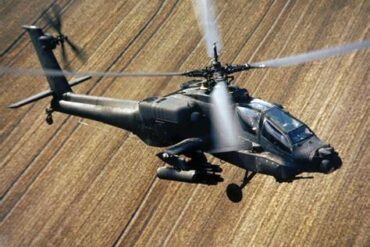
However, the ageing Tiger fleet is scheduled to be phased out in favor of the AH-64E Apache Guardian by 2028, marking a significant shift in Australia’s aerial battlefield strategy.
Multinational Coordination and Rotary-Wing Assets
Talisman Sabre not only showcases bilateral military strength but also integrates rotary-wing capabilities across multiple partner nations. The Australian Army has deployed:
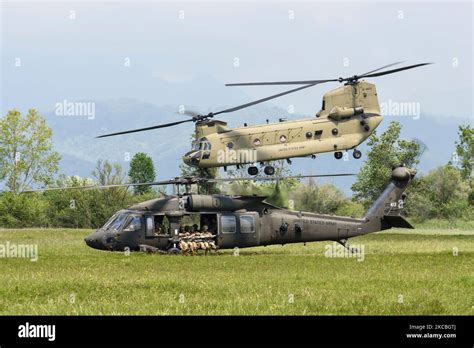
- CH-47F Chinook heavy-lift helicopters
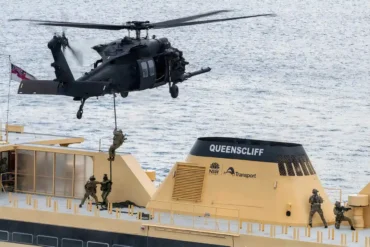
- UH-60M Black Hawk utility helicopters
- Tiger ARH for reconnaissance support
Meanwhile, New Zealand’s Defence Force has contributed three MRH-90 Taipan helicopters, despite Australia having grounded its fleet. These cross-national integrations are crucial for battlefield logistics, troop transport, and medical evacuation drills under simulated combat conditions.
The inclusion of Singaporean and American rotary-wing units, including Sikorsky and Boeing platforms, highlights the scale of interoperability being tested during Talisman Sabre.
Strategic Implications and Future Aviation Doctrine
The hard landing serves as a stark reminder of the operational risks associated with aging airframes and high-tempo exercises. While no casualties were reported in this instance, the incident underscores the urgent need for fleet modernization and rigorous safety auditing.
The ADF’s broader aviation transition plan—which includes the full-scale replacement of Tigers with Apaches and the continued deployment of Black Hawks and Chinooks—represents a move toward greater capability, survivability, and NATO-standard interoperability.
Additionally, lessons learned from Talisman Sabre will feed into Australia’s 2025 Defence Strategic Review, which prioritizes readiness in the Indo-Pacific and enhances joint operations with QUAD and AUKUS allies.
Community and International Response
The rapid support extended by U.S. military personnel and local emergency services highlights the operational camaraderie and logistical efficiency of Talisman Sabre. Public transparency around the incident also reflects a maturing defence communications policy, aimed at fostering trust through accountability.
While the helicopter remains under investigation and repair, the ADF has not disclosed the full extent of structural damage or any projected return-to-service timeline.
Conclusion: Vigilance in the Skies as War Drills Continue
As Talisman Sabre continues across the Northern Territory, Queensland, and maritime zones, the ADF remains under heightened scrutiny following this latest incident. The successful evacuation of the crew offers a positive note, yet the event reveals the delicate balance between rigorous training and operational safety.
With future warfighting scenarios increasingly relying on rotary-wing mobility, reconnaissance, and rapid deployment, this incident reinforces the ADF’s imperative to accelerate its aviation overhaul while maintaining the combat readiness expected in joint international exercises.
The Tiger’s twilight years, shadowed by controversy and now caution, serve as both a testament to its resilience and a warning of its limitations. For Australia’s military aviation future, the lesson is clear: evolve or risk being grounded.