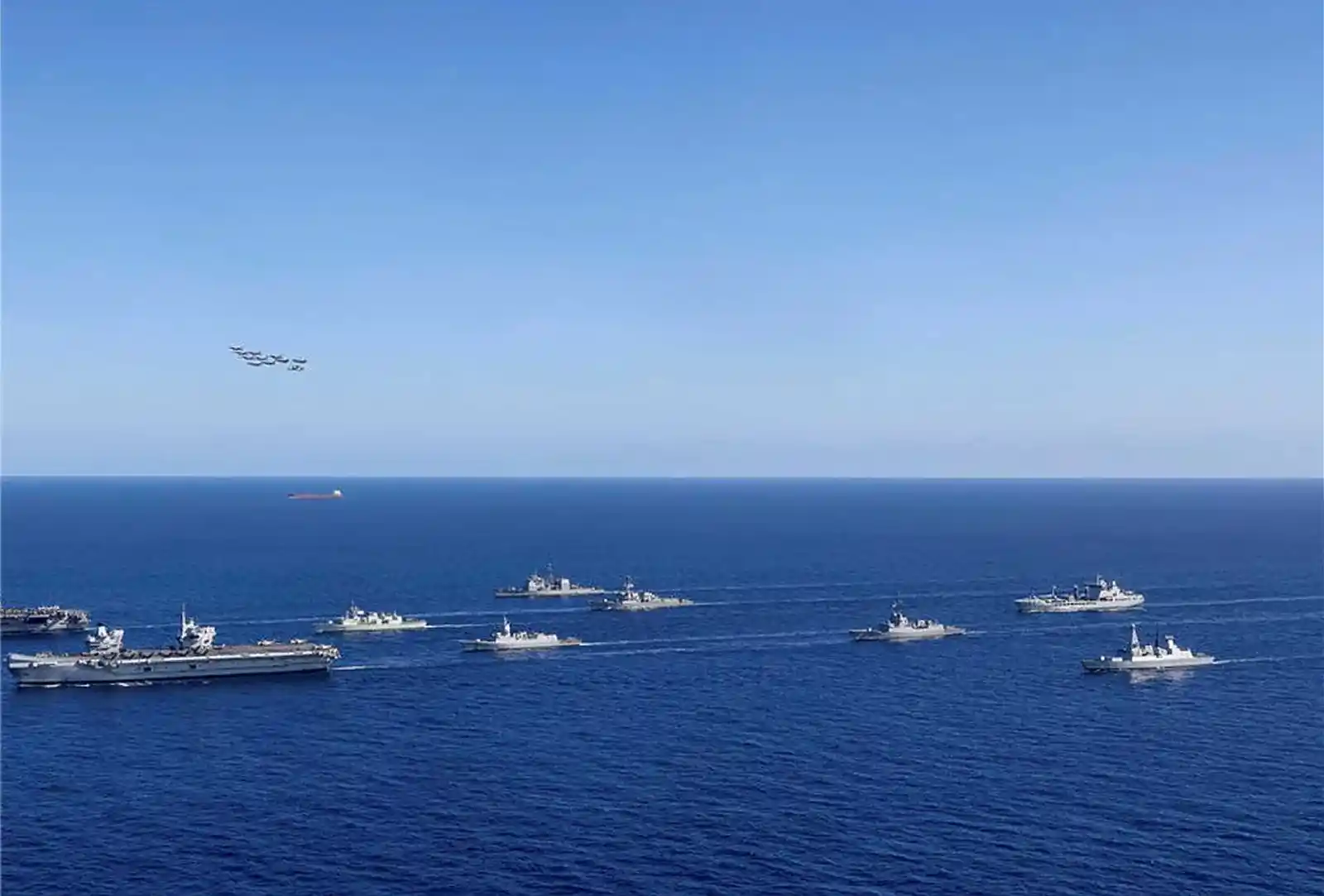
In a landmark demonstration of British expeditionary might and strategic Indo-Pacific alignment, the UK Carrier Strike Group 25 (CSG25) has arrived in Australian waters to spearhead Exercise Talisman Sabre 2025—the largest British military engagement ever held in Australia. This momentous deployment marks a defining phase in Operation Highmast, the UK’s global outreach mission aimed at strengthening international security cooperation, reinforcing AUKUS partnerships, and showcasing British maritime power in the Pacific theatre.
HMS Prince of Wales at the Heart of UK Maritime Projection
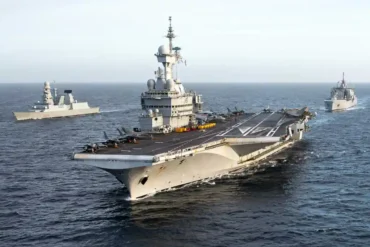
At the core of CSG25 is HMS Prince of Wales, the Royal Navy’s state-of-the-art Queen Elizabeth-class aircraft carrier, serving as the flagship and symbol of British naval excellence. The 65,000-ton warship is among the most technologically advanced carriers afloat, capable of deploying F-35B Lightning II stealth fighters, Merlin helicopters, and Wildcat helicopters for a broad range of combat and support operations.
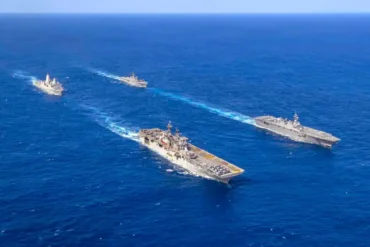
Supporting vessels include:
- HMS Diamond (Type 45 destroyer) — providing high-end air defense.
- HMS Portland (Type 23 frigate) — delivering anti-submarine and general fleet escort capabilities.
- RFA Fort Victoria and RFA Tidesurge — supplying logistics, fuel, and ammunition.
- An Astute-class nuclear attack submarine — delivering undersea surveillance and strike capabilities.
These units together form a robust multi-domain combat task group, capable of executing simultaneous operations in the air, sea, undersea, and littoral environments.
3,000 British Troops Deployed Across the Continent
As part of the largest British force deployment to Australia in modern history, over 3,000 personnel from the Royal Navy, British Army, and Royal Air Force (RAF) are active across key training zones spanning Western Australia, Queensland, New South Wales, the Northern Territory, and—historically for the first time—Papua New Guinea.
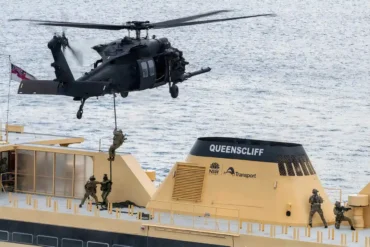
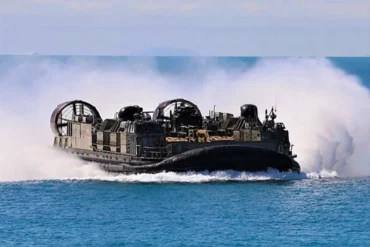
Royal Marines from 42 Commando have launched amphibious assault operations, landing on hostile beaches and securing mock urban objectives in coordination with Australian and U.S. Marine Corps forces. These missions are critical in refining tri-nation amphibious doctrine and enabling seamless combat readiness.
Meanwhile, RAF Voyager aircraft have flown long-range missions from the UK, providing vital air-to-air refueling and strategic airlift capabilities to ensure rapid force projection. On the ground, British Army Ranger units are immersed in jungle warfare training alongside Indo-Pacific allies, enhancing their ability to fight in harsh, unfamiliar environments.
AI and Autonomy: Britain’s Tech Edge on the Battlefield
What sets this iteration of Talisman Sabre apart is the technological leap demonstrated by UK forces. In collaboration with Australia and the U.S. under the AUKUS pact, the Royal Navy is pioneering Extra-Large Uncrewed Underwater Vehicles (XL-UUVs)—operated remotely from land-based centers. These experimental platforms, capable of stealthy deep-water operations, are a pivotal element in shaping future submarine warfare doctrines.
Alongside this, the UK’s Defence Science and Technology Laboratory (DSTL) has embedded advanced AI algorithms in combat networks under the Resilience, Autonomy, and AI Technology (RAAT) framework. These systems autonomously analyze and engage simulated threats, offering a glimpse into AI-integrated warfare, where machines and operators coordinate in real time to neutralize multi-domain aggressors.
AUKUS Alliance in Action: Strategic Goals Realized
The exercise is a significant expression of the AUKUS alliance, founded on shared commitments to Indo-Pacific stability, military interoperability, and defense technology sharing. The joint operations not only reinforce British-Australian military ties but also place interoperability with the U.S. Indo-Pacific Command at the forefront of strategic defense planning.
Royal Marines, Australian Amphibious Ready Elements, and U.S. Marines are executing combined landing operations, integrating joint firepower, logistics, and reconnaissance. These drills are vital to ensuring coalition agility, resilience, and responsiveness in a region where maritime security is threatened by grey-zone tactics, state-sponsored intimidation, and non-state disruptions.
Operation Highmast: A Strategic Pivot to the Indo-Pacific
Operation Highmast is not merely a symbolic deployment. It represents the UK’s strategic repositioning, reinforcing the Indo-Pacific tilt outlined in Britain’s Integrated Review and further solidified in its Plan for Change defense roadmap. The plan includes:
- Raising defense spending to 2.6% of GDP by 2030.
- A renewed focus on forward presence and agile deployments.
- Deeper collaboration with allies across the AUKUS and Five Eyes intelligence networks.
With Talisman Sabre 2025, Britain is demonstrating that it is not just a Euro-Atlantic power but also a committed Indo-Pacific stakeholder, capable of contributing meaningful combat strength and strategic assets to preserve regional order.
Strengthening Maritime Security in a Contested Region
As geopolitical tensions rise in the Indo-Pacific—with increased Chinese maritime assertiveness, growing grey-zone operations, and an expanding nuclear arms race—freedom of navigation and open sea lanes are under threat. By operating seamlessly with Australian and U.S. forces, the UK helps to deter aggression, assure allies, and uphold the rules-based international system.
The Royal Australian Navy’s participation in coordinated maritime patrols, carrier escort duties, and intelligence sharing with British vessels is a major step in building combined maritime domain awareness. With the inclusion of Papua New Guinea as a training zone, the coalition extends its strategic influence into new territories, enabling logistical reach and early threat detection in one of the world’s most complex maritime theaters.
UK’s Maritime Vision for the Future
Exercise Talisman Sabre 2025 is more than an exercise—it is a strategic rehearsal for future conflict scenarios. It underlines Britain’s doctrine of “persistent presence,” which seeks to maintain continuous deployments in strategically vital zones. The Carrier Strike Group, as the centerpiece of this doctrine, is a scalable instrument of diplomacy, deterrence, and defense.
From integrated multi-domain operations to cutting-edge autonomous systems and AI-enabled decision-making, the UK Armed Forces are testing and validating their 21st-century warfighting concepts in coalition environments. These capabilities, forged in the crucible of joint multinational exercises, ensure that Britain remains a relevant and powerful actor on the global security stage.
Conclusion: A Defining Moment in British Global Power Projection
The deployment of Carrier Strike Group 25 to lead the British presence in Exercise Talisman Sabre 2025 is a clear, deliberate act of strategic assertion. It proves the UK’s capability and will to project power far from home, to operate alongside its closest allies in high-end warfare scenarios, and to adapt to rapidly evolving threats.
By integrating naval, land, air, and cyber forces under a unified command structure, and by embedding experimental technologies directly into operations, the UK is reshaping the future of military engagement. As geopolitical instability grows and alliances are tested, Britain’s enduring commitment to the Indo-Pacific under AUKUS and Operation Highmast sends a powerful message: Global partnerships, innovation, and military readiness remain at the heart of British defense policy.