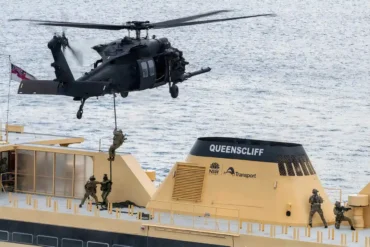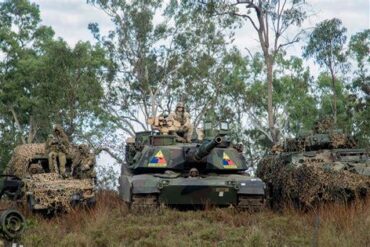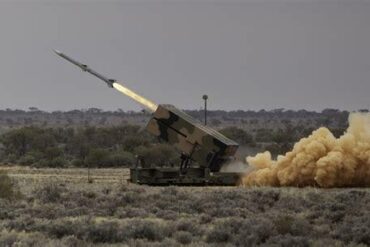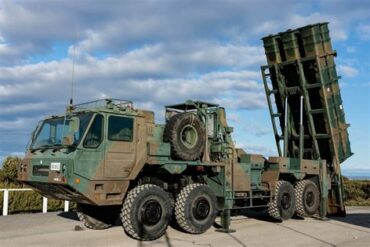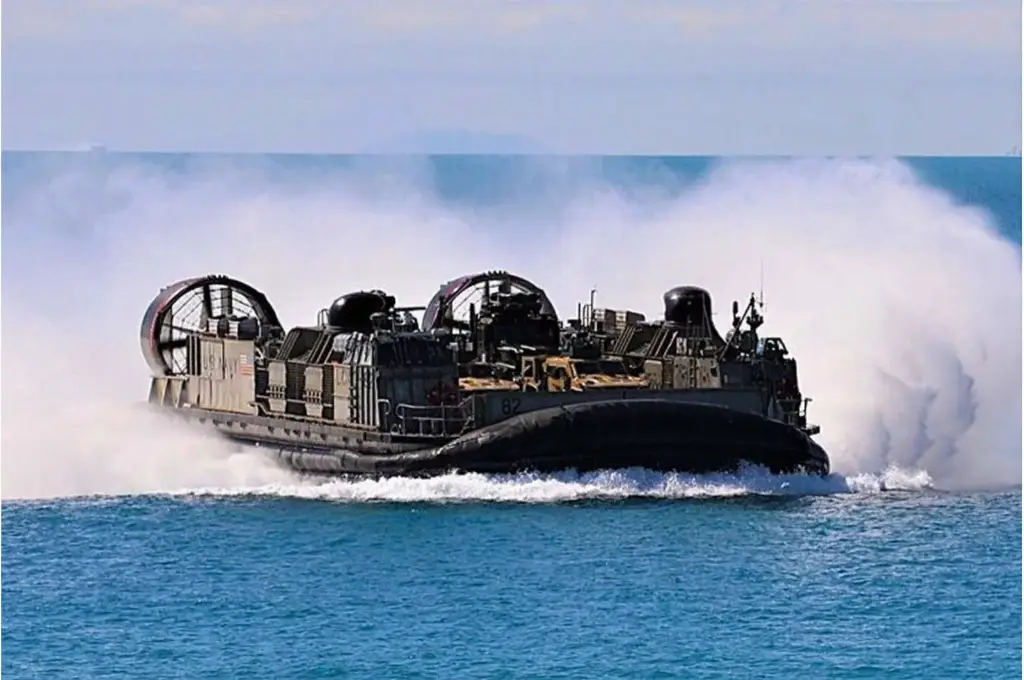
On July 24, 2025, the quiet shores of Queensland, Australia, thundered with the arrival of high-speed Landing Craft Air Cushion (LCAC) vehicles from the U.S. Navy, carrying Oshkosh Joint Light Tactical Vehicles (JLTVs) and supported by units from the Japanese Self-Defense Forces. This bold maneuver was a central event in Talisman Sabre 2025, a biannual multinational exercise that has evolved into one of the most strategic joint defense exercises in the Indo-Pacific region.
The landing, executed with textbook precision, marked a turning point in U.S. military posture, illustrating not only advanced amphibious capability but also a deliberate strategic reorientation toward the Indo-Pacific. Conducted against a backdrop of increasing geopolitical friction in the region, this exercise served as a tangible assertion of alliance solidarity and operational readiness.
LCAC and JLTV: Symbols of Modern Amphibious Warfare
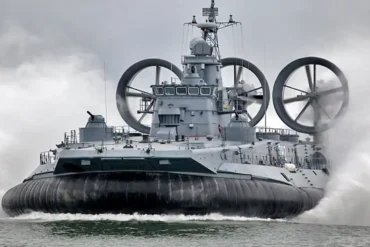
At the core of this joint amphibious operation was the U.S. Navy’s LCAC, a combat-proven air-cushion vehicle capable of transporting up to 60 tons of equipment, vehicles, and troops from ship to shore with unmatched speed. Since its induction in the 1980s, the LCAC has served as a cornerstone of U.S. littoral warfare. Its more modern iteration, the Ship to Shore Connector (SSC), is gradually replacing aging models, boasting upgraded propulsion and command systems.
The LCAC’s ability to seamlessly move across water, sand, mudflats, and even ice gives it a tactical edge over legacy landing platforms, allowing forces to strike at unexpected vectors, bypassing traditional beachheads. These craft are particularly suited for austere and contested environments, such as the Pacific’s sprawling archipelagos.
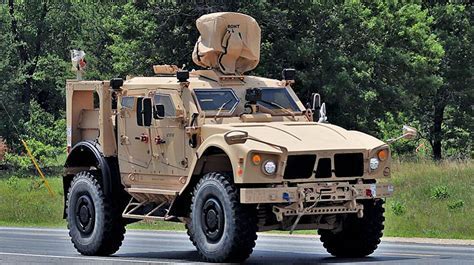
Complementing the LCAC’s amphibious reach was the JLTV, a rugged, agile, and highly survivable replacement for the venerable Humvee. Designed with modular armor kits, enhanced battlefield connectivity, and off-road dominance, the JLTV enables U.S. and allied forces to quickly project protected mobility ashore. Each LCAC is capable of carrying two JLTVs simultaneously, increasing deployment density per wave and ensuring high operational tempo.
Japan’s Expanding Expeditionary Profile
Japan’s participation in this high-visibility landing is especially notable. Once bound by a postwar pacifist constitution, Japan has steadily expanded its expeditionary capabilities in response to regional security threats, particularly the rise of China’s naval footprint. During Talisman Sabre 2025, Japanese forces operated in full coordination with their U.S. counterparts, showcasing not only interoperability at the tactical level but also a shared strategic vision.
Japan’s contribution included troops trained in littoral combat operations, logistics coordination, and joint command elements embedded with U.S. forces. The Japanese Ground Self-Defense Force’s Amphibious Rapid Deployment Brigade (ARDB), akin to the U.S. Marine Corps, took part in staging and securing the landing zone, reinforcing their growing role in collective regional deterrence.
Strategic Implications in the Indo-Pacific Theater
This event wasn’t merely a rehearsal; it was a live-action signal to adversaries. As China continues to expand its artificial island bases and militarizes key zones in the South China Sea, the U.S. and its regional allies are making their deterrent posture unmistakable. The 2025 edition of Talisman Sabre saw increased complexity, scale, and participation, with over 30,000 troops from the U.S., Japan, Australia, South Korea, and other partners engaging in multi-domain exercises.
The LCAC-JLTV pairing directly supports the U.S. Marine Corps’ Force Design 2030, which emphasizes dispersed, expeditionary, and agile force elements optimized for Pacific combat conditions. The ability to rapidly deploy armored units across difficult terrain gives commanders greater flexibility and denial capability, especially in first-island-chain scenarios.
Australia’s hosting of this event also speaks volumes. As a member of both AUKUS and the Quad, Canberra is emerging as a key node in the U.S.-led Indo-Pacific defense architecture. The choice of Queensland, with its vast shoreline and challenging terrain, provided an ideal proving ground for amphibious maneuvers aimed at countering anti-access/area-denial (A2/AD) strategies.
Joint Training and Tactical Realism
The 2025 landing exercise included a full spectrum of support elements — aviation overwatch, cyber defense integration, logistics support, and field medical evacuation. A combination of CH-53 helicopters and MV-22 Ospreys provided vertical lift, while unmanned aerial systems conducted overhead surveillance and reconnaissance.
Field commanders from both Japan and the U.S. emphasized tactical synchronization, including real-time communication using joint data links and encrypted combat networks. The ability to seamlessly shift command authority and share situational awareness proved vital in validating the joint task force’s combat readiness.
This landing was not choreographed theater. The mission included live-fire drills, simulated peer-adversary attacks, and chemical/biological environment testing. The LCACs faced simulated shore battery threats, requiring evasive maneuvering and tight time-on-target delivery of JLTVs. Once ashore, JLTVs pushed inland to establish a mobile forward operating base, reinforcing objectives within hours of first landing.
Force Design 2030 and Expeditionary Advantage
The Talisman Sabre 2025 LCAC landing exemplifies how Force Design 2030 is not theoretical. The U.S. Marine Corps is actively restructuring into smaller, faster, and more lethal units tailored for Indo-Pacific contingency scenarios. Commandant Gen. Eric Smith has long stressed the importance of light amphibious warships (LAWs), prepositioning, and littoral regiments — all of which are centered around platforms like the LCAC and JLTV.
By demonstrating the ability to put boots — and armor — on the ground in remote, logistically austere areas, the U.S. and its allies send a clear message: access will be maintained, no matter the cost. The JLTV’s communications suite also allows it to serve as a node in distributed kill webs, enabling sensor-to-shooter links with drones, HIMARS, and naval strike platforms.
Moreover, this scenario validated concepts such as Expeditionary Advanced Base Operations (EABO) and Littoral Operations in a Contested Environment (LOCE). These doctrines emphasize the ability to quickly land, fight, and redeploy — preventing static deployments and maintaining the element of unpredictability in force projection.
Recalibrating U.S. Strategic Focus
The visible emphasis on the Indo-Pacific, underscored by this high-profile landing, signifies a pivot away from the traditionally Europe-focused force posture. While NATO remains critical, the strategic center of gravity for U.S. military planning is unmistakably shifting toward the Asia-Pacific Rim.
The 2025 iteration of Talisman Sabre featured scenarios directly aligned with Indo-Pacific Command (INDOPACOM) threat assessments. These include counter-island seizure drills, amphibious raid simulations, and forward-based missile deployment exercises. By incorporating regional allies like Japan, South Korea, and the Philippines into these rehearsals, the U.S. is building a web of interconnected defense capabilities that function under a shared doctrine.
Conclusion: Projection, Deterrence, and Unity
The US-Japan hovercraft landing during Talisman Sabre 2025 was more than a demonstration of raw power; it was a calculated act of deterrence, coordination, and strategic messaging. The integration of LCACs and JLTVs into a real-world, multinational scenario marked a watershed moment in regional defense preparedness.
As great-power competition intensifies across the Pacific, exercises like this will become standard rather than exceptional. The U.S. military’s evolving toolkit — from amphibious hovercraft to agile light tactical vehicles — gives commanders the tools to maintain presence, support partners, and project power into even the most contested waters of the 21st century. For the United States and its allies, the message is clear: readiness is not optional — it’s operational.