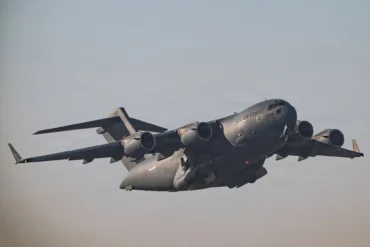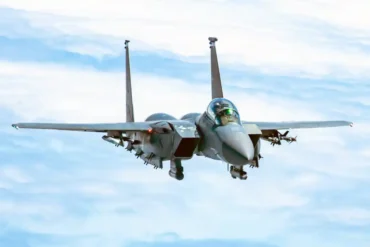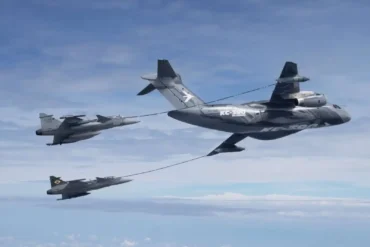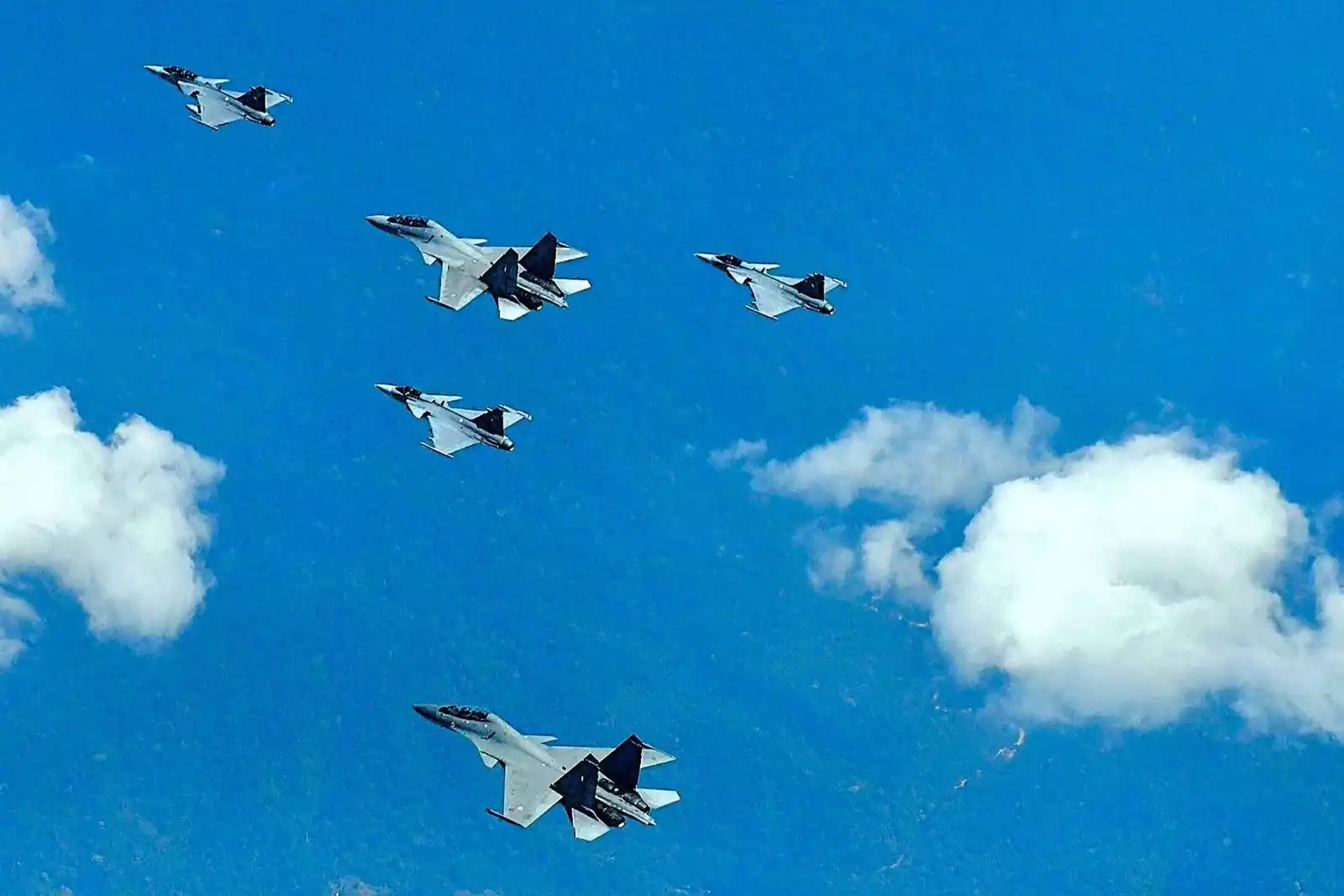
India and Thailand have taken a measured but unmistakable step toward deeper Indo-Pacific defense coordination, conducting a joint air patrol over the Indian Ocean that paired the Indian Air Force’s Su-30MKI multirole fighters with the Royal Thai Air Force’s JAS 39 Gripen jets. The in situ drill, confirmed on 13 February 2026, placed two distinct airpower philosophies into a shared operational environment, integrating air-to-air refuelling, airborne battle management, and coordinated fighter control procedures across national command structures.
The exercise unfolded against the strategic backdrop of an Indo-Pacific increasingly defined by maritime competition, chokepoint security, and the need for sustained aerial presence over vast oceanic spaces. Rather than a symbolic flypast or routine courtesy engagement, this event focused on operational mechanics: detection, command and control, tanker rendezvous, tactical intercepts, and long-range coordination over water. In a region where geography amplifies complexity, these details matter more than headlines.
From 9 to 12 February 2026, Indian assets operated from bases in the Andaman and Nicobar Islands, projecting airpower deep into the Indian Ocean Region, while Thai Gripens flew from Thailand to integrate into the combined air picture. This geographic spread was itself a signal. It demonstrated reach, endurance, and the ability to assemble a coherent operational framework across long distances, precisely the kind of capability required to secure sea lines of communication stretching toward the Malacca Strait and beyond.
Su-30MKI and Gripen: Two Airpower Models in One Airspace
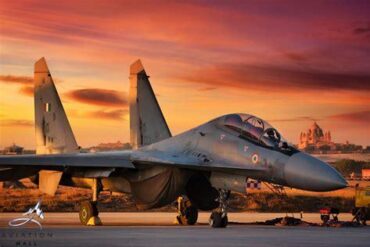
At the heart of the drill was the deliberate pairing of two very different combat aircraft. India’s Su-30MKI is a heavy, twin-engine multirole fighter optimized for endurance, payload, and range. With thrust-vectoring engines, a large radar aperture, and the ability to carry a diverse weapons load, it is designed for extended missions—maritime strike, air dominance, and long-range patrol among them. When supported by IL-78 aerial refuelling tankers and Airborne Warning and Control System (AWACS) platforms, the Su-30MKI becomes a persistent presence over contested maritime corridors.
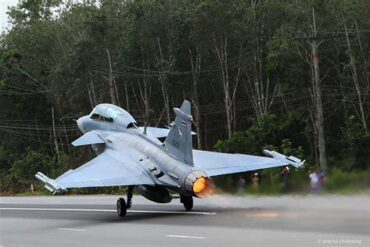
Thailand’s JAS 39 Gripen C/D, by contrast, embodies a different doctrine. It is a lighter, network-centric fighter built around rapid sortie generation, dispersed basing, and tight integration with data links and ground-based control. The Gripen’s design philosophy emphasizes sensor fusion and information sharing, allowing smaller formations to operate effectively through connectivity rather than sheer mass.
Bringing these aircraft together transforms a training sortie into a systems-level examination. Detection feeds into identification, which feeds into command decisions, which feed into tactical maneuvering. Each stage must align across two air forces with distinct operating cultures. This is where interoperability ceases to be a diplomatic phrase and becomes a technical reality—or exposes friction.
Building a Recognized Air Picture Over Water
Overland air operations benefit from fixed radar coverage and dense infrastructure. Over the ocean, the equation changes. Distances expand, radar horizons shrink, and the margin for navigational or procedural error narrows. The February patrol forced Indian and Thai crews to construct and maintain a recognized air picture—a shared, continuously updated understanding of all aircraft in the operational area—across national command chains.
Thailand contributed its Ground Control Interception (GCI) element, integrating fighter control procedures with Indian airborne command assets. This blending of ground-directed and airborne-managed control is tactically significant. It tests whether disparate communication protocols, data links, and engagement procedures can be synchronized without delay or confusion.
Air-to-air refuelling added another layer of complexity. Tanker rendezvous geometry is unforgiving. Timing, altitude blocks, fuel transfer rates, and deconfliction procedures must be standardized. The presence of the IL-78 was not incidental; it converted what could have been a short-duration engagement into a sustained patrol profile, approximating real-world air policing or maritime security operations.
The Maritime Security Imperative
The Indian Ocean is not merely a stretch of water; it is a strategic artery. Energy shipments, commercial traffic, and military movements converge near chokepoints such as the Malacca Strait, Lombok Strait, and the approaches to the South China Sea. Airpower over these corridors serves both deterrent and stabilizing functions.
For India, the Andaman and Nicobar Islands provide a forward operating platform that extends surveillance and response capability eastward. For Thailand, participation in such patrols underscores a commitment to safeguarding maritime approaches that underpin its trade-dependent economy. The joint drill therefore aligns with broader regional priorities: securing sea lines of communication without formalizing rigid alliance structures.
This approach reflects a pattern among Indo-Pacific middle powers. Instead of binding treaties, they cultivate operational familiarity. Instead of overt bloc formation, they emphasize capability development and crisis response readiness. The February exercise fits squarely within that model.
Interoperability Beyond Symbolism
Interoperability is often invoked but rarely dissected. In practical terms, it involves harmonizing mission planning products, radio discipline, emergency procedures, and tactical terminology. A shared sortie demands agreement on brevity codes, identification protocols, altitude separation standards, and rules of engagement simulations. Small discrepancies can cascade into operational risk.
By conducting a maritime-focused patrol, India and Thailand stress-tested these fundamentals. Crews had to coordinate intercept geometries, manage fuel states, and execute formation tactics across language and doctrinal differences. This is where professional trust is built—not in press releases, but in cockpit-level execution.
The Gripen’s network-centric architecture offered Indian observers insight into a different operational rhythm. The aircraft’s reliance on secure data links and integrated command systems reflects Sweden’s design ethos: leverage information superiority to offset numerical constraints. Exposure to this model provides Indian planners with a tangible benchmark for evaluating network integration concepts within their own expanding fleet ecosystem.
Procurement Context and Strategic Signaling
While the patrol was framed as routine cooperation, its timing inevitably intersects with ongoing regional procurement discussions. Saab has actively promoted the Gripen E to India, emphasizing industrial participation and technology transfer. Meanwhile, India’s expanding cooperation around the Rafale platform signals a parallel trajectory in its fighter modernization roadmap.
The exercise does not dictate procurement outcomes. Fighter selection in India is shaped by industrial policy, fleet composition, geopolitical alignment, and long-term sustainment considerations. However, operational exposure strengthens evaluation. Seeing how a Gripen-centered concept of operations meshes with Indian tanker-supported reach and AWACS-backed command frameworks adds empirical substance to theoretical proposals.
More broadly, the patrol signals to regional observers that India and Thailand are willing to align operationally in the maritime domain. It is a measured message—assertive but not provocative. The focus on command integration and endurance underscores readiness rather than confrontation.
Incremental Alignment in the Indo-Pacific
The language surrounding the drill referenced India’s Act East policy, which seeks deeper engagement with Southeast Asia. Defense cooperation is a natural extension of economic and diplomatic ties. For Thailand, collaboration with India diversifies partnerships and enhances strategic flexibility in a region where major power competition is intensifying.
Incremental alignment carries advantages. It allows both nations to enhance readiness without triggering the political sensitivities that formal alliances can provoke. It fosters habits of coordination that can prove invaluable in contingencies ranging from humanitarian assistance to maritime surveillance.
Airpower is uniquely suited to this approach. Aircraft can deploy rapidly, integrate temporarily, and disengage without permanent basing commitments. Joint patrols, therefore, serve as both practical training and strategic signaling—visible enough to register, calibrated enough to avoid escalation.
Sustained Airpower Over Strategic Sea Lanes
Ultimately, the significance of the Su-30MKI–Gripen patrol lies in its emphasis on endurance and systems integration. Sustained air operations over water demand resilient command structures, reliable refuelling chains, and disciplined tactical coordination. By rehearsing these elements together, India and Thailand are investing in the operational habits necessary to secure strategic maritime approaches.
Repeated engagements of this nature could gradually influence how each air force benchmarks interoperability, network integration, and sustainment models. They reinforce a shared understanding that maritime security in the Indo-Pacific is not an abstract concept but a daily operational requirement.
The February 2026 patrol did not redraw alliance maps or announce new defense pacts. Its impact is subtler and arguably more enduring. It demonstrated that two air forces with different platforms, doctrines, and industrial lineages can construct a unified air picture over one of the world’s most critical maritime regions—and sustain it. In an era where stability often hinges on preparedness rather than proclamation, that capability speaks for itself.