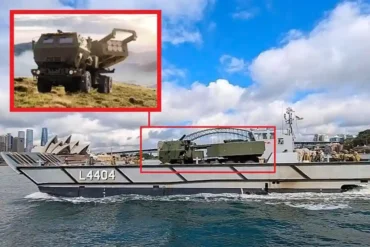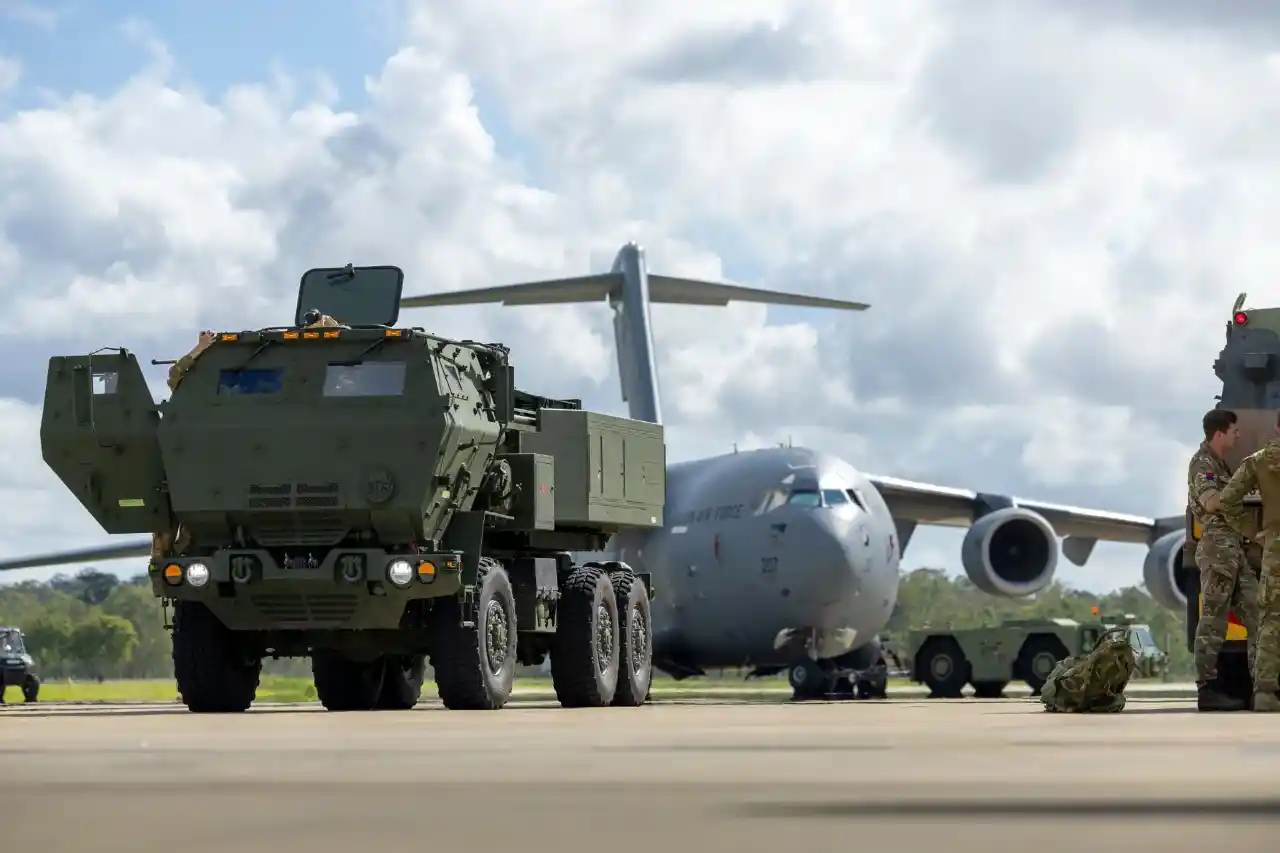
In a bold display of precision firepower and rapid deployment capability, the Australian Army, in collaboration with the U.S. Army and U.S. Air Force, executed a strategic long-range strike exercise in December 2025 under the banner of Exercise Kenney Strikes Back. The demonstration marked a pivotal moment in Australia’s expanding military interoperability with the United States, placing HIMARS (High Mobility Artillery Rocket System) at the center of future Indo-Pacific deterrence operations.
Strategic Objectives Behind Exercise Kenney Strikes Back
The goal of the exercise was more than just a show of strength. It served as an operational rehearsal that validated key concepts central to both nations’ evolving military doctrines. Centered on rapid infiltration, precision engagement, and quick extraction, the drill underscored the ability to insert long-range fires deep into contested zones without the need for prolonged infrastructure or force buildup.
Australia’s Department of Defence confirmed the event on January 7, 2026, highlighting its success across multiple operational environments. From airbase to launch point, HIMARS platforms were seamlessly deployed, activated, and extracted under simulated conflict conditions—executing missions within tightly compressed timelines.
Deploying HIMARS with Strategic Reach and Tactical Precision
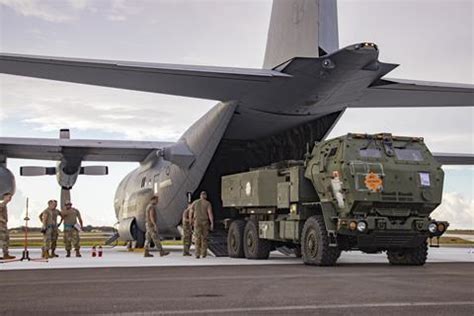
At the core of this military milestone was the deployment of M142 HIMARS by the 14th Regiment, Royal Australian Artillery. These wheeled launchers, weighing 16.25 tonnes, were transported aboard U.S. Air Force C-17 Globemaster III aircraft from RAAF Base Amberley to forward operating positions across Australia’s vast north and southeastern coasts.
The C-17, with its ability to carry over 77 tonnes and land on short, austere airstrips, enabled the theater-wide mobility of Australia’s most advanced artillery assets. This logistical capability is not just about transportation—it’s about turning firepower into maneuverable strike elements capable of shaping conflict zones on demand.
Accompanying the HIMARS were Bushmaster Protected Mobility Vehicles, known for their resilience against mines and IEDs, and U.S. Army MRZR all-terrain vehicles, providing mobility for reconnaissance and support roles at the forward edge. These assets enabled a layered, responsive, and protected strike posture.
Realistic Operational Tempo in Simulated Contested Environments
The chosen deployment zones—RAAF Base Scherger in Queensland and HMAS Albatross in New South Wales—were not accidental. They are both positioned near key maritime and air routes in the Indo-Pacific, acting as launchpads for regional operations. Once on-site, the HIMARS teams wasted no time:
- Establishing secure communications
- Receiving digitally transmitted fire missions mid-flight
- Rapidly maneuvering into predesignated firing positions
Though no live munitions were used, the entire fire control sequence was executed digitally, from target acquisition to simulated launch, followed by immediate re-embarkation on the C-17s for extraction. This mirrored the combat requirement of strike-and-move agility, a necessity in modern high-threat theaters.
The HIMARS Advantage: Reach, Speed, and Survivability
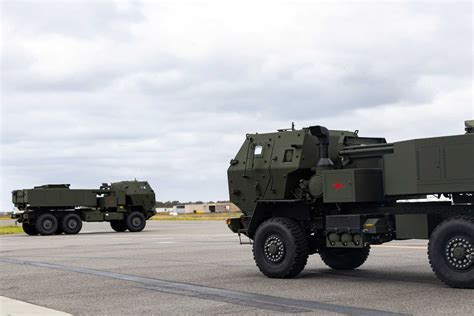
The Lockheed Martin-built HIMARS has become a linchpin of long-range fires doctrine. Capable of launching either:
- A pod of six GMLRS rockets (up to 80 km), or
- A single Precision Strike Missile (PrSM) with a range exceeding 500 kilometers,
…it delivers devastating effect at standoff distances. Crucially, the launcher can displace and relocate within minutes of firing, minimizing counter-strike vulnerability.
The compatibility with C-17 airlift transforms this system from a static asset into a maneuverable strategic tool. Commanders can now reposition firepower fluidly across regional hot zones, complicating adversary planning and reinforcing the unpredictability of allied response.
Cross-National Integration: Accelerating Interoperability
According to Warrant Officer Class Two Mick Krek, Battery Sergeant Major of the 54th Siege Battery, this exercise marks a major milestone for Australia’s 14th Regiment. Having only recently transitioned onto HIMARS, the ability to perform full-scale deployments and coordinate strikes alongside seasoned U.S. crews is invaluable.
He emphasized that this mirrors Australia’s strategic imperative: to secure its northern approaches and maintain freedom of movement across air and sea corridors. Working closely with American counterparts allowed Australian crews to quickly elevate their tactical proficiency.
From the U.S. Army perspective, Captain Daniel Schell, Commander of the 17th Field Artillery Battery, pointed out how fire mission data was received in mid-air and passed digitally to Australian teams on the ground. This data continuity proved that integrated fire missions could occur without traditional fixed command centers—a game-changing factor in contested environments where static infrastructure may not survive.
Airlift as a Force Multiplier: The Role of the C-17 Globemaster III
Traditionally seen as a logistical asset, the C-17’s role in this exercise was far more operational. With a cruising speed of 450 knots and intercontinental range, it did more than just ferry equipment—it enabled the projection of combat power at strategic distances.
The involvement of the USAF 62nd Airlift Wing illustrated how airlift is central to joint fires doctrine. By transforming artillery into a rapid-response capability, the exercise showed how precision fires can now be delivered with agility once reserved for airborne infantry or special forces.
The Bigger Picture: Australia’s Force Transformation
Exercise Kenney Strikes Back dovetails into Australia’s broader military modernization strategy. The acquisition of over 20 HIMARS launchers by the end of 2026 is just one aspect of a plan that emphasizes:
- Long-range strike capabilities
- Littoral maneuver operations
- Networked joint fires integrating air, sea, and land sensors
This drill moved HIMARS from concept to credible combat readiness, demonstrating that Australia’s force transformation is not only underway but already achieving joint interoperability outcomes.
Strategic Implications for the Indo-Pacific Security Architecture
The geopolitical stakes in the Indo-Pacific are rising rapidly. With growing concerns over maritime security, great power competition, and contested airspace, exercises like Kenney Strikes Back are not symbolic—they are operational rehearsals for potential future flashpoints.
By validating the rapid deployment of precision fires, the U.S. and Australia signal their readiness to deter aggression, respond rapidly to crises, and operate without dependence on fixed bases. The ability to insert HIMARS into remote outposts, prosecute a strike, and extract in hours rather than days, aligns perfectly with evolving concepts such as Expeditionary Advanced Basing Operations (EABO) and Dynamic Force Employment (DFE).
Conclusion: A Model for Future Joint Strike Operations
Exercise Kenney Strikes Back stands as a defining proof of concept for how modern militaries will fight in the 21st-century Indo-Pacific theater. It showcased not just hardware, but the synchronization of allied intent, capability, and doctrine. The seamless integration of Australian and U.S. units under demanding timelines and operational scenarios sends a clear message: mobility, precision, and interoperability are the new cornerstones of deterrence.
The rapid evolution of HIMARS from an acquisition to a fully fielded asset ready for strategic strike missions reflects how quickly Australia has embraced transformational defense capabilities. As future exercises expand in scope and complexity, this HIMARS deployment model is likely to be replicated, refined, and operationalized across a growing number of allied contexts in the region.