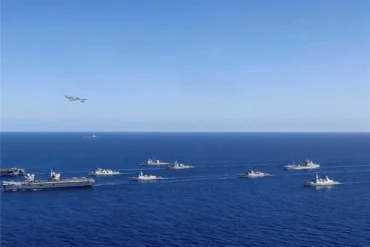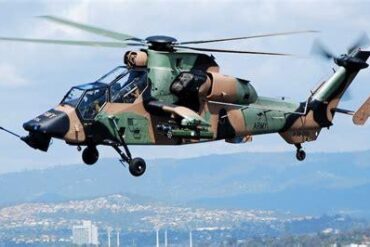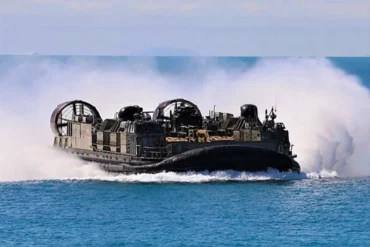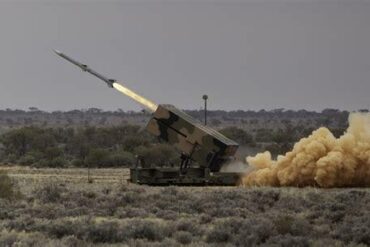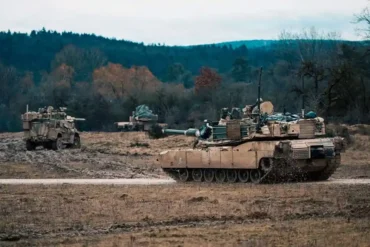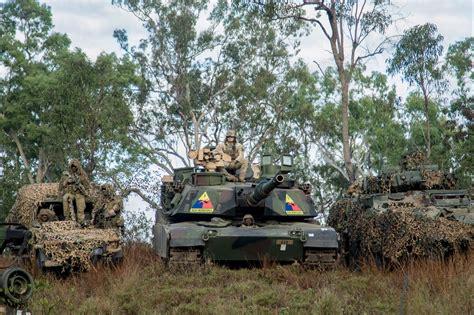
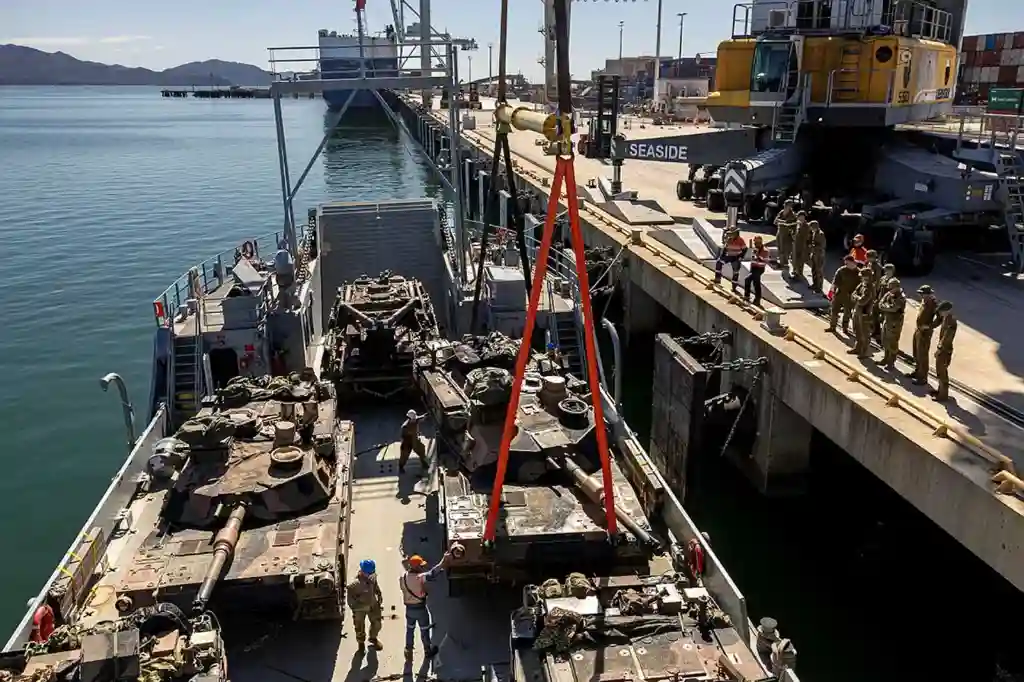
On 19 July 2025, the United States and Australia demonstrated a significant leap in joint amphibious warfare capabilities during the Exercise Talisman Sabre 2025 amphibious phase at the Port of Townsville, Queensland. This complex operation involved loading Australian M1A2 SEPv3 Abrams main battle tanks onto U.S. Navy Landing Craft Utility (LCU) vessels, showcasing seamless collaboration between the Australian Army’s 2nd Cavalry Regiment, U.S. Navy personnel, and Depth Defence Logistics contractors. The operation reinforced the Indo-Pacific alliance’s readiness for multi-domain, high-stakes deployments across contested environments.
Advanced Amphibious Interoperability in Action
This exercise tested the limits of heavy armor amphibious integration, proving that U.S. and Australian forces can execute precision port-to-shore deployments involving 70-ton main battle tanks. The M1A2 SEPv3 Abrams, the most modern variant of the Abrams family, requires intricate coordination for loading due to its weight and dimensions. Crews from both nations displayed clockwork precision, with tank commanders, crane operators, and deck crews working in unison to achieve safe and efficient loading operations.
Strategic Implications for the Indo-Pacific
The Indo-Pacific theater is increasingly characterized by strategic competition, particularly with China’s expanding military footprint. This joint demonstration served as more than a logistical showcase—it was a strategic message of deterrence. The ability to rapidly project heavy armored assets from sea to shore in potential flashpoints such as the South China Sea or Taiwan Strait underlines the allied capacity to respond swiftly to coercion or aggression. This high-readiness amphibious capability strengthens the posture of both nations in supporting regional security and maintaining freedom of navigation in critical sea lanes.
Reinforcing the AUKUS Framework
The operation provided a live validation of AUKUS interoperability goals, enhancing collaboration across naval, ground, and industrial domains. For the Australian Army, it was a test of logistical agility and its ability to integrate with U.S. maritime lift assets. For the United States, it demonstrated the efficiency of joint procedures involving Army armor and Navy landing craft under a multinational command structure. The use of Runnymede-class LCUs, capable of carrying multiple main battle tanks per sortie, highlighted the importance of maritime logistics readiness in supporting littoral operations.
M1A2 Abrams: A Force Multiplier for Littoral Warfare
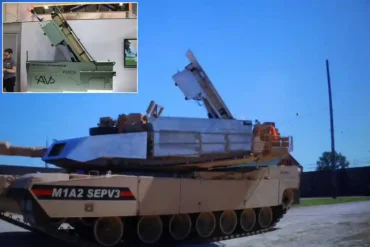
Integrating main battle tanks into amphibious operations is a decisive force multiplier. The M1A2 SEPv3 provides shock action, immediate firepower, and armored survivability in contested littoral zones—enabling follow-on forces to secure and expand a beachhead. This capability becomes essential in environments involving anti-access/area-denial (A2/AD) challenges, urbanized coastal defenses, or island-based fortifications.
Preparing for Multi-Domain Conflict
The amphibious phase of Talisman Sabre 2025 was designed to simulate high-intensity, multi-domain conflict, incorporating contested landings, logistics under fire, and coalition-based defense scenarios. By deploying armored assets alongside naval platforms, the U.S. and Australia are preparing for contingencies requiring mass ground force projection in hostile environments. This is crucial not only for countering Chinese A2/AD strategies but also for addressing regional instability and hybrid threats.
A Multinational Exercise with Regional Impact
With over 35,000 personnel from 19 nations participating, Exercise Talisman Sabre 2025 is the largest iteration of the exercise to date. The successful execution of the Townsville amphibious phase underscored coalition readiness to operate jointly under complex, near-peer conflict conditions. The demonstration also sent a clear signal of allied unity, reinforcing their commitment to upholding stability and projecting credible deterrence across the Indo-Pacific.
Looking Ahead
The integration of mechanized land forces with maritime lift capabilities is a pivotal element of future allied strategies in the Indo-Pacific. As geopolitical tensions rise, these joint amphibious demonstrations serve not only as military exercises but as operational assurances to partners and warnings to adversaries. Talisman Sabre 2025 has once again reaffirmed that the U.S.–Australia alliance is capable, adaptable, and prepared to meet the evolving challenges of the 21st-century security environment.