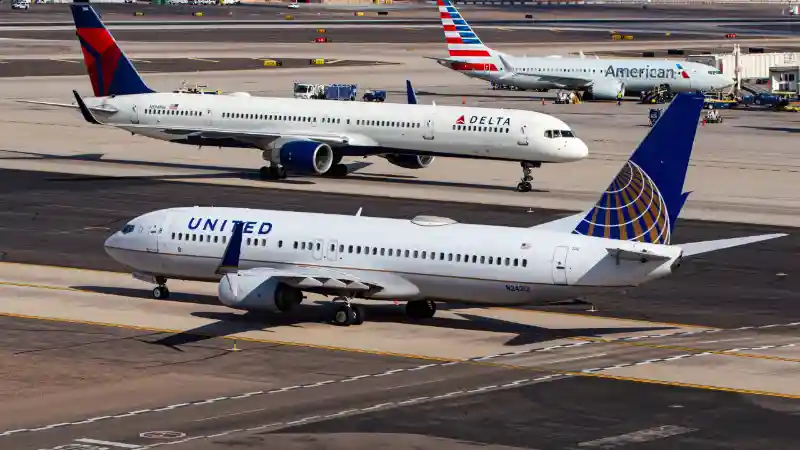
A trusted insider turned airport access into a criminal enterprise, and the bill landed at three of America’s largest carriers. Chaculvin Hayes, an employee of GAT Airline Ground Support, exploited his position to manipulate reservation systems at Delta, United, and American Airlines over nearly three years, draining more than $600,000 through fraudulent upgrades, altered itineraries, and unauthorized vouchers. The FBI’s case ended with a 16-month federal prison sentence and a restitution order of $602,886.18, a stark reminder that the most guarded systems in aviation can still be undone by the person holding a legitimate login.
How a Ground Support Employee Weaponized Reservation Access
The scheme rested on a privilege most travelers never see. Authorized airline staff can override customer reservations when operations demand it, waiving fees, rerouting passengers, and issuing goodwill credits. Hayes and several coworkers used that authority as a personal cash register, upgrading passengers to first class, shifting flight dates and routes, and issuing travel credits without ever collecting the required payments. Those clean, system-sanctioned changes masked the theft, because every fraudulent transaction looked like routine customer service.
Hayes then monetized the access directly, selling deeply discounted tickets under the alias “Neeve Andrews” and pocketing the payments himself. Investigators found he had altered hundreds of passenger reservations and generated dozens of unauthorized travel vouchers using his own employee credentials. The scam ran from January 2017 through December 2019, a span long enough to suggest oversight gaps at multiple layers, from frontline scheduling to reconciliation of fee waivers and credit issuance.
The Audit Trail That Closed the Case
Reservation platforms log every action against an employee ID, and those logs became the prosecution’s backbone. Each waived fee, each route change, and each voucher left a signature tied to Hayes. He pleaded guilty to conspiracy to commit wire fraud in June 2026, accepting responsibility for a conspiracy that spanned three carriers and required coordination with other GAT workers.

The sentencing reflected both the scale of the loss and the breach of trust. Federal prosecutors treated the case as organized fraud rather than opportunistic theft, and the restitution figure of $602,886.18 restores the value of waived fees, upgraded seats, and fabricated credits. Sixteen months behind bars is modest against the dollar amount, but the message is sharper: insider access is never a license, and the audit trail never forgets.
Why Airline Ticketing Systems Remain a Prime Target
The Hayes case is one strand in a wider pattern of attacks on travel distribution infrastructure. On May 17, 2026, the Airlines Reporting Corporation (ARC) issued a fraud alert warning of rising attempts to breach Global Distribution Systems (GDS), the platforms travel agencies use to book and ticket flights. ARC documented two intrusion routes: criminals posing as legitimate agencies to obtain credentials and request access, and deceptive phishing emails that tricked employees into surrendering logins. Once inside, attackers issued tickets under the agency’s ARC account without authorization, leaving agencies exposed to chargebacks and accreditation risk.
Japan Airlines confronted a separate exposure in October 2026, when reservation software provider Amadeus notified the carrier that booking data had been accessed without authorization. Records tied to roughly 92,000 customers who booked with JAL and Japan Transocean Air may have been viewed, including passenger names, booking references, travel dates, and flight routes. Payment card numbers and passwords were not compromised, and JAL reported no evidence of misuse at the time.

What the $600K Scam Teaches Airlines and Travelers
For carriers, the lesson is that privileged access needs continuous behavioral monitoring, not just perimeter defense. Fee waivers, seat upgrades, and voucher issuance should be reconciled against customer records in near real time, with anomaly detection flagging employees whose override volume outpaces peers. Segregation of duties matters too: the same worker who alters a reservation should not control whether the required fee was collected.

For travelers, the case explains a familiar irritation. Discounted airfare sold through unofficial channels, especially via social media or messaging apps, often rides on stolen system access, and the resulting tickets may be canceled or flagged at the gate. Booking directly with airlines or accredited agencies keeps a traveler inside the protected chain. ARC’s warning shows the same logic applies to agencies themselves, where credential hygiene and employee phishing awareness are now core operational controls rather than IT afterthoughts.
The Bottom Line on Insider Fraud in Aviation
Chaculvin Hayes converted a routine support job into a multimillion-dollar fraud pipeline, and the consequences now include federal prison, a six-figure restitution debt, and a permanent criminal record. His case, ARC’s GDS alert, and the Amadeus-linked JAL incident together describe one threat landscape: criminals no longer need to break encryption when they can borrow a password or exploit a legitimate override. Airlines that treat insider access as a monitored privilege, and travelers who buy tickets through verified channels, close the gaps that made a $600,000 scam possible.