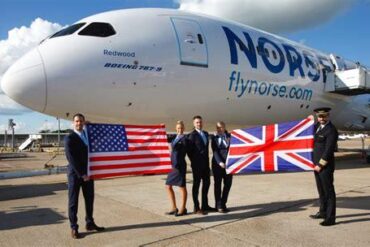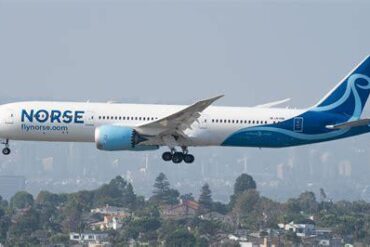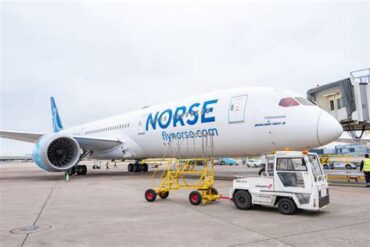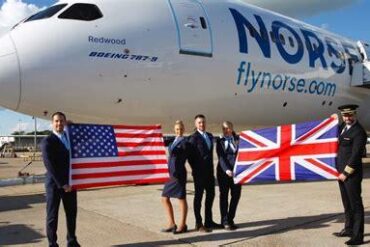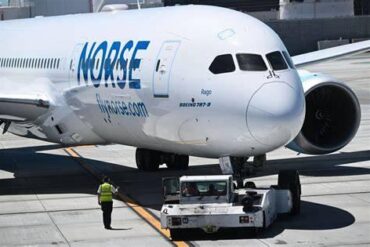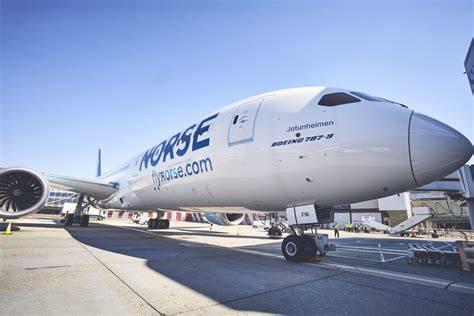
Norse Atlantic Airways suspended every one of its flights on Thursday, November 26, after admitting it was “dependent on securing financing to meet its short-term liquidity needs,” and that it could offer “no assurance that a viable solution will be found.” The low-cost long-haul carrier, which took to the skies in June 2022 with a fleet of Boeing 787 Dreamliners, grounded its entire schedule overnight, leaving travellers across Europe and North America searching for last-minute alternatives. Nine current or planned routes are now stopped, among them the winter corridors that had become the airline’s commercial lifeblood. Management remains locked in talks with investors over a possible takeover that would carry a rescue package with it, but the board has been blunt about the alternative: if a short-term financing solution cannot be found urgently, it intends to file for bankruptcy.
How Norse Atlantic Reached the Brink of Collapse
The airline’s own language had shifted sharply in the weeks before the shutdown. It described its financial position as critical, and its published statement acknowledged that it had already “explored various strategic alternatives and entertained discussions for a potential takeover.” Founded in the shadow of Norwegian Air Shuttle’s retreat from transatlantic flying, Norse inherited the same impossible economics: thin margins, capital-hungry widebody aircraft, and legacy rivals that could match it on price while relying on premium cabins for profit. It responded with wet leases, seasonal rotations and lease-out deals designed to keep cash flowing, but the runway kept shortening until the November 26 grounding removed the last cushion.
The Nine Routes Lost and the Thailand Winter Strategy
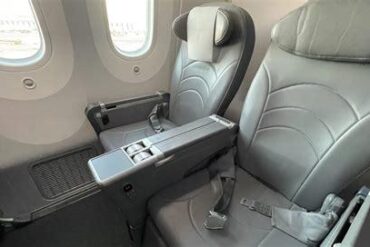
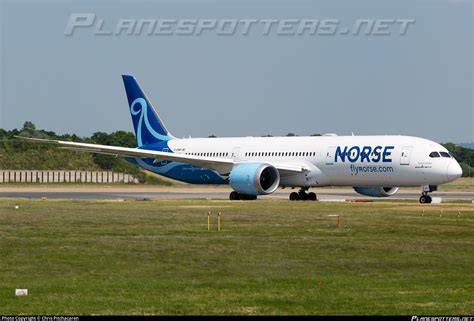
Nine long-haul routes now stand halted. Seven were live at the time of suspension, and two were scheduled to begin in December: Manchester (MAN) to Bangkok Suvarnabhumi (BKK) four times weekly, and London Gatwick (LGW) to Phuket International (HKT). Thailand had become the centre of gravity for the airline’s winter schedule, with London Gatwick, Oslo (OSL) and Stockholm (ARN) all connected to Bangkok and Phuket. The remaining pair of corridors launched from Gatwick: one to Cape Town International (CPT) in South Africa, the other to Orlando International (MCO) in Florida. Every route relied on the 787, configured, according to aeroLOPA, with 56 premium economy recliners and 282 economy seats.
A History of Retrenchment Across Europe and the US
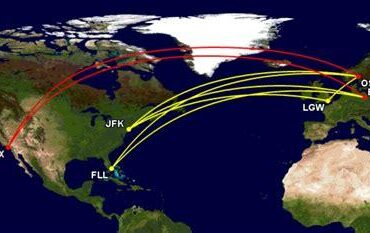
The nine-route tally caps years of remorseless pruning. Norse previously flew from Athens to New York and Los Angeles, from Berlin to Fort Lauderdale, Los Angeles, Miami and New York, and from Paris Charles de Gaulle to New York, Los Angeles and Miami. From Oslo it cut Delhi, Fort Lauderdale, Los Angeles, Orlando and New York, with early JFK services routing via London. After establishing a UK operating arm, Gatwick services to Boston, Bridgetown, Las Vegas, Montego Bay, San Francisco and Washington Dulles were subsequently withdrawn. Each withdrawal was a deliberate attempt to protect margins; collectively, they reveal how narrow the path to profitability had become.
Pakistan International Airways and the Unwinding Wet-Lease Arrangements
Norse’s flying for other carriers sits outside the suspension count, but its wet-lease clients are already adjusting. ch-aviation reports that Pakistan International Airways has returned to operating its own Boeing 777s between Pakistan and the United Kingdom, having previously depended on leased Norse 787-9s. The switch underscores how tightly Norse’s Dreamliners had been woven into other airlines’ schedules, and how quickly those schedules must now be rebuilt.
What Happens if Norse Atlantic Files for Bankruptcy
Everything now hinges on whether investors can construct a takeover that includes a financing solution. Failure to do so would trigger a bankruptcy filing, stranding bookings, dispersing crews and removing one of the last independent low-cost transatlantic operators from airports spanning Gatwick to Suvarnabhumi. For passengers holding tickets the clock is already ticking, and for the wider industry the episode confirms what Norse itself learned over four turbulent years: the intercontinental market is a genuinely tough nut to crack.